

17 December 2025 5:07 pm
Great teaching is built on the power of storytellingandresearch showsthat narrative- ledinstructionimprovescomprehensionandinformation retention.But why is storytelling so powerful in the classroom and how can educators harness3Dtechnology to amplify its impact?
The Power of Narrative
Stories engage us because theyprovidecontext and meaning. When students encounterfacts on their ownthey may struggle to understand. But when presented as part ofa narrative, theycan makea deeper connection.
Immersive storytelling strengthens thisimpactby placing learners insideastory.When students participate activelyintheirlearningrather than simply receiving information,theyexperience emotion and build empathy.Thisin turn boosts comprehension, critical thinking and even retention.This is especiallytruein subjectssuch ashistory, literatureand science wherestudentsbenefit from adopting different viewpoints or seeing abstract ideas in context.
Augmented RealityStorytelling
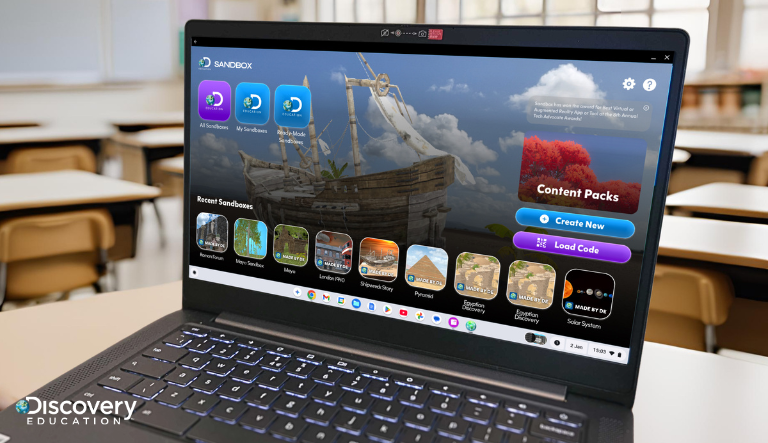
3D tools such asDiscovery Education’s Augmented Reality (AR) appSandboxtransform narrative learning by allowing students to build and explore their own immersiveworlds. Rather than passively reading about an event, they can recreate it.And instead ofsimplywatching avideo, they canmakeone themselves. This shift,from receiving information to actively creatingit,turns students intopowerfulstory makers.
Consider a lesson on Ancient Egyptian temple architecture. Traditionally, students might look at photos of Karnak or watch a short documentary. While helpful these materials lack a hands-on element. But what if studentscould designtheir ownversion ofAncient Egyptian, using AR?
Theymightbegin building a temple, placing columns, sculptures and hieroglyphs based on their research. As theybuild, they’llthink about the story behind their creation.Who used thistemple? Why was it important? What events or rituals happened here?Perhaps they’ll createa scenewhere ayoungEgyptianscribe attendsa ceremonial celebration.Indesigning this moment they applytheirknowledge of religion, history and art.These studentsaren’t just studying history,they’restepping inside of it.
This is whereARtruly shines.Usinglife-sizedmodels,students can walk around their creations experiencing realistic scale and detail. This sensory engagement helps studentsto absorbnot just the factsbut the cultural significance.
Case Study: The Second World War
Lawford School in Essex provides a strong example of how this approach can transform learning. Students used Sandbox to explore World War II by building 3Dmodelsand crafting their own narratives.
Usingagreen-screen feature, they created news-style broadcasts interviewing virtual civilians and produced first-person videos showing what an air raid might have been like inside an Anderson Shelter. These student-built narratives allowed them to form emotional, personal connections to historical events, resulting in deeper understanding.
Teachers reported noticeable gains in engagement, teamwork, and critical thinking skills. The project demonstrated how 3D storytelling can turn history lessons into powerful, unforgettable experiences.
Education and Imagination
This method isn’t limited to history. Students can use3D storytelling in ARto explore literature, model scientific processes, create virtual museums or build imaginative worlds for creative writing. The opportunities are nearly limitless,but the core idea remains the same. When students craft stories in 3D, they move from memorising content to truly understanding it.
By embracing tools likeDiscovery Education’sSandbox,teachers can foster creativity, curiosity andcriticalthinking in ways that traditionalteachingalone cannot. When students don’t just read about history but build it, and whenthey don’t justhear about differentcultures but step into them,learning becomes an immersive experience. In theageof digitallearning, 3D storytellingis the bridge between education and imagination,giving students the power to bring ideas to life.
Learn more about the entire suite of immersive learning solutions from Discovery Educationhere.

