

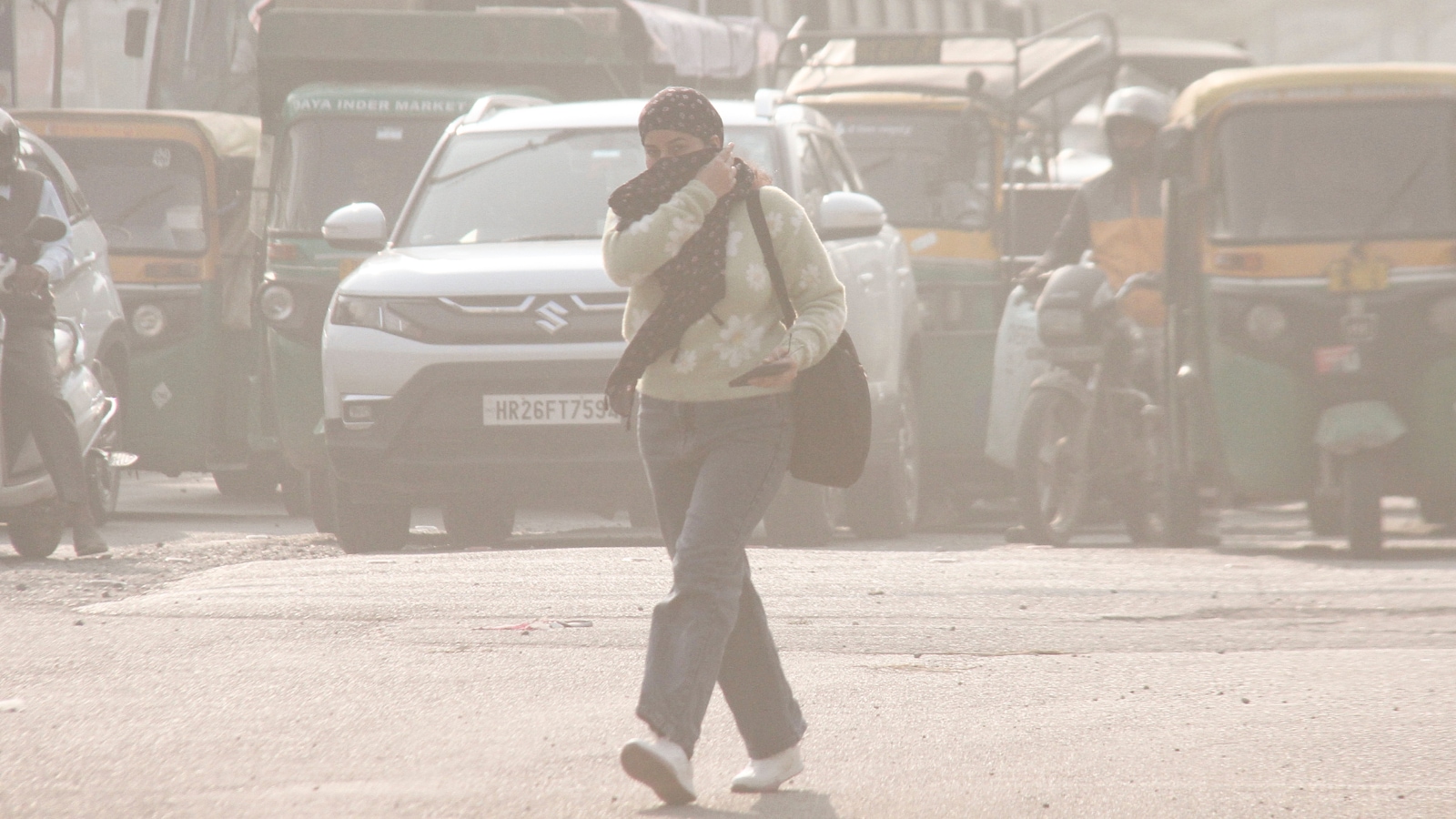
Air pollution has become a year-round threat, over 80 Padma awardee doctors warned in a national advisory on Thursday. It was on the same day that Delhi’s particulate levels climbed to nearly 10 times the World Health Organisation (WHO) norms. The top doctors sounded an alarm on the health impacts, in particular, as they said it has reached an “unmanageable scale”.
In the advisory, they described air pollution as a “direct and ongoing threat to human life,” particularly for vulnerable groups. But the warning did not stop at the known risks.

The doctors also pointed to insidious contaminations entering everyday air. “Microplastics and nanoplastics are now being detected in ambient air, particularly around high-traffic corridors, and are associated with chronic inflammation and endocrine disruption. Pollutants such as volatile organic compounds, hydrocarbon fractions and heavy metals are contributing to cancers, developmental delays, cognitive decline and worsening diabetes and hypertension control,” the group wrote.
What makes microplastics different from traditional pollutants?
Unlike the more familiar air pollutants such as particulate matter, carbon monoxide and nitrogen oxides, airborne microplastics are far less known and far less studied. Their persistence, ability to travel long distances, and their tiny size — smaller than 10 microns, or roughly one-tenth the width of a human hair — allow them to penetrate deep inside the human body.
Thursday’s advisory noted that mounting evidence now shows microplastics and nanoplastics infiltrating the human body through air and adding to the burden of chronic diseases.
“Microplastics get embedded in arterial walls and raise the risk of heart attack or stroke by 4.5 times within three years,” Dr Shashank Joshi, endocrinologist at Mumbai’s Lilavati Hospital and Padma Shri awardee, told The Indian Express.
These particles are formed both directly (as industrially manufactured micro-sized plastics) and indirectly, as larger plastics degrade through sunlight, friction, oxidation and other environmental processes. Once inside the body, microplastics can themselves continue to break down, potentially releasing harmful chemicals into the bloodstream.
Story continues below this ad
Because inhalation delivers these particles straight into the respiratory and circulatory systems, researchers warn that airborne microplastics represent a largely unstudied but critical new layer of exposure in urban air. There is also emerging evidence that suggests these particles can carry bacteria, viruses and other contaminants on their surfaces, adding a dimension of risk that traditional pollutants do not.
Where do these particles come from, and why are they critical in Delhi’s context?
Dr Joshi pointed out that traffic and vehicular pollution are major sources of airborne microplastics, especially in congested urban settings like Delhi.
A 2018 source-apportionment study by The Energy and Resources Institute (TERI) and the Automotive Research Association of India, which is still relied upon, had found transportation contributed 39% of Delhi’s PM 2.5 pollution — the largest share among sources.
Story continues below this ad
A more recent analysis this year, using the Indian Institute of Tropical Meteorology’s Decision Support System, done by Envirocatalysts, a Delhi-based think tank, showed transport emissions accounted for 14% to 22% of Delhi’s PM 2.5 in November, during peak winter buildup.
Dr Joshi explained, “Microplastics are never discussed. When we discuss them, we usually contextualise them for water and food pollution. But they are in the air too, especially in traffic corridors. It’s a subject area for research.”
He also referred to recent studies involving institutions such as the Institute of Mathematical Sciences (IMSc) in Chennai. This study, titled ‘The Dawn of a New Air Pollutant: Inhalable Microplastics as Emerging Vectors of Hazardous Contaminants and Their Implications for Human Health’, published by Elsevier last month, has found that Delhi was among the Indian megacities with the highest concentration of inhalable microplastics at 14.18 µg/m3.
In markets like Chandni Chowk and Sarojini Nagar, these were mainly released from the textiles, disposables, and packaging activities.
Story continues below this ad
On the exposure, the study also illustrates that Indians in urban cities inhale enough microplastics to accumulate about 3 grams in their lungs over a lifetime, roughly the weight of a teaspoon of sugar.
Can airborne microplastics trigger other health concerns?
Padma awardee Dr Ambrish Mithal, Chairman and Head of Endocrinology and Diabetes at Max Healthcare, Saket, highlighted how air pollution, including from microplastics, is emerging as a driver of metabolic disorders.
Citing a major study published in the New England Journal of Medicine, which earlier this year detected micro and nanoplastics in the carotid artery plaques (fatty, hardened deposits that build up inside the major neck arteries supplying blood to the brain) of patients undergoing surgery; he said those with detectable particles had a 4.5-times higher risk of heart attack, stroke or death over nearly three years of follow-up.
Microplastics, he said, accumulate in tissues and organs and can induce inflammation, oxidative stress and gut microbiota disruption, all of which contribute to insulin resistance.
Story continues below this ad
Another study presented at the American Diabetes Association, he said, linked Bisphenol A (BPA), a chemical used in plastic bottles, to a rapid onset of insulin resistance in healthy adults, even at levels deemed “safe” by regulators.
The surge in non-communicable diseases, including diabetes, cannot be explained by lifestyle changes alone, he said. “Diabetes has grown exponentially all across the globe in the last three decades. “Presently, India is home to more than 10 crore people with diabetes, and more than 13 crore people are classified as prediabetic,” he said, adding that pollutants and emerging contaminants may be playing a significant but overlooked role.
Dr Mithal warned that microplastics have also been associated with gestational diabetes and metabolic disturbances in pregnancy. “Plastic bottles exposed to sunlight release volatile organic compounds (VOCs) which can pose serious health risks,” he said.
What do the top doctors recommend that people do?
The advisory by the doctors has listed a series of protection measures, including the use of air purifiers and N95 masks when possible, along with low-cost steps such as wet-mopping, avoiding incense and mosquito coils, and improving kitchen ventilation.
Story continues below this ad
The group stressed that children should not participate in outdoor assemblies on high-AQI days, and that pregnant women, the elderly and those with heart or lung disease should minimise exposure.
At the policy level, the doctors called for corrected GRAP thresholds, the declaration of severe pollution episodes as public-health emergencies, curbs on diesel vehicles and generators, strict enforcement of construction dust and waste burning, and a national microplastics monitoring programme.
They also urged multi-state coordination across North India, warning that without urgent systemic interventions, the country risks “long-term and irreversible health damage across generations.”
