


Volume 28 | Issue 4
Strategies for companies to build effective classroom connections.
Click here to read the complete illustrated article or continue below to read the text article.
By Catherine Dunlop, Senior VicePresident of Corporate Partnerships,Discovery Education
The global workforce is undergoing asignificant shift. By 2030, more than170 million new jobs are projectedworldwide, and the U.S. manufacturing sectoralone anticipates 4 million openings in the nextdecade.
Yet, despite this growth, the talent pipeline isunder strain. The manufacturing industry couldface a shortage of 1.9 million skilled workers by2033 if current trends persist. This gap isn’t justin manufacturing: employers across industriescite consistent skills gaps, a fact compounded bythe continued impact of emerging technologies,like AI.
Classrooms have the potential to address theskilled worker shortfall. How? Let me explain:
K-12 education is appropriately focused onacademic achievement in line with state andnational standards; but today’s economy andthe rapidly evolving world demands more.Employers increasingly value adaptable, skilledindividuals who can apply knowledge to real-worldchallenges and market needs.
However, 83% of students report they cannot link classroom learning to future employment.This disconnect not only impacts workforcereadiness but also student engagement.Research shows that 92% of students find lessonsmore enjoyable when they see real-worldrelevance, a powerful motivator for learning.
Connecting careers to the classroom addressesboth issues. For example, when studentsunderstand how math relates to engineeringor how communication skills matter in health care, school becomes a gateway to opportunity.Career-connected learning fosters confidence,builds purpose, and equips students with durableskills like problem-solving, collaboration, communication,and other competencies employersconsistently rank as critical for success.
In my role, I partner with global brands whowant to help build an impactful workforce.Together, we prepare students for the futurethrough innovative, real-world learning opportunitiesthat nurture curiosity. Here are twostrategies companies can take to build relationswith schools.
Strategy 1: ClassroomConnections with EmployeeVolunteers
Students cannot aspire to careers they don’tknow exist. Career fairs, industry partnerships,and virtual experiences broaden horizonsbeyond the familiar. Meeting professionalshelps students picture themselves in those roles.
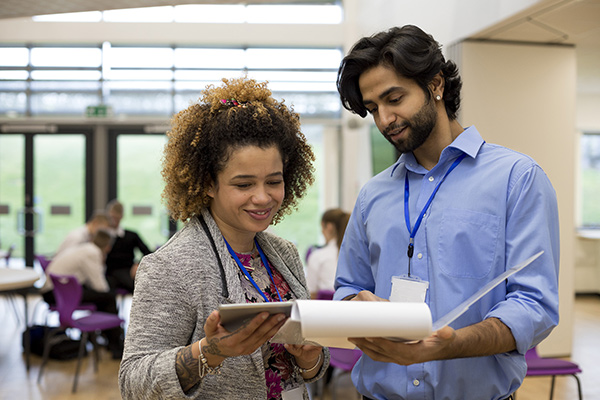
With Career Connect schools gain a direct-toclassroomvirtual volunteer experience wherecorporate employees meet with students toexplain their jobs.
For students, these interactions reinforce classroomlessons by connecting the dots betweenpossible careers and the actual people withthe career. These interactions also cultivatementorship opportunities and professional fluency,giving students practice in networkingand communication long before their first jobinterview. As the platform offers virtual-basedinteractions, students all over the country areable to meet with industry professionals fromanywhere, ensuring all students can access thebenefits of career connections.
For companies, many prospective employeesprioritize working for companies that supportemployees’ overall well-being. Offering volunteerismopportunities can improve how applicantssee a company’s culture. According to aDeloitte volunteerism survey, 70% of U.S. workers“agree that companies who sponsor volunteeractivities have a more pleasant work atmosphere.”Organizations such as Genentech,American Society of Mechanical Engineers,Lockheed Martin, ProLogis, DuPont, Nucor,Trane, Capital Power, The Home Depot, andmany others all use Career Connect to buildemployee engagement through volunteerism.
Strategy 2: Translating WorkTasks into Classroom Learning
Another way for companies to effectively connectwith classrooms is to transform the day-todaywork experiences of professionals in diversefields into resources for educator lessons plans.This type of work bridges industry to classroomsto inspire the next generation.
There are multiple pathways for how this cantake shape, but let me highlight two:
- Immersing Students in Learning: Verizon took their power of connectivity and technologyto create TimePod Adventures, whichimmerses K-12 students in the universe throughstate-of-the-art, life-size Augmented Reality(AR). Accessible on a browser, Chromebook, ormobile device, students need only internet accessand audio, meaning more students are able toenjoy AR. Guided by an AI-powered assistantand featuring grade-band specific lesson plansavailable in English and Spanish, TimePodAdventures support educators in developingnew skills and encourages students to take control,explore incredible environments, and solvecomplex challenges. Plus, accompanying professionaldevelopment resources help educatorsquickly dive into new and innovative techniquesand teaching strategies, all while teachers earnadditional teaching credentials.
- Addressing Teen Driver Safety: In 2023,Honda launched the multi-year safety imitative– Honda Safety Driven – as a multi-to helpaddress the nearly one-third of annual trafficfatalities in the U.S. involving drivers underthe age of 25. Having already reached nearlyone million students, the national safety educationinitiative uses real-world applicationsand practices of STEAM, aiming to empowerstudents to use safe driving skills as a roadmapto become responsible decision-makers. Thelatest classroom resources bring Honda RacingCorporation engineers alongside IndyCardriver and Indy 500 winner Scott Dixon and champion motocross riders Jett and HunterLawrence of the Honda HRC Progressive racingteam to teach students about safety.
Students Need You, Now
The future of work is being built now. By connectingcareers to the classroom, we can inspirethe next generation, meet critical workforceneeds, and create a more resilient economy.Programs that help integrate industry expertiseinto classroom instruction help students see andpractice what they can be.
Investing in education is a long-term strategicinvestment in both business and society.Corporate partnerships can create a strongertalent pipeline, improve employee skills andretention, and accelerate innovation.
The question isn’t whether we can afford tomake these connections. It’s whether we canafford not to. If we miss the opportunity toact, the cost will be measured in lost potential.Millions of students will leave school withoutthe confidence, skills, and vision to shape theirfutures. They’ll enter a world of opportunitywithout the tools to seize it. This isn’t just abouteducation; it’s about ensuring every learnerhas a chance to thrive in a rapidly changingeconomy.

About the Author:
Catherine Dunlop is an accomplished growth and partnerships leader with morethan 25 years of experience building high-performing teams and driving revenueacross mission-driven and technology-focused organizations. In her newrole, Dunlop designs and implements strategies connecting PreK-12 educationand the public/private sector, forging connections with corporate and communitypartners that infuse real-world content into school curricula. Together withher colleagues, Dunlop is nurturing curiosity in classrooms around the worldthrough cutting-edge technology solutions and immersive, hands-on experiencesfocused on critical topics such as workforce readiness, STEM, environmental education, financialliteracy, and more.
Prior to joining Discovery Education, Dunlop held leadership positions at Bonterra and Network for Good,creators of tech solutions supporting non-profit fundraising and engagement. At both organizations, shebuilt meaningful partnerships across the philanthropic sector driving growth and impact. In addition, Dunlophas led strategic partnerships with companies including Walmart, Google, Facebook, and Patagonia, helpingto advance their philanthropic goals.
