

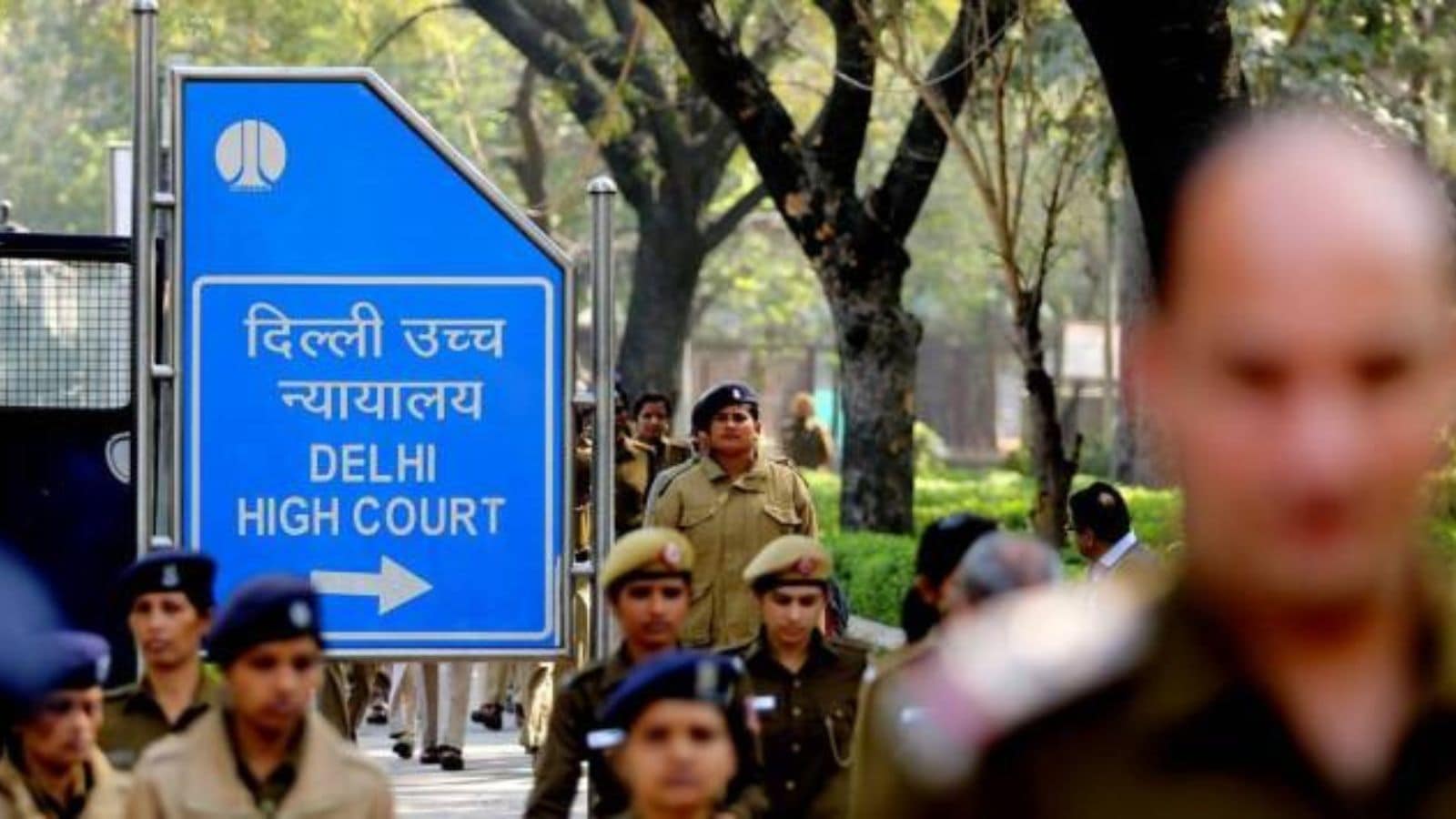
The Delhi High Court on Wednesday instituted suo motu proceedings to monitor and supervise the implementation of policies concerning remission and premature release of convicts in the Capital. The proceedings follow a Supreme Court order in November, requesting high courts to monitor implementation of remission policies.
A division bench of Chief Justice DK Upadhyaya and Justice Tushar Rao Gedela appointed senior advocate Siddharth Aggarwal as amicus curiae in the case while directing the Delhi Additional Chief Secretary (Home) to file an affidavit within three weeks, detailing the existing policies on remission and premature release.

In February, an SC bench of Justices Abhay S Oka and Ujjal Bhuyan had directed states to consider the premature release of prisoners even if they don’t apply for remission. With exceptions for certain kinds of convicts, states are empowered to release prisoners before the completion of their sentence under the Bharatiya Nyaya Suraksha Sanhita (BNSS) and the Code of Criminal Procedure (CrPC).
The decision had come in a suo motu case that the court itself had instituted in 2021 to tackle issues related to overcrowding in prisons. The SC at the time had also directed every state to create an “exhaustive” policy for remission within two months, if one is not already in place, noting that conditions for remission should be reasonable.
The Delhi HC will hear the matter next on January 13, 2026.
According to Delhi government’s 2004 early release policy, life convicts can be taken up for premature release after serving 14 years in jail without remission and after 20 years with remission. In more serious offences, such as heinous murder, murder with rape or crimes by gangsters, life convicts can be considered for early release after spending 20 years in prison. The Sentence Review Board (SRB) also assesses factors such as possibility of the convict integrating in the society and socio-economic factors, among others, while considering premature release.
Notably, the HC had repeatedly flagged the “continued failure” of the Delhi government to implement the state’s remission and premature release policies.
Story continues below this ad
Justice Sanjeev Narula, through multiple orders in November and October, had recorded the SRB’s continued dealing of matters of convicts in a “superficial and perfunctory manner”. It had also flagged a recurring pattern – the state’s own policy framework on premature release is neither being consistently followed nor meaningfully implemented.
In June, Justice Girish Kathpalia, too, had observed that a SRB’s decision to reject the request for premature release five times between 2020 and 2023 — after a life convict has spent more than 21 years in prison without remission — “suffers from vices of non-application of mind and completely mechanical approach to such a sensitive issue”.
The SC, in a May 8 order – addressing the “huge problem” of pendency of criminal appeals at HCs – had recommended for roster rationalisation, where dedicated benches of HCs can deal with criminal appeals so that other cases are not assigned to those benches. It had emphasised on giving priority to the hearing of criminal appeals where the accused are in jail, appeals against conviction where the trial court had sentenced the accused to life sentence and pleas where the accused are out on bail.
Further, the SC had directed that suggestions made by amicus curiae in the case, Devenash Mohta, be circulated among all HCs. It also requested the HCs to respond to the suggestions within two months.
Story continues below this ad
On November 4, Mohta had flagged to the SC that 12 HCs, including in Delhi HC, Bombay HC and Allahabad HC, had not yet complied with the May 8 order. The SC had then granted four weeks to all to comply with the directions.
In the November 4 order, the SC had also requested the chief justices across HCs to register a suo motu writ petition and constitute a division bench to monitor and supervise the implementation of the remission and premature release policies of the respective states. It directed that the progress in this regard shall be informed by the HCs to the SC on January 20, 2026.
