


January 6, 2026 01:31 PM IST
First published on: Jan 6, 2026 at 06:42 AM IST
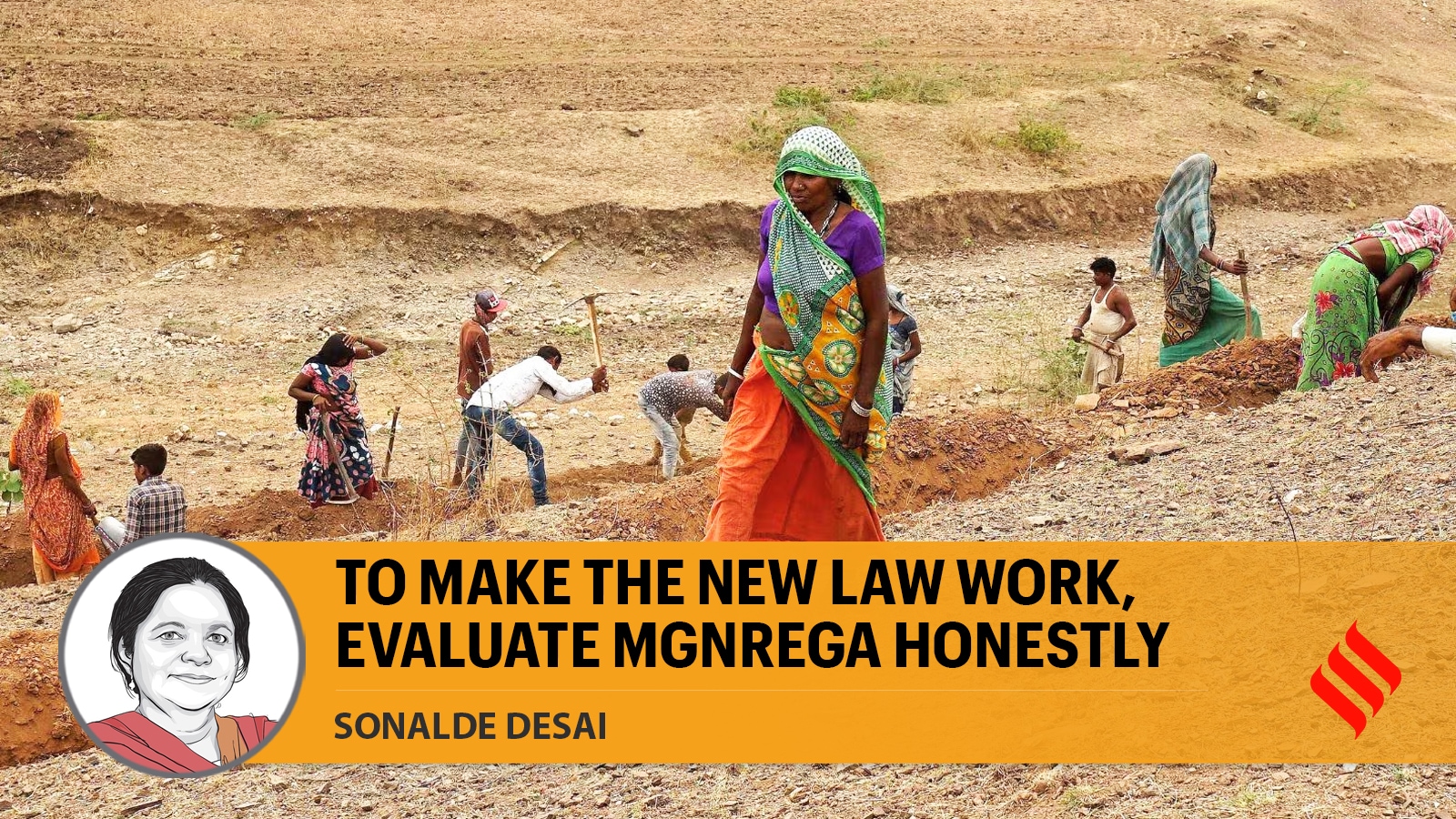
The impulse that led to the passing of MGNREGA celebrated the spirit of inclusive development. However, the engineering that rendered the spirit behind MGNREGA into functioning machinery requires repairs and unclogging. Unless we recognise both achievements and challenges facing MGNREGA, it will be difficult to repair it, and this omission will continue to haunt both the present programme as well as its replacement, VB-G RAM G.How and where has MGNREGA succeeded? Its primary success lies in universal access that relies on self-targeting, reducing local bottlenecks. Making manual work available regardless of household economic status removes gatekeeping by local elites. Over the years, it has provided a safety net to households and employment to women and older Indians who would not easily find other jobs. Studies also suggest that it has been instrumental in increasing rural wages.
Nonetheless, cracks developed in this edifice over the years, reflected in growing inequality between states. In 2011-12, Kerala provided about 3.6 days of work per rural resident, but by 2023-24, the number of days had grown to 11.3. In contrast, UP stagnated with 1.7 days of work in 2011-12 and 1.9 in 2023-24. However, UP’s rural population is considerably poorer, with a monthly per capita expenditure of Rs 3,481 in 2023-24 compared to Rs 6,611 for Kerala. Universal schemes are supposed to be more inclusive of the poor, not less. What happened?

Part of the problem is that, since its inception, neither the UPA nor the NDA allocated sufficient funds for the scheme. Assuming only 50 days of work per rural household at the lowest prevailing wage of Rs 234, to fully fund the scheme would require more than Rs 2,10,000 crore in wages alone. Except for the pandemic years, the Centre’s allocation did not exceed Rs 86,000 crore. Due to a significant shortfall in funds, particularly in the second half of the fiscal year, payments for materials from the Centre were frequently delayed, forcing states to advance their own resources for infrastructure work. This usually benefited richer states. State governance efficiency in navigating the system also played a role. Kerala, for example, was able to spread work evenly throughout the year, whereas nearly 40 per cent of the MGNREGA days in UP were exhausted in the first quarter.
Many states combined other infrastructure activities with MGNREGA. Infrastructure schemes paid for construction materials, and MGNREGA paid for labour. This was a mixed blessing, since district magistrates were under pressure to use MGNREGA to supplement infrastructure activities, even in prosperous districts where local wages were higher than MGNREGA wages and demand for it was low, sometimes resulting in an unholy alliance with contractors. This suggests that if the MGNREGA is to function as a safety net for the poorest, many of whom live in poorer states that face significant administrative challenges, some restructuring is essential.
VB-G RAM G quietly moves away from universal entitlement to targeted benefits. However, would the proposed alternative redress inter-state inequality? Possibly not.
Moving from universal to normative allocation that favours poorer states and poorer districts within a state will create a mechanism that directs funds to those who need them most. However, the changed Centre-state allocation ratio will exacerbate challenges for states unable to meet their share. VB-G RAM G shifts the Centre-state contribution ratio from 90-10 to 60-40 for most states. Poorer states may not be able to meet this commitment. This could be particularly challenging as fiscal space available to states shrinks.
The challenge is to honestly evaluate which features of MGNREGA have stood the test of time and which require recalibration. While the right to employment is a heartwarming concept, it needs a wholehearted commitment of resources. An unfunded mandate leads to perversion of the original intent, making it only a “right” in name that often excludes the poor.
The writer is professor, NCAER and University of Maryland. Views are personal
