

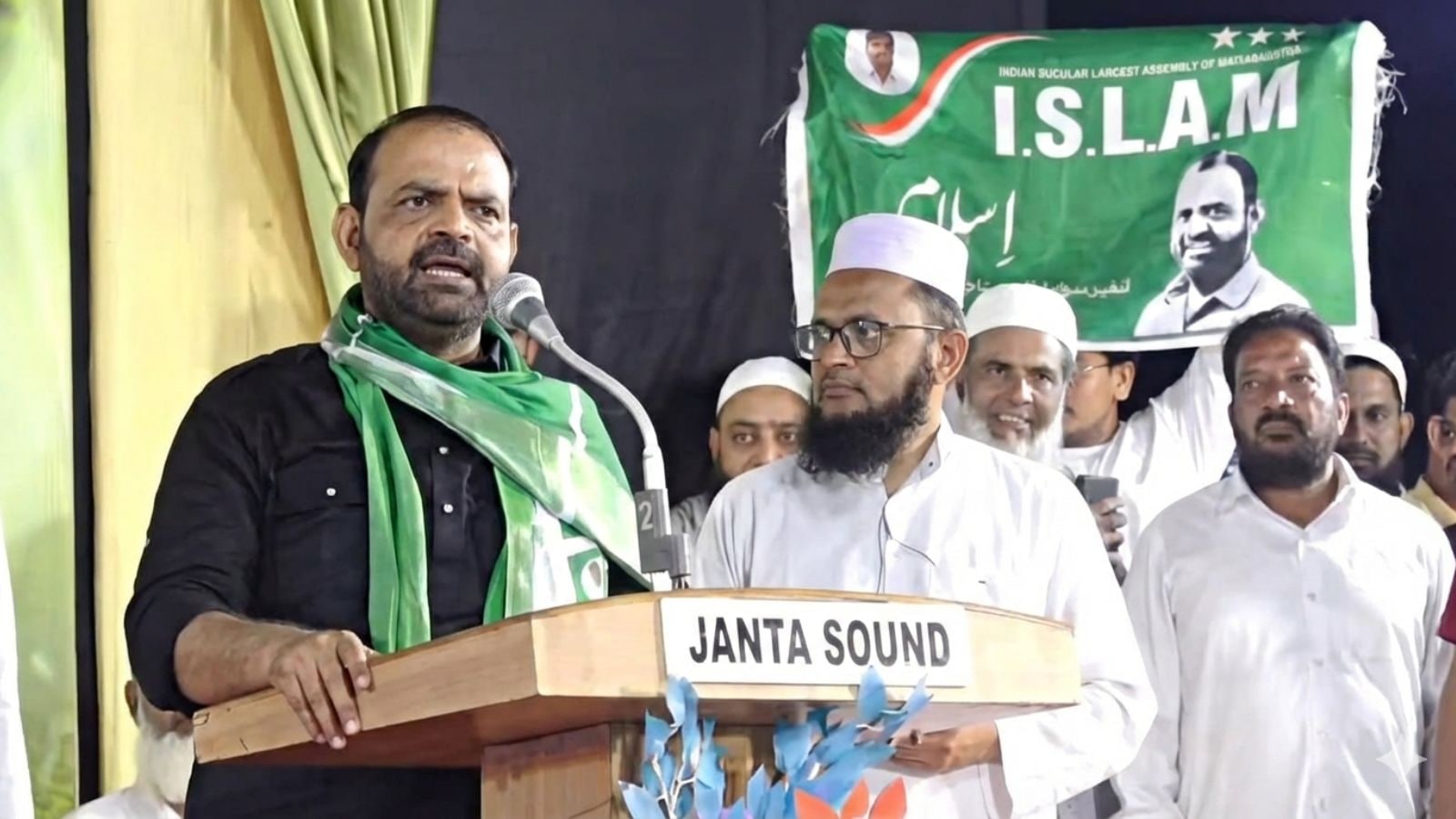
Malegaon, one of Maharashtra’s most politically distinct cities, has once again charted its own course. In the recently concluded municipal Corporation elections, the city delivered a clear verdict in favour of a new political formation, ISLAM, floated by former Congress MLA Shaikh Asif, which emerged as the single-largest party in the 84-member civic body.
ISLAM, short for Indian Secular Largest Assembly of Maharashtra, won 35 seats and, along with its ally Samajwadi Party, which secured five, crossed the halfway mark. The alliance is now set to install its mayor, making Malegaon one of the few cities in the state where power rests outside both the ruling Mahayuti and the Opposition Maha Vikas Aghadi.

A city shaped by minority politics
Muslims make up 11.56% of Maharashtra’s population, but in Malegaon, the figure rises to nearly 78%, giving the community a decisive role in the city’s politics. Malegaon Central is among the rare Assembly constituencies in the state to have consistently elected a Muslim MLA since Independence.
For decades, politics here revolved around two influential families, that of socialist leader Nihal Ahmed, who represented Malegaon five times as a Janata Dal MLA, and Shaikh Rasheed, the late Congress leader who won the seat twice. Control of civic and Assembly politics alternated between these families, even as party loyalties shifted.
That balance began to change after the 2006 Malegaon blasts, when a cleric, Mufti Ismail, entered electoral politics. Winning first without the backing of an established party in 2009, Mufti Ismail gradually built a base through his people’s platform, Kaumi Mahaz, and went on to win the Malegaon Central seat for the All India Majlis e Ittehadul Muslimeen in 2019.
Why Shaikh Asif floated ISLAM
Shaikh Asif, son of the late Shaikh Rasheed, entered the Assembly in 2014 on a Congress ticket after serving as Malegaon’s mayor. In 2022, he quit the Congress, citing differences with the state leadership, and briefly aligned with the undivided Nationalist Congress Party before moving away following the split.
Ahead of the Assembly elections in 2024, Asif launched ISLAM, positioning it as a response to what he described as repeated remarks targeting Islam in public discourse. “Since the BJP came to power, there has been a constant attack on Islam through statements. This party has been formed to respond to that,” he said while announcing the outfit.
Despite the attention the new party drew, Asif failed to unseat Mufti Ismail in the Assembly elections. Another contender, Shan e Hind, daughter of Nihal Ahmed and now with the Samajwadi Party (SP), polled around 9,000 votes.
Civic polls and a pragmatic alliance
Malegaon’s politics has long been marked by pragmatic alliances, often cutting across ideological lines. In 2017, the local Congress unit aligned with the Shiv Sena for the mayoral elections.
Drawing on this tradition, Asif allied with the SP, once a rival linked to the Nihal Ahmed family, for the civic polls. The strategy paid off handsomely. ISLAM’s 35 seats and the SP’s five gave the alliance 40 seats, short of an absolute majority but enough to lead the corporation with outside support.
The AIMIM finished with 21 seats, the Shiv Sena 18, and the BJP just two. With indications that the Congress’s three corporators may back Asif, ISLAM is poised to control the mayoralty.
“We are a secular front which has won 40 seats. We are a secular party and three of our corporators are Hindus. We are committed to working for all communities and all sections of society,” Asif said.
New party, familiar faces
While ISLAM’s rise has drawn attention across the state, local observers say it represents continuity as much as change. Even the previous Malegaon Municipal Corporation was dominated by Asif’s family, with his father and mother serving as the last two mayors in the outgoing body.
“This is not really a new political force. These are established political families who know the city well. It is more a case of old players in a new political outfit,” said social activist Aleem Faizee.
