

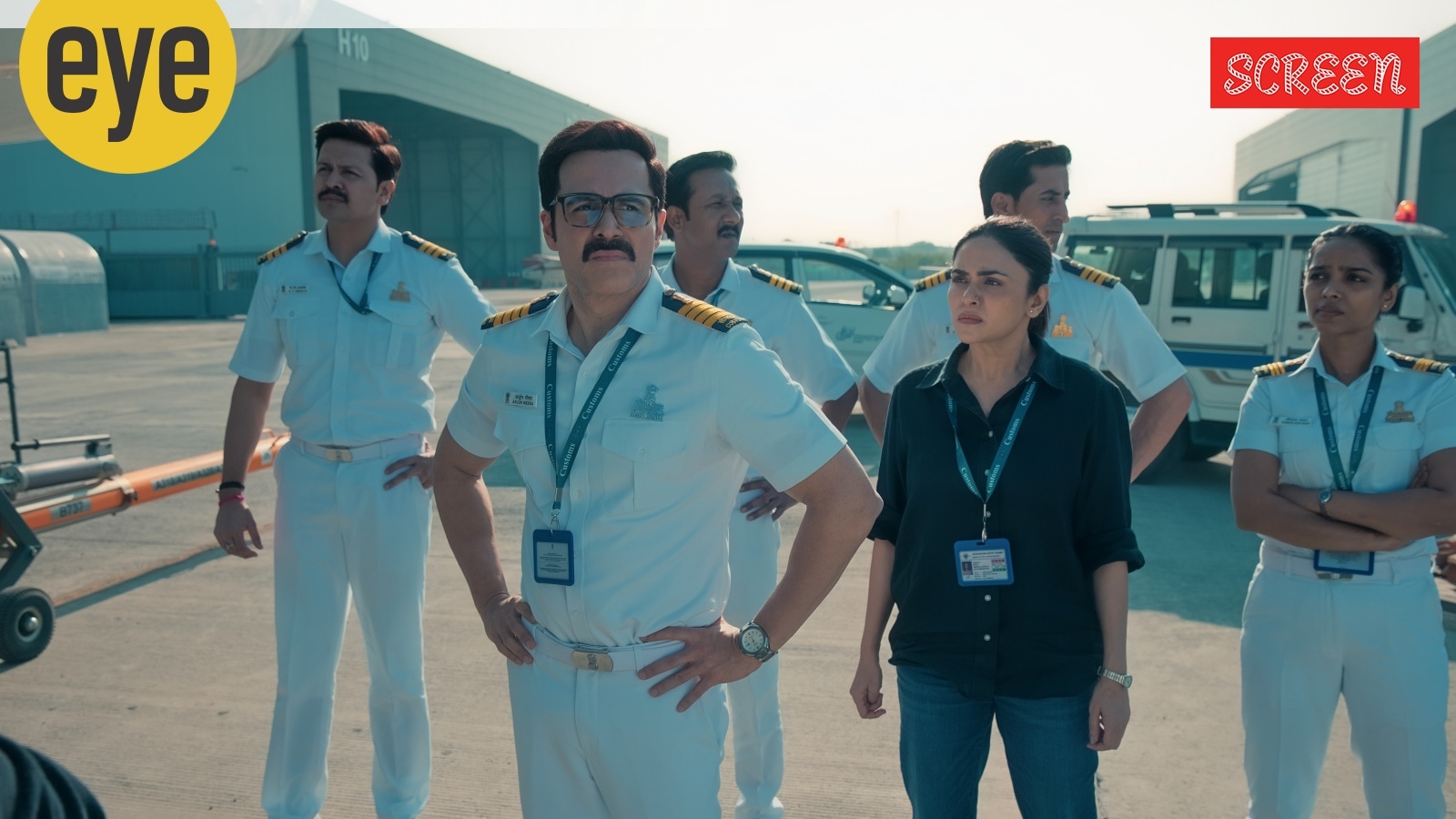
Even as Emraan Hashmi’s brief appearance as himself in The Ba**ds of Bollywood* went viral last year, the actor has continued to make his presence felt on screen with a string of talked-about projects such as Ground Zero (2025), Haq (2025), and the recently released Netflix series Taskaree: The Smuggler’s Web. These roles have not only put the spotlight back on Hashmi but have also connected him with a new generation of viewers, reshaping his on-screen image.
In an interview, Hashmi, who rose to popularity with pulpy entertainers like Murder (2004) and Gangster (2006), speaks about staying relevant to a changing audience, why a script is “like a Bible” to him, and how his recent choices have allowed him to explore his range as an actor. Excerpts:

In the last couple years, we have seen you in a variety of roles.
I don’t take credit for it. I’ve been fortunate that there are great directors and producers who are offering me interesting roles. I’ve had to choose these from that bag of roles because it is important to keep things fresh. So, if you see my trajectory in the past two years, I have played an RTO Inspector in Selfiee (2023); a spy in Tiger 3 (2023); a BSF officer in Ground Zero; a lawyer in Haq; and now a customs officer in Taskaree.
Though you were never completely away from films, are you approaching acting with a different energy now?
I was always there in the game, working and being appreciated for it. But there is a new audience now. People are revisiting my movies. With Haq and now Taskaree, it’s great that they have woken up and taken notice. The fans, who have always been there, are telling them on social media: ‘Why have you woken up so late to Emraan?’ It’s good to be acknowledged for your work.
You have been in the industry as an actor for over two decades now. What changes do you notice?
From being a star, who was boxed into a particular image and that served me well then, I have maneuvered my career into roles of substance and characters that have more meat. So, it’s a little bit by design. It’s also because of the people I’ve collaborated with and their faith in me. With every decade, the audience changes. Therein comes the difficult part of making yourself relevant to a new audience. The only way to stay relevant is by tapping into subjects and films that deliver that fresh experience. So, I’ve always tried to do that. Some films do well. Some films don’t. But it’s important to try and give your audience something new as well as tap into a new audience base.
You have represented a certain kind of manliness in your earlier movies. What’s your take on hyper-masculinity being portrayed in Indian films today?
I’ve played morally ambiguous characters for a large part of my career. It has just been my trajectory and it’s been an interesting one. It’s got to do with people offering me those roles and my choices. As an actor I didn’t want to go down a stereotypical way. The trend right now is becoming more skewed towards hyper masculinity, which is working in favour of theatrical business. You can have room to experiment in OTT, but it’s become a little more contained when you talk about the theatrical business.
Do you want to break away from that?
I want to do diverse roles and want to take up ones that create some impact on screen. It depends on the script, director, producer and what they’re pitching to you.
What’s it about acting that still fascinates you?
It’s the journey of reading something on paper, breathing life into a character and living that character out. The more distinct a character is from your personality, the more challenging and fun it is to play it out on screen. It involves getting into someone else’s headspace. You get to play a hundred different lives.
Is there a process that you follow when you work on a new project
First of all, a script is like a Bible for me. I treat every film like a stage play. I come fully prepared on the set. Knowing how the writer and director envision it helps. After you internalise a character, the real work starts on the set. I like to rehearse before I come to a film set. Once I’m on a film set, I enjoy performing without worrying about my lines.
Story continues below this ad
You are known for your swag. What is your perception regarding it?
Swag is not something that you can work on. Yes, you can learn how to talk better or to dress better. But there’s something that’s intangible about having swag or charisma. It’s either there or it’s not. Swag and heroism are something that the audience has always celebrated. It is like the icing on the cake for any actor who has that.
Do you aspire to become a director like many others in your extended family?
I have no particular goal right now. As a director, you need to detach from the world of acting. You need to research, work with your writer and then shoot. It’s a commitment of at least two years. I’ve still got a lot of acting left in me. But then, never say never.

© The Indian Express Pvt Ltd
