

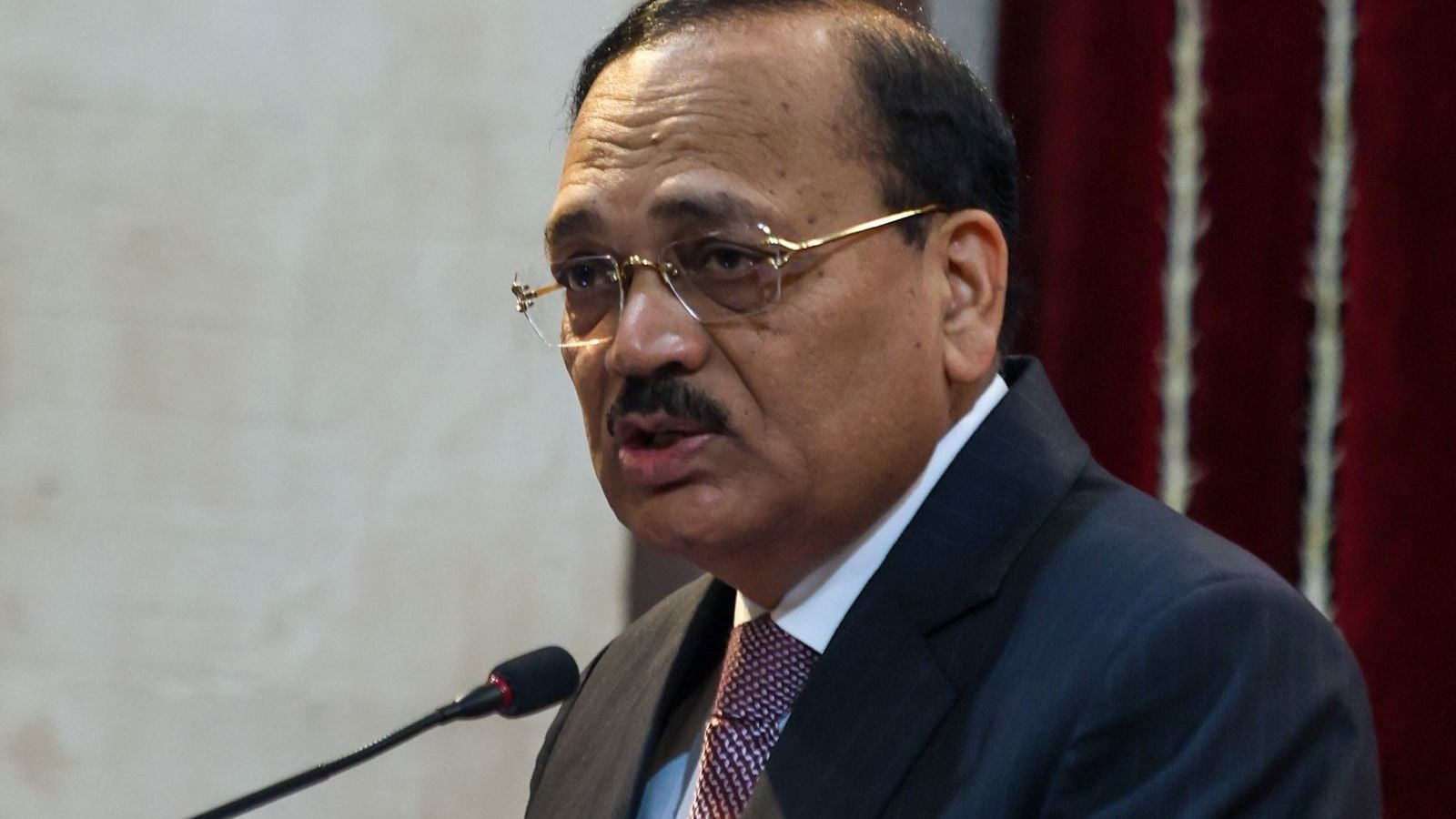
Calling High Courts the “primary sentinels”, Chief Justice of India Surya Kant on Saturday said their future depends on their ability to act as “proactive courts” and urged them to “not only wait for the knock at the door but also… remain alert to systemic failures in the rule of law”.
The CJI also underlined the “power of interim relief”, and said that “justice delayed is notjust justice denied, it is justice destroyed”.
The CJI was speaking on the topic ‘The sentinel on qui vive: Article 226 as the guardian of access to justice’ at the Fali Nariman Memorial Lecture. Article 226 of the Constitution grants powers to the High Courts to issue directions, including writs, to any person, authority or government to enforce fundamental rights of citizens.
“When the law is silent, the sentinel does not remain mute. We have seen High Courts issue temporary directions to protect the environment, ensure the dignity of prisoners, and secure the rights of migrant workers during national crises. This is the principle of gap filling: the idea that the court’s writ must run wherever there is a void in justice,” the CJI said.
“The High Court is the primary sentinel, guarding the doorstep of the ordinary citizen, ensuring that the rule of law is not a distant Delhi-centric concept but a localised, breathing reality,” he added.
“Perhaps the most critical, yet overlooked, facet of access provided by Article 226 is the power of interim relief. For a small farmer whose land is being seized or a student wrongly denied admission, justice delayed is not just justice denied; it is justice destroyed. The High Court’s ability to stay an executive action at the very first hearing is often the only real ‘access’ the citizen ever experiences,” the CJI said.
“The future of the High Court depends on its ability to act as a proactive court. The court must not only wait for the knock at the door… but it also must remain alert to systemic failures in the rule of law… The goal must be to transform ‘access to justice’ from a passive right into an active, state-guaranteed service,” he added.
Story continues below this ad
The CJI also said that High Courts “must preserve their powers and also evolve their practice”, with the first frontier being the “digital gateway”. To ensure equality through technology in day-to-day court functioning, he urged courts to move beyond viewing virtual hearings as “emergency measures” and embrace them as a “permanent pillar of accessibility”.
“In an era where a citizen’s rights are as likely to be infringed by an automated system or by burgeoning technology, our courts must adapt accordingly… It is a well-known truism that advancement in technology is further deepening the economic divide between the haves and the have-nots. Thus, technology must instead be harnessed towards ensuring judicial equality,” the CJI said.
He said a tribal woman in Gadchiroli or a worker in a remote corner of the Northeast should not have to travel far to seek justice and there should be “accessibility and affordability”. The CJI further said that the gap between the rights of the citizens and the available remedies should be filled through “procedural innovation”.
Citing Fali Nariman’s “unwavering commitment to constitutional morality” during the Emergency, the CJI said: “The declaration of the Emergency in 1975 tested the very soul of our democracy.”
Story continues below this ad
He also emphasised that the country’s “constitutional journey cannot be understood without first recalling the long shadows cast by colonial rule and the fact that for nearly two centuries, our people lived under the laws that were often instruments of control rather than guardians of freedom.”
“Civil liberties were not merely neglected; they were deliberately denied. The voice of the Indian citizen was muted by ordinances, censorship, preventive detention, and laws that prioritised imperial convenience over human dignity,” he said.
The suppression of liberties through colonial legislation left an indelible lesson: freedom without the means to enforce it is fragile, and rights without remedies are hollow, the CJI said.
Meanwhile, the Bombay High Court also felicitated the CJI on his elevation. Responding to appeals from Supreme Court Justice Dipankar Datta (former Bombay High Court Chief Justice) and Deputy Chief Ministers Eknath Shinde and Ajit Pawar, who were present at the event, the CJI said he would examine the issue of making the Bombay High Court’s Kolhapur Circuit Bench a permanent bench and communicate with the authorities concerned. “From the Supreme Court, there shall be a consistent support to their cause,” he said.
