

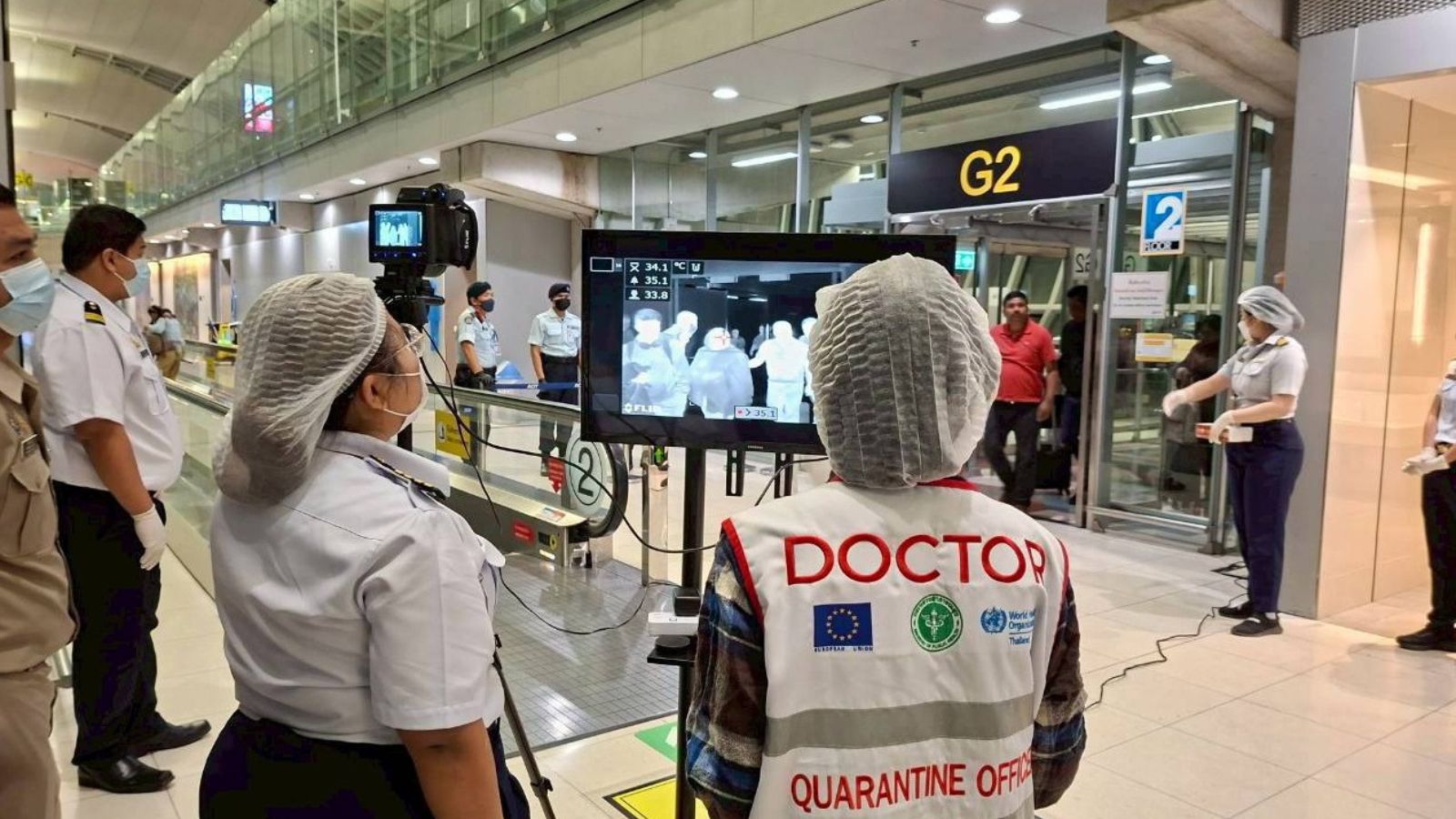
AS AIRPORTS in Thailand, Taiwan and Nepal reintroduced Covid-style health checks following reports of Nipah cases in India, the Union Health Ministry on Tuesday clarified that only two cases had been reported in West Bengal since last December. All the contacts linked to them have tested negative.
“It has been observed that speculative and incorrect figures regarding Nipah Virus Disease (NiVD) cases are being circulated in certain sections of the media. In this context, it is clarified that, as per reports received from the National Centre for Disease Control (NCDC), only two confirmed cases of Nipah Virus Disease have been reported from West Bengal from December last year till date,” the ministry note said, adding that the Centre, in close coordination with the West Bengal government, has initiated prompt and comprehensive public health measures in accordance with established protocols.

The ministry said the public and media should “rely only on verified information released by official sources and refrain from spreading unverified or speculative reports”.
It further clarified that a total of 196 contacts linked to the confirmed cases had been identified, traced, monitored and tested. “All traced contacts have been found asymptomatic and have tested negative for Nipah Virus Disease. Enhanced surveillance, laboratory testing and field investigations were undertaken through coordinated efforts of Central and State health agencies, which ensured timely containment of the cases,” it said.
Promising treatment
In latest research, monoclonal antibodies have emerged as a promising treatment for Nipah infection, designed to block the virus from entering host cells by targeting its F protein (fusion protein) or G protein (glycoprotein), with certain candidates like MBP1F5 and m102.4 showing success in preclinical models, including preventing lethal infections in non-human primates. However, ongoing research and human trials are needed for widespread availability.
Nipah is a viral infection that mainly affects animals such as bats, pigs, dogs and horses, but can infect humans who come in contact with the infected animals. It can be transmitted through food items such as fruits or date palm sap which have been contaminated with bodily fluids of an infected animal, usually bats. Nipah usually presents as fever and swelling of the brain and can prove fatal. However, the disease is not as transmissible as Covid-19 or influenza and is unlikely to cause a huge number of infections in a short time.
As for preparedness, the government has a modest reserve of monoclonal antibodies that it had imported from Australia during the Nipah outbreak in Kerala last year. Though the monoclonal antibody hasn’t gone through human trials to prove effectiveness against Nipah, the government has allowed its use on compassionate grounds. There is no effective treatment available for the disease which kills 40% to 75% of those infected.
An infected person has to be administered two doses of monoclonal antibodies. It has to be done in the early stages of the disease as it does not work once a person already has brain swelling called encephalitis.


© The Indian Express Pvt Ltd
