

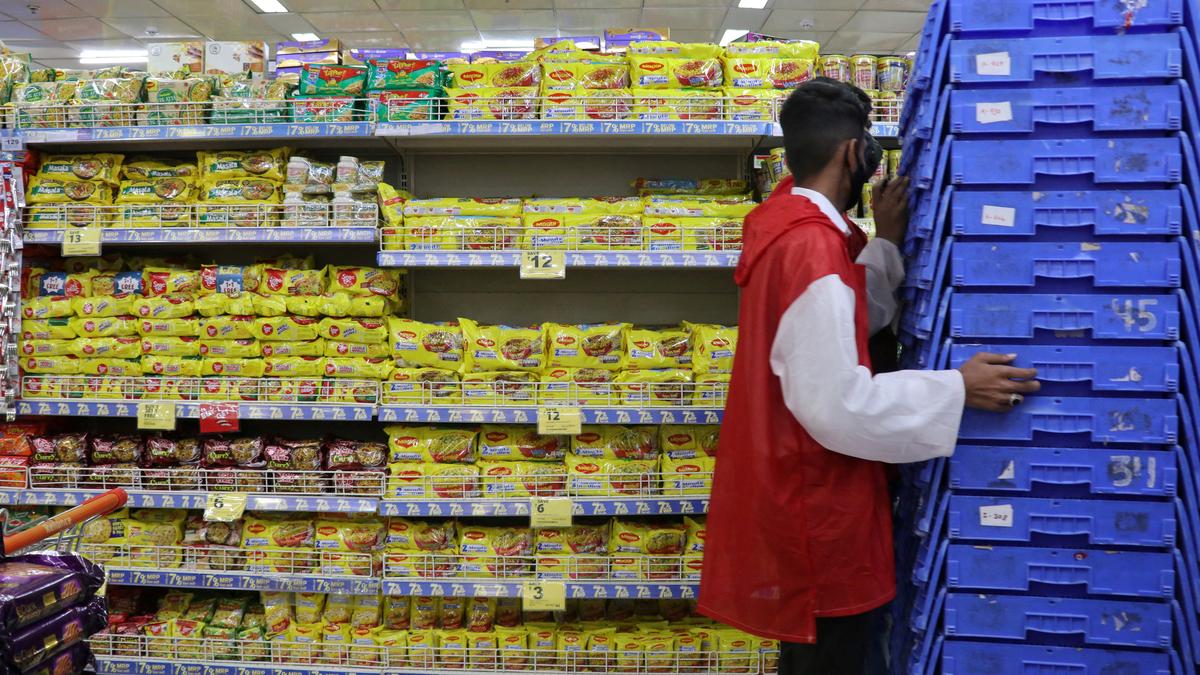
Representative image.
| Photo Credit: Reuters
Noting the increased ultra-processed foods (UPFs) in Indians’diet, the Economic Survey 2026-27 suggestsa marketingbanonsuch products from 6 a.m. to 11 p.m. for all media.Tabled in the Lok Sabha by Finance Minister Nirmala Sitharaman on Thursday (January 29, 2026), the Economic Survey alsoruescelebrity endorsement, emotional selling, and marketing tactics used by companies producing these UPFs as a major challenge to tackle obesity.
The survey calls for filling policy gaps inAdvertisementCode regarding UPFs, pointing out that whilemisleading, unverified, or unhealthy advertisements are prohibited, the term ‘misleading’ isundefined, leaving it tointerpretation. Similarly, the Centre’s guidelinesprohibitadsfromexaggerating healthbenefits, butlack clear nutrient thresholds or a framework foridentifyingmisleading claims, notes the Survey.

In a bid to tackle these marketing challenges, the Survey has suggested enforcing restrictions on the marketing of infant and toddler milk and beverages, replacing theIndian Nutrition Rating (or Health Star Rating) system with warning labels and restricting marketing to children. It also suggests action on school and college sponsorship of events by UPF manufacturersand a ‘nutrient-based tax’ on these food products. If UPFs exceedthresholdsfor sugar, salt, or fat, the Survey proposes to levy the highest slab of GST and a surcharge.
The Survey urges the Food Safety and Standards Authority of India (FSSAI) to bring UPFs under regulation with a clear definition and standards by integrating it into the existing frameworks, rather than replacing them. It also calls for the raise awareness about the adverse effects of consuming UPFs through targeted campaigns aimed at schools and colleges.

Asper a Lancet study, India’s UPF sales hasby more than 150% from 2009 to 2023 – retail sales have grown from $0.9 billionin 2006 to$38 billionin 2019. During the same time, India haswitnesseda doubling in obesity among men and women, notes the Survey. The 2019-21 National Family Health Survey (NFHS) reports that 24% of Indian women and 23%of Indian men are overweight or obese. Among children,over 3.3 crorewereestimatesas obese in 2019 and this figure is projected to reach 8.3 crore by 2035.
The Economic Survey projects that India’s GDP will growin the range of 6.8 to 7.2% in 2026-27 while domestic inflationremainslow at 1.7% for April-December 2025.After thisprecusorto India’s financial health,Ms. Sitharaman is scheduled to present her ninth consecutive budget speech – a first on Sunday (February 1, 2026) to a joint session of Parliament.
Published – January 29, 2026 08:41 pm IST
