

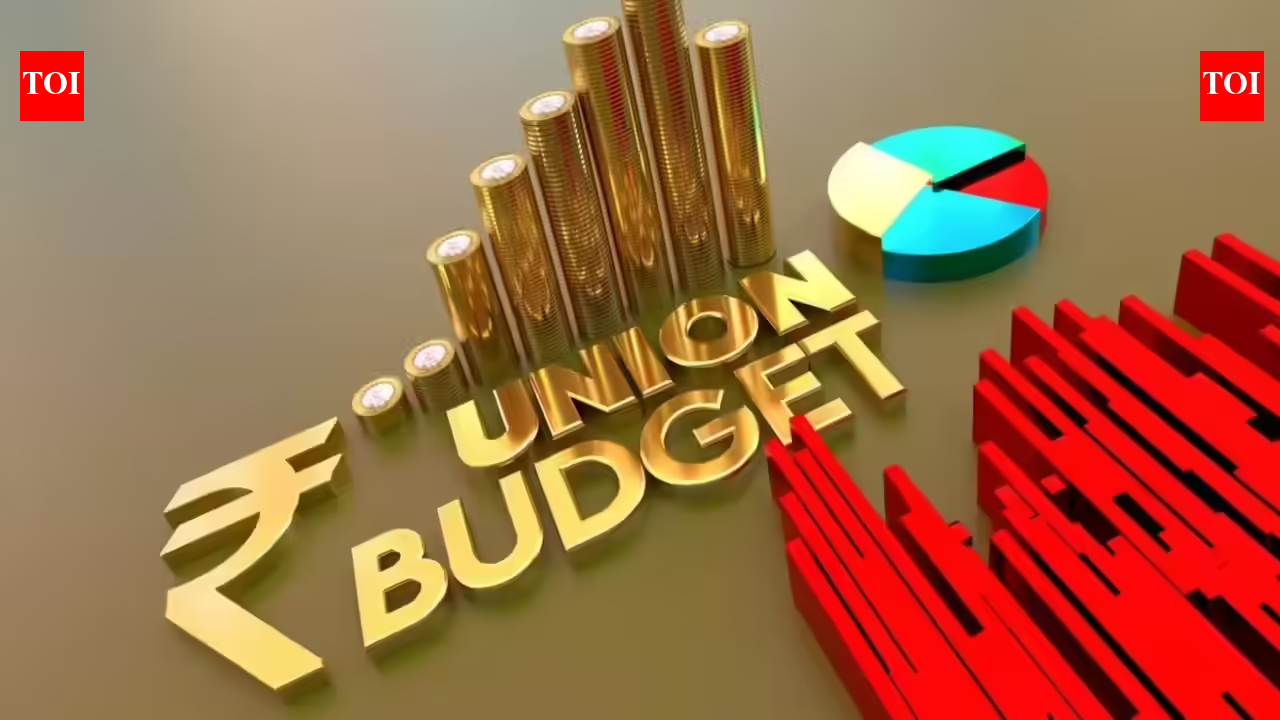
The Union Budget comes with a vocabulary that can be confusing even for regular readers. Many terms are technical, and are used repeatedly across Budget documents, tables and debates. The “Budget at a Glance” table presents a consolidated snapshot of the Union Government’s finances for a financial year, showing actuals, Budget Estimates and Revised Estimates across receipts, expenditure and deficits. Each line item follows a defined accounting and constitutional framework. Below is a detailed explanation of the key terms, grouped for clarity.Estimate rekated terms
- Budget Estimates (BE): These are the government’s projections of receipts and expenditure for the next financial year, presented in the Budget.
- Revised Estimates (RE): Mid-year revisions of Budget Estimates, based on actual trends in receipts and spending. Revised Estimates are not voted by Parliament and do not by themselves authorise additional expenditure.
- Actuals / Accounts: Final audited figures of receipts and expenditure for a completed financial year, as recorded in government accounts.
Also Read: Budget 2026 Live Updates
Taxes and revenue
- Revenue receipts: Income that does not create any liability or reduce assets. Revenue receipts are used to meet routine government expenditure and consist of tax and non-tax revenue.
- Tax revenue (net to Centre) : The Centre’s share of gross tax collections after transferring the states’ share as recommended by the Finance Commission. It includes income tax, corporate tax, GST, customs and excise.
- Non-tax revenue: Income earned without taxation, such as dividends from public sector enterprises and the RBI, interest receipts, fees, fines and spectrum charges.
- Direct taxes: Taxes levied directly on individuals and entities, such as income tax and corporate tax.
- Indirect taxes: Taxes imposed on goods and services and paid by consumers at the point of purchase, including customs duty and excise duty.
- Customs duty:A tax charged on goods imported into or exported from India, generally passed on to consumers.
Also Read: Income Tax Budget 2026
Capital receipts and borrowing
- Capital receipts: Receipts that either create a liability for the government or reduce its financial assets. These include borrowings, loan recoveries and disinvestment proceeds.
- Recovery of loans: Repayments received from states, Union Territories, public sector enterprises and other entities to which the Centre had earlier extended loans.
- Other receipts: Mainly proceeds from disinvestment and asset monetisation.
- Borrowings and other liabilities: Funds raised by the government through market borrowings and other instruments to bridge the gap between receipts and expenditure.
Government expenditure
- Total expenditure: The sum of revenue expenditure and capital expenditure incurred by the Central Government.
- Revenue expenditure / Expenditure on revenue account: Spending that does not result in creation of assets, such as salaries, pensions, subsidies, interest payments and grants.
- Capital expenditure / Expenditure on capital account: Spending that leads to creation of assets or reduction of liabilities, such as infrastructure projects, loans to states and equity investments.
- Grants-in-aid for creation of capital assets: Grants given to states or institutions for asset creation. Though asset-forming, these are classified as revenue expenditure under accounting rules.
- Effective capital expenditure: Capital expenditure plus grants-in-aid given for creation of capital assets. This provides a consolidated view of asset-creating expenditure.
Deficits and fiscal indicators
- Revenue deficit: The excess of revenue expenditure over revenue receipts. It indicates the extent to which routine expenditure is financed through borrowing.
- Effective revenue deficit: Revenue deficit minus grants for creation of capital assets. It reflects the portion of revenue deficit that does not result in asset creation.
- Fiscal deficit: The gap between total expenditure and total non-borrowed receipts. It represents the government’s total borrowing requirement for the year.
- Primary deficit: Fiscal deficit minus interest payments. It shows the borrowing requirement excluding servicing of past debt.
Policy tools
- Fiscal policy: Government decisions on taxation, expenditure and borrowing aimed at influencing economic growth, inflation and employment.
- Monetary policy: Actions taken by the Reserve Bank of India to regulate money supply and interest rates.
- Inflation: A sustained increase in the general level of prices in the economy.
Parliamentary approvals and controls
- Finance Bill: The Bill introduced after the Budget speech that gives legal effect to tax proposals announced in the Budget.
- Vote on Account: Temporary approval granted by Parliament to meet government expenditure for part of the year until the full Budget is passed.
- Excess grant: Parliamentary approval required when expenditure exceeds the amount originally authorised.
- Re-appropriation: Transfer of savings from one head of expenditure to another within the same grant, approved by a competent authority.
Funds and government accounts
- Consolidated Fund of India: The main government account into which all revenues, borrowings and loan recoveries flow. No money can be spent from this fund without parliamentary approval.
- Contingency Fund of India: A fund placed at the disposal of the President to meet urgent, unforeseen expenditure, pending parliamentary approval.
- Public Account of India: Accounts where the government acts as a banker, such as provident funds and small savings. The money does not belong to the government and withdrawals do not require parliamentary approval.
Budget oversight and accountability
- Outcome Budget / Output–Outcome Monitoring Framework: Documents that assess how ministries used Budget allocations and whether intended outputs and outcomes were achieved.
- Guillotine: The process by which all pending Demands for Grants are put to vote together once the allotted discussion time ends in Parliament.
- Cut motions: Motions moved by MPs to seek reduction in Demands for Grants on grounds of economy, policy disagreement or to raise grievances.
- Disinvestment: Sale of government shareholding in public sector undertakings to raise resources.
Why this glossary matters
Budget terms define how money is raised, spent, approved, borrowed and audited. Understanding the difference between revenue and capital spending, fiscal and primary deficit, or Consolidated Fund and Public Account helps readers interpret Budget numbers accurately — beyond headline announcements.
