

5 min readFeb 8, 2026 06:38 AM IST
First published on: Feb 7, 2026 at 08:00 PM IST
India’s interim trade deal with the United States marks a clear inflection point in New Delhi’s engagement with Washington. It decisively breaks from the defensive instincts that long shaped India’s negotiations with America and positions it well to navigate the emerging geo-economic contestations of the world with greater confidence.
Moving beyond the old anxieties that framed every engagement with the US as a threat to sovereignty or strategic autonomy, the agreement reflects a more assured India, willing to operate in a complex global economic order on the basis of mutual benefit. India’s negotiating culture is finally catching up with its growing economic weight and geopolitical salience.
As the political class and commentariat pore over the details, the most striking feature of the debate is that it is not really about the merits of the agreement. Instead, it is about India’s evolving relationship with the United States itself.

That an accord with Washington attracts far more scrutiny than similar deals with the UK or Europe is hardly surprising. Had Delhi concluded a comparable agreement with Moscow—imagining for a moment that Russia had a large economy—or with a Beijing willing to grant meaningful market access, and wrapped it in the rhetoric of multipolarity, the domestic response would likely have been uncritical applause, with little interest in the fine print.
Yet, neither Russia nor China offers a serious alternative to economic engagement with the US and Europe. India exports barely $5 billion worth of goods to Russia and around $15 billion to China, compared to nearly $80 billion each to the US and Europe.
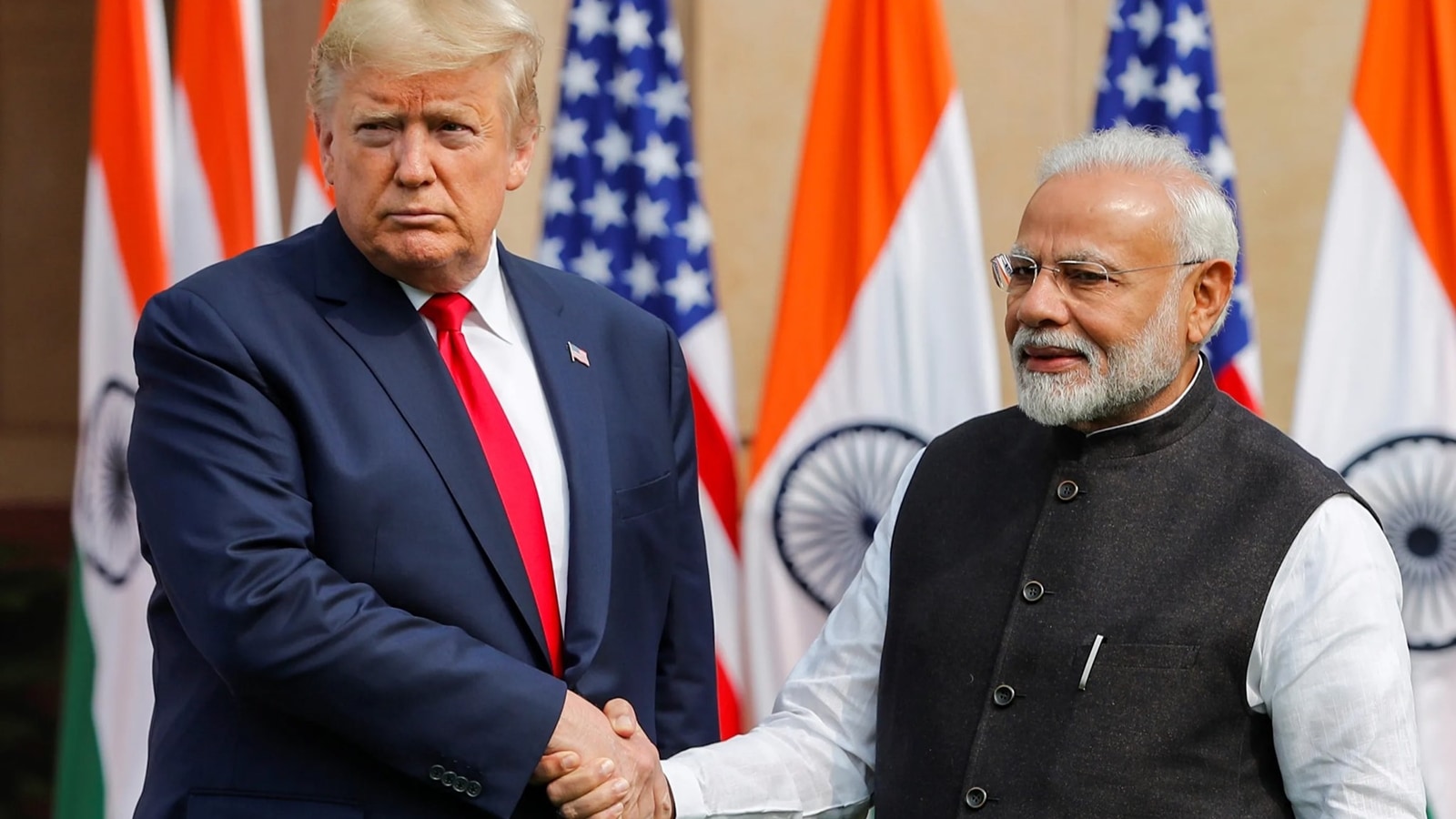
Still, elite discomfort persists — not with the terms of the agreement, but with the identity of India’s partner. Fear of American arm-twisting, deeply embedded in India’s postcolonial political culture, had begun to ebb as bilateral ties expanded over the last two decades. That progress was interrupted amid US President Donald Trump’s rough-and-ready approach to trade talks with India.
The White House’s approval of a balanced deal, whose broad outlines had been on Trump’s desk for months, signals a more pragmatic turn in Washington’s approach. As economic benefits begin to accrue, India’s own exaggerated anxieties about doing business with the US are likely to diminish.
A second major shift lies in the NDA government’s more confident handling of negotiations, in stark contrast to the UPA’s struggles two decades ago over the civil nuclear initiative. That agreement aimed to end India’s three-decade isolation from global atomic commerce. But instead of celebrating a strategic breakthrough, the UPA found itself besieged by an opportunistic compact between the BJP and the CPM, determined to bring down the government.
More damaging than the political theatrics of Left and Right was the Congress leadership’s own timidity. Without Prime Minister Manmohan Singh’s threat to resign, the party seemed prepared to walk away from the nuclear deal—consigning India to more decades in the nuclear doghouse.
The discourse at the time conflated engagement with the US with surrender of India’s “strategic autonomy”; critics warned of India becoming America’s “vassal”. Two decades on, that hysteria stands exposed: India has not bought a single American nuclear reactor, while its only nuclear purchases remain from Russia.
This establishment neurosis — turning every transaction with Washington into a morality play — now resurfaces in debates over India’s imports of discounted Russian oil. Buying cheaper Russian crude after the Ukraine war was commercial pragmatism; future decisions must be equally pragmatic, rooted in a clear assessment of India’s broader economic interests.
Rather than a litmus test of autonomy, the issue of Russian oil should open a deeper India-US conversation on the future of global energy markets. With the US now a major hydrocarbons exporter and India among the world’s largest importers, energy geo-economics must become a core element of bilateral dialogue.
Third, the new trade agreements with the US and Europe reflect India’s effort to reposition itself in a rapidly changing global economic order. If the 1990s reforms helped India adjust to economic globalisation, today’s world is defined by intense geo-economic competition — reconfigured global manufacturing supply chains, competing technology standards, and a fierce contest for access to critical natural resources.
But Delhi’s negotiating culture has long been shaped by the peculiar idea that India’s opening position must also be its final one — an approach that reduces flexibility and often leaves India at the margins of global rule-making. Trade negotiations, by definition, involve give and take but the public discourse has long focused only on what India has “given away”, ignoring what it has “gained”. This zero-sum mindset is out of step with trade as a positive-sum game.
By closing the deal with the US — and defending it without diffidence — Delhi signals that India has emerged as a confident negotiator and a purposeful interlocutor.
C Raja Mohan is a contributing editor on international affairs for The Indian Express
