

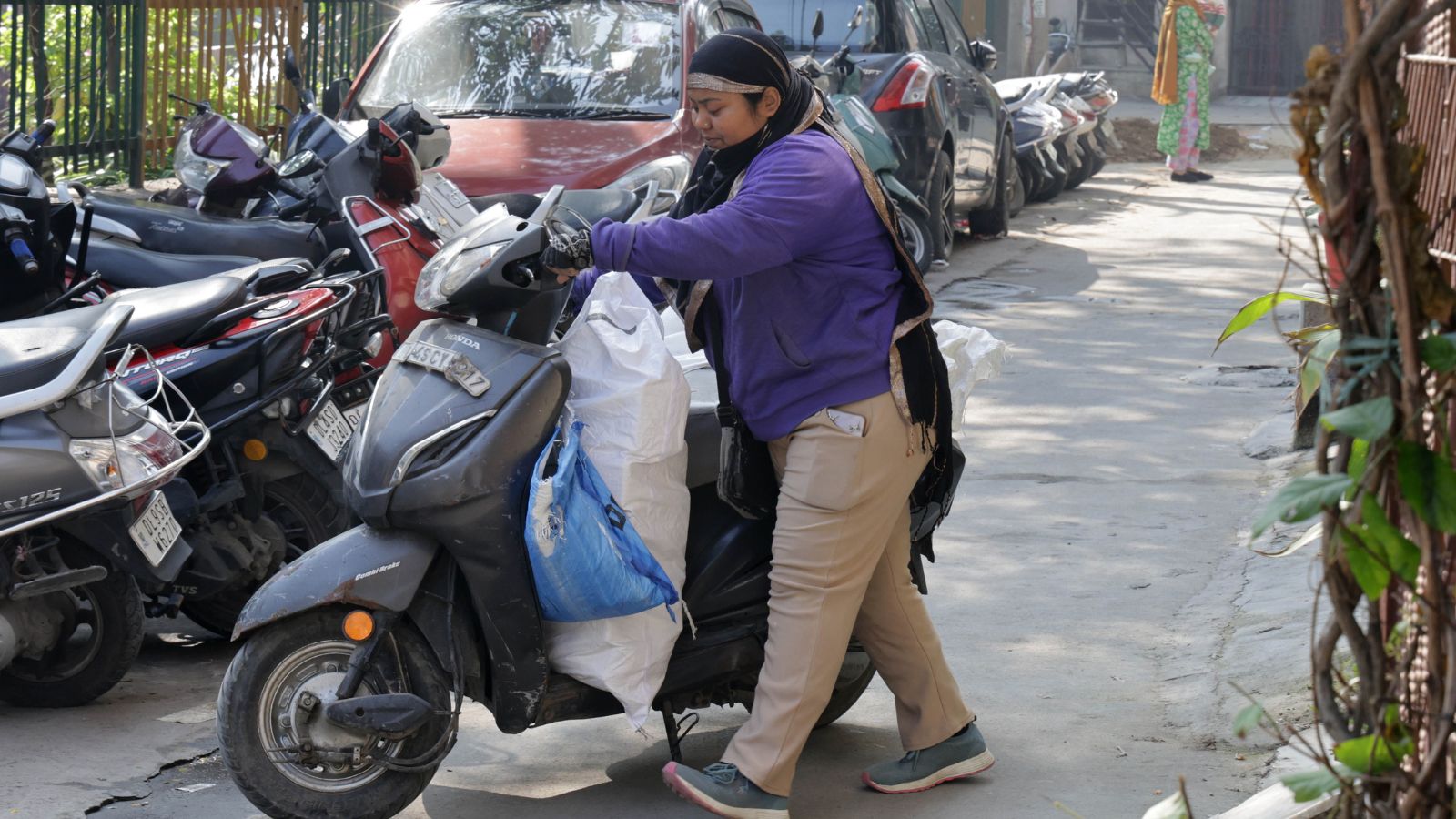
Gig and platform work was estimated to support 1.2 crore people as of end-2024-25, and this number is estimated to double by 2030. India remains a global outlier where quick commerce, the gruelling “10-minute delivery” model, has not only survived but thrived.
Quick commerce works in India’s dense neighbourhoods with tight storage spaces, the preference of people for fresh purchases and their habit, often dictated by lower disposable incomes, of buying small quantities, according to research by J M Financials.
Yet, the recent strikes by gig worker unions, particularly on Christmas and New Year’s Eve, have catapulted their working conditions into the national conversation. This has also resulted in the central government asking quick commerce companies to remove the 10-minute delivery deadline.
The Indian Express spoke to four quick commerce workers in different parts of Delhi — east and west, tony and lower-income — about their lives and livelihoods. Their stories, playing out in dark stores, over bumpy rides in narrow lanes, and trudging up and down staircases of residential buildings, reveal the many faces of the gig economy.
For some, this job is a stopgap, for others, a lifeline. For many, it is both freedom and uncertainty at once. In a country with endemic unemployment and underemployment, platform work has created new opportunities. But as more people enter the system without strong mechanisms for collective bargaining or social protection, frictions are increasing, and the demands for regulation are growing louder.
Queries to Blinkit and Zepto did not elicit a response.
38-year-old man
Laxmi Nagar, East Delhi
The 38-year-old man who declines to give his name because he is not sure “who will think what” of his story, leans on his bike outside a Blinkit dark store. A siren on his phone goes off. An order — a single packet of Maggi — has been assigned.
Story continues below this ad
He plunges into traffic, taking the wrong way on a main road for half a kilometre before entering a maze of lanes. After riding for seven minutes and making a call to the customer on the third floor, he completes the 3.6-km round trip, for which he earns Rs 20.21. He knows this area well enough to not need the map on his mobile phone that most delivery executives would be lost without. In some cases, he can predict which customer will meet him on the ground floor and which one will make him climb four storeys. “Pairon mein dard hota jaata hai, upar-neeche kar kar ke, bike chalate-rokte pure din (My legs hurt going up and down stairs, riding the bike all day),” he says.
Back at the store, another order waits — a packet of puja wicks this time. He reaches the address, but the customer says he’s at the temple in the next street. This is a 4-km trip, and he earns Rs 21.43. The 38-year-old turned to gig work late in life, after his textile business collapsed in 2022. When he signed up on the app, he was promised a monthly income of Rs 25,000-30,000. In a widely discussed post on X early this year, Deepinder Goyal, the founder of the company that owns both Zomato and Blinkit, said that in 2025, average earnings per hour of delivery workers were Rs. 102, an almost 11% growth from Rs. 92 in 2024.
The numbers on the 38-year-old’s app, however, show smaller earnings. He made Rs 16,477 last August after working for 234 hours — that is, a little less than eight hours daily, for which he earned Rs 70 per hour. In September, October, and November, his monthly earnings were about Rs 15,000 on average. That matches with what the Economic Survey for 2025-26 noted: “About 40 per cent of gig workers [in India] report earnings below ₹15,000 per month.”
Still, the 38-year-old is glad he has his own home, a bike, and some savings. “Others, especially youngsters, live on rent and rent their bikes. Every rupee matters to them, and they try to work all the time, completing as many orders as they can.”
Suraj Gautam, 27
Kirti Nagar, West Delhi
Story continues below this ad
Suraj Gautam represents the segment of the gig workforce that is driven by desperation. After his father was disabled and his brother fell ill, Suraj had to move to Delhi from his family home in Ayodhya to repay a Rs-5-lakh debt. The Zepto app promised weekly earnings and the freedom to “be your own boss”.
Suraj worked 15-hour days from 6 am to midnight with only a brief afternoon nap. During the first half of 2025, he pulled in Rs 40,000 a month — but only by hitting every grueling “peak slot” and “surge” incentive. The “Full Week Surge” incentive offers a Rs 3,012 top-up, but only if the worker completes a rigid combination of peak and non-peak shifts.
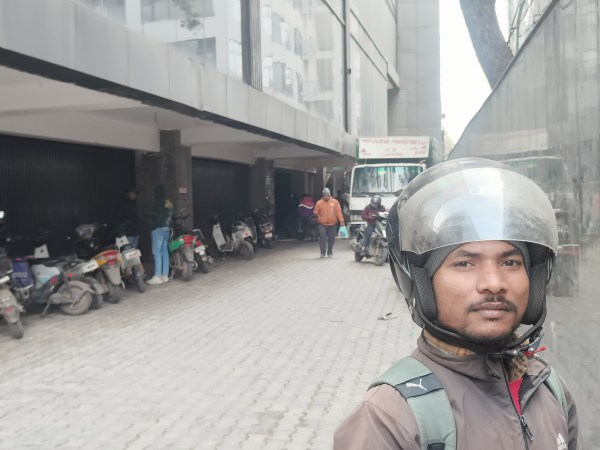 Suraj Gautam
Working with Zepto allowed Suraj to pay off a big part of his family’s loan, but the earnings eventually did not last, he says. His income fell to about Rs 500 per day because “ladke aate hi jaa rahe hain (there’s an oversupply of labour)”, and he was forced to leave. “If workers don’t have the option of choosing their work hours, but have them dictated by algorithms, then it can’t really be termed gig work,” said Balaji Parthasarathy, professor at Indian Institute of Information Technology (IIIT), Bengaluru, and head of IIITB’s Centre for Information Technology and Public Policy.
As for Suraj, who now works for Porter, Zepto has served its purpose. He has a plan: “There is another Rs 2 lakh of the loan left to repay. I am going to work for another year, and then invest in some electrical equipment. I will learn how to fix mobile phones and laptops at a famous class in Kanpur, which costs Rs 35,000. Once I have done that course, I will move to Ayodhya, where there are very few people with those skills.
Anjali Verma, 31
Chanakyapuri, South Delhi
Story continues below this ad
For Anjali, one of the small number of women who work with Blinkit, the gig economy has actually fulfilled its promise of flexibility. She works at a dark store close to a clutch of upscale restaurants in Chanakyapuri, and logs on after her four-year-old son returns from school.
“Only after I have fed my son do I leave my house for work,” she says. How hard she works often depends on the social and family commitments at the time, which she prioritises. “This is what I like about this job. No one can scold me for not coming in for a week if I don’t want to. No one is sitting on my head, demanding work,” she says.
Before starting with Blinkit in January 2025, Anjali had worked at a petrol pump near Shanti Path for almost a decade, earning a monthly salary of Rs 12,000. Following the switch, the tradeoff between earnings and working hours has worked out to her satisfaction. “There, I had fixed working hours every day. I would not be able to take care of my family the way I can now,” she says.
Arif Khan, 38
Sangam Vihar, South Delhi
Story continues below this ad
Arif Khan, 38, is a veteran of the platform economy, having worked for Amazon, Uber Eats, and Urban Company. He is ambitious, dreaming of a future restaurant — and tech-savvy, asking Gemini for suggestions for a logo for the restaurant. Arif’s last gig, one of the longest he has worked anywhere, and among the best, he says, was with Zepto. Gigs work for him because of the “freedom from bosses” and rigid schedules, and because the pay is low elsewhere, he says.
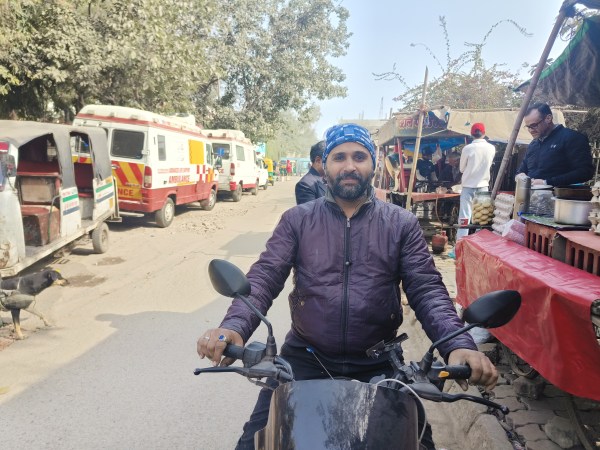 Arif
Arif
Towards the end of his gig with Zepto, he was making Rs 7,000 every week on average every week, Arif said. And yet, Zepto was good only until it lasted. “After I participated in the New Year’s strike, my ID got blocked. The manager said some customers had complained against me,” Arif said. But that is not true, he insisted — “I had delivered every order.”
Saurabh Bhattacharjee, Co-Director, Centre for Labour Studies at NLSIU, Bangalore, argues the government should mandate that these firms maintain some degree of algorithmic transparency.
