

6 min readColomboUpdated: Feb 10, 2026 10:51 PM IST
Every T20 season when international stars assemble for franchise gigs, content creators invariably put across a question. “Whose cover-drive is better: Virat Kohli or Babar Azam. Depending on which side of the border the interviewee is, the answer varies. May be time has come to ask a more pertinent question: Who among Babar and Kohli is more versatile across formats. The answer will be unanimously loaded in favour of the Indian.
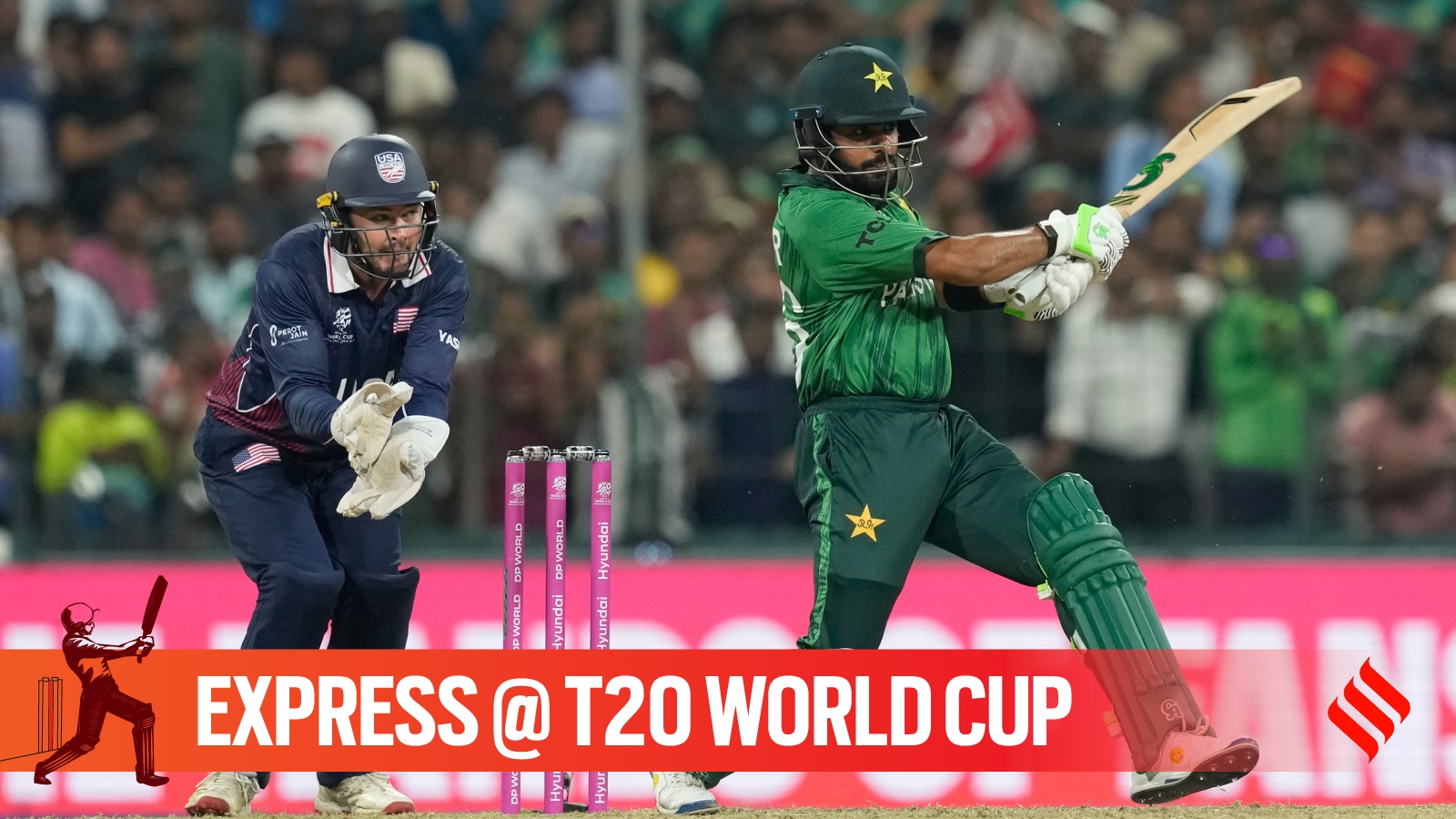
And the reasons for it are mostly provided by Babar himself, who has been striking in T20Is at 128. Take this innings of 46 off 32 against the USA in Pakistan’s second group fixture in the T20 World Cup. If his 15 off 18 against the Netherlands in the opening game put needless pressure on Pakistan before Faheem Ashraf rescued them, the knock on Tuesday, showed how the batsman, often spoken of in the same breath as Kohli, Steve Smith and Kane Williamson is so out of depth in T20s. While the trio are no longer part of their national T20 set-up, in franchise circuit, they all remain batsmen who have evolved into ones who can adapt and change. But Babar? Where does he stand?

It is the question that the whole of Pakistan has been asking, particularly when the more aggressive Fakhar Zaman, who is capable of winning matches on his own, is warming the bench. Before the game against the USA, former Australian captain Ricky Ponting, a T20 coach who swears by intent, and former India coach Ravi Shastri, who has seen the sort of effect Babar’s knock can have on the team, had issued a piece of advice to the Pakistan batsman. Loosely put it was on these lines: “Try to score a boundary off the first five-six deliveries so that it doesn’t put pressure on other batsmen.”
May be at least against the Netherlands, Babar didn’t need to get on the pedal straightaway, but against the USA, he had all the reasons for it. When he walked into bat, Pakistan had 56 on board at the end of the first powerplay. Their openers Saim Ayub and Sahibzada Farhan had done what was needed from them – make full use of the powerplay. The two are clean, crisp strikers, who get into good positions that enable them to have a good swing of the willow. Yet in the first six overs, they had just three singles and a two to show alongside five boundaries and as many sixes. If an opponent like USA can tie them down, then stronger opponents are capable of building pressure through dot deliveries.
Now, back to Babar. The senior pro, he has been made part of this side for his capability to play the anchor role, which in itself has become an outdated concept in T20s. It is what prompted Kohli and Rohit Sharma to change their approach and one that has also seen Smith do it at times in Big Bash. Last month, playing in Big Bash, Smith denied taking a single when Babar was at the other end with the stump mics picking up the Australian explaining to his partner that ‘he can’t hit sixes.’
It isn’t a misplaced notion. For the first 18 deliveries off his knock at the SSC – which was hosting a night T20 fixture for the first time in its decorated history – he seldom showed the intent to hit boundaries. Even off a free-hit, he just lined up and guided the ball to deep square-leg as against having a swing – and a miss in the worst case. That meant, Pakistan had to rely solely on Farhan – another batsman who struggles to bat in the middle-overs – for boundaries. In the rare occasion when he charged down against left-arm spinner Harmeet Singh, he didn’t try to target the straight boundaries. Instead, just clipped it off his pads and rushed for a close two. Was it worthy to risk a double or a big shot? It is a question that probably someone needs to be planted in Babar’s head.
That sort of sedate start appeared to take Pakistan nowhere as even when he lined up to pull the short deliveries that the spinners offered generously, all that Babar did was to keep it on the ground. That those were hit with hard hands meant, it just added a single to his tally. As patience grew thinner and at every delivery that Babar went without scoring a boundary, the camera panned to Fakhar in the dressing room, who could do nothing but scratch his beard in frustration.
Story continues below this ad
It is not as if Babar isn’t capable of changing gears. Having scored 15 off 18, off the 19th ball, when Harmeet Singh landed another short one, Babar used the depth of the crease and pulled it long over mid-wicket. Two more deliveries that landed in the same length were pulled for successive boundaries. In the next over, he picked a slower delivery off Shadley van Schalkwyk and deposited it over mid-wicket. The smooth change of gears was so effortless that in the next over, he kept the flow going with a boundary before holing out at long-on. Babar had 46 off 32, his last 15 giving him 31 runs.
Although Babar eventually caught up, it is also pertinent to question what if he hadn’t? Those deliveries would have done irreparable damage as incoming batsmen would have to make up for it. Against the USA they were lucky as Farhan’s 73 and a cameo from Shadab Khan lifted Pakistan to 188/9.
