

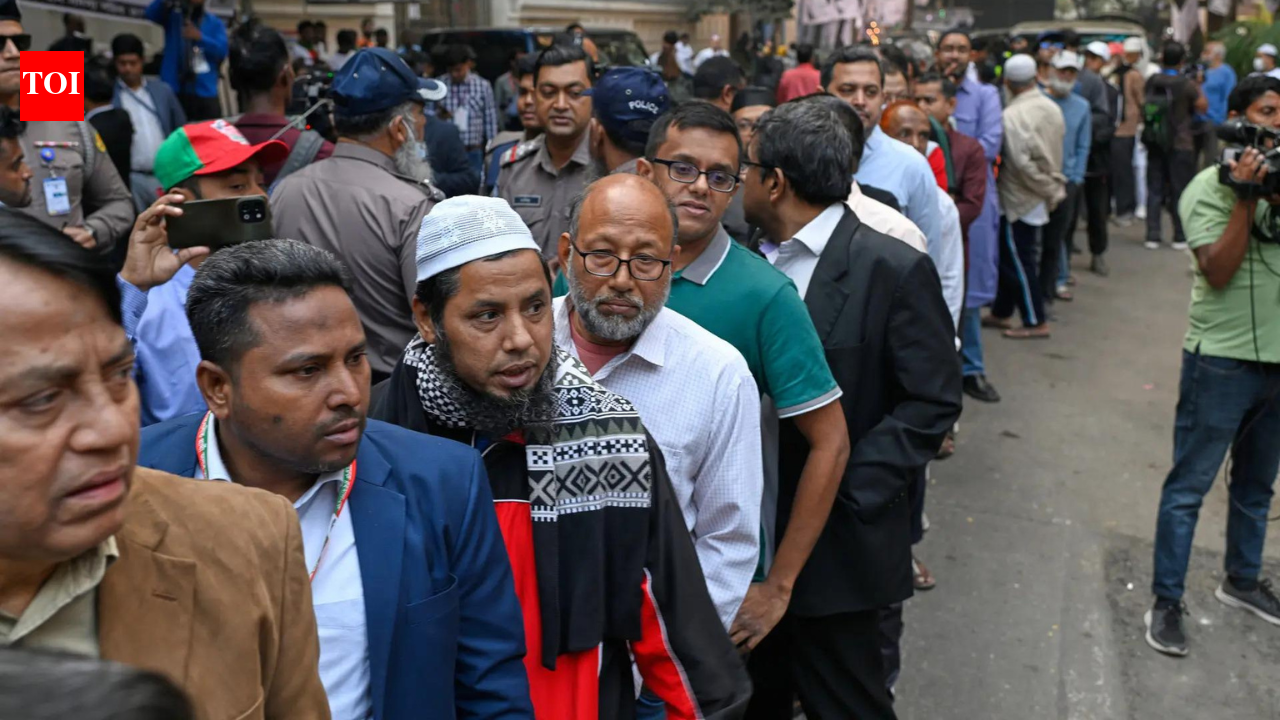
Bangladesh is voting in its first general election since a student-led uprising toppled Sheikh Hasina’s 15-year rule in August 2024. What began as protests over public sector job quotas spiralled into the deadliest political violence since independence, leaving more than 1,000 people dead and dismantling one of South Asia’s most entrenched political orders.Now 127 million voters in the Muslim-majority nation of 170 million people are electing 350 lawmakers — 300 directly and 50 reserved for women — in what European Union observers have described as the “biggest democratic process of 2026, anywhere”. More than 50 parties and over 2,000 candidates are in the fray.
How the 2024 uprising reshaped politics
The immediate trigger was a student protest movement in July 2024. Within weeks it evolved into a nationwide revolt against Hasina’s government. Security crackdowns intensified tensions, and by early August the prime minister resigned and fled to India.The fallout was seismic. The once-dominant Awami League was later barred from contesting the election, fundamentally reshaping the political landscape and ending the two-party duopoly that had defined Bangladesh for decades.
The interim government’s role
Nobel Peace Prize winner Muhammad Yunus, 85, returned from exile to head a caretaker administration. He described the system he inherited as “completely broken” and promised a democratic reset.
Yunus has said the interim government would “hand over the responsibility to the newly elected government with deep pleasure and pride”. Alongside the parliamentary vote, citizens are also deciding in a referendum whether to adopt sweeping constitutional reforms aimed at limiting prime-ministerial power and strengthening judicial independence.
What the referendum proposes
The so-called July National Charter includes proposals for term limits for the prime minister, a new upper house of parliament, enhanced presidential powers and greater judicial autonomy.
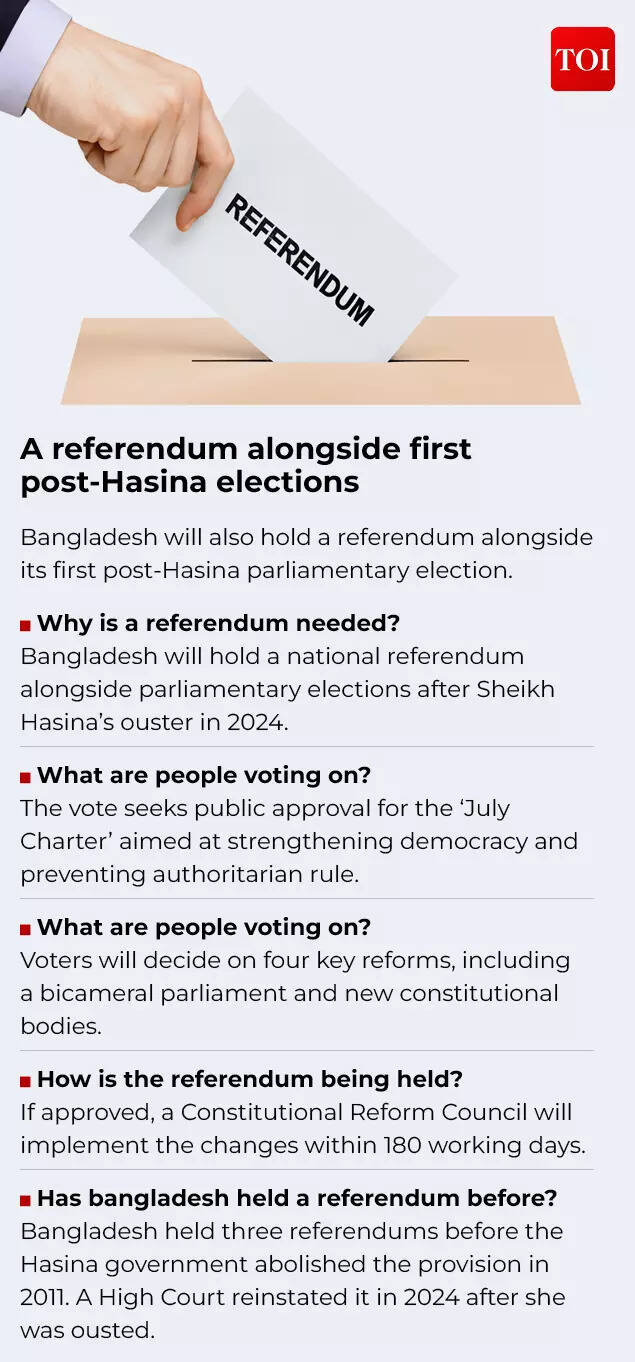
Supporters argue the reforms are necessary to prevent a return to one-party dominance. Critics, particularly among student activists, say the charter must have constitutional backing to carry real weight. The referendum result could shape Bangladesh’s political architecture for decades.
BNP’s bid for a comeback
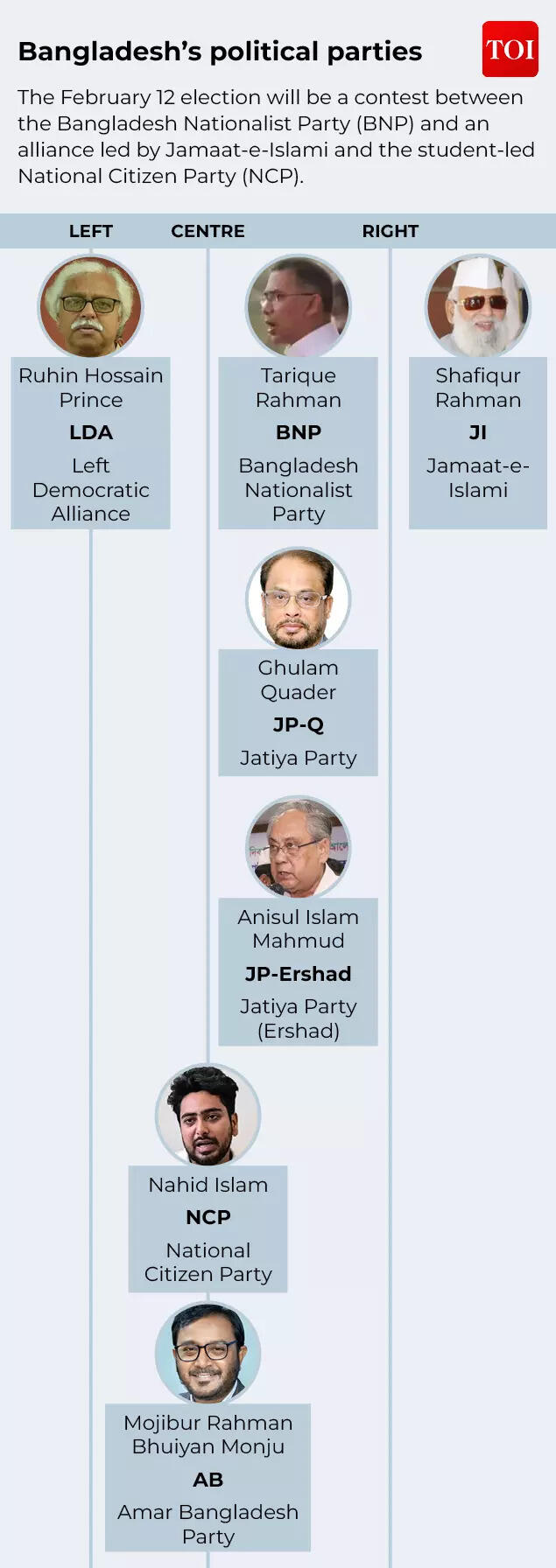
The Bangladesh Nationalist Party (BNP), led by 60-year-old Tarique Rahman, is widely tipped to win. Rahman returned in December after 17 years in self-imposed exile, energising party supporters.“We expect that we will have a clear mandate from the people,” he said ahead of polling. Campaigning on restoring security and reviving a struggling economy, Rahman has warned that “the economy has been destroyed” and pledged to create jobs for young people.Opinion polls vary sharply, but most place the BNP ahead — though sometimes by narrow margins.
Jamaat-e-Islami’s resurgence
Jamaat-e-Islami, once marginalised and banned from elections, has re-emerged as a serious contender after a Supreme Court ruling restored its registration in 2025.
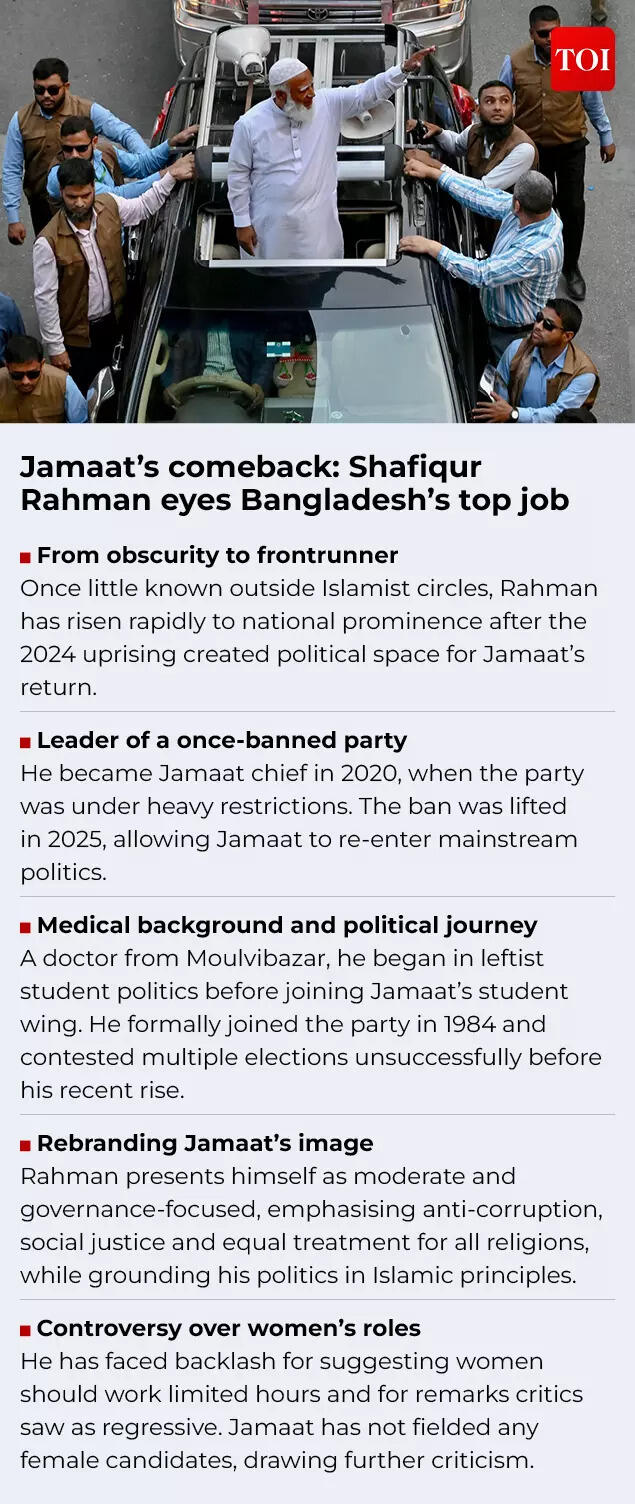
Its leader, Shafiqur Rahman, has sought to soften the party’s image, focusing on anti-corruption and welfare. “We want to build a country of unity with everyone on board,” he said during campaigning. If successful, Jamaat could help shape the first Islamist-influenced government in constitutionally secular Bangladesh.
The Awami League’s absence
Sheikh Hasina, 78, was sentenced to death in absentia for crimes against humanity linked to the 2024 crackdown and remains in India. Her Awami League has been barred from contesting — a decision condemned by rights groups.Hasina has warned that elections without her party risk “sowing the seeds” of division. In the January 2024 vote, widely criticised by opponents as a sham, the Awami League secured 222 seats amid low turnout. This time, its absence has opened political space — but also intensified polarisation.
Security and violence concerns
Bangladesh has a long history of military intervention, and the armed forces remain influential. More than 300,000 security personnel have been deployed nationwide.Rights group Ain o Salish Kendra reported 158 people killed and over 7,000 injured in political violence between August 2024 and December 2025. Police records show five deaths and more than 600 injuries during the campaign period alone.UN experts warned of “growing intolerance, threats and attacks” and a “tsunami of disinformation”, particularly targeting first-time voters.
A youthful electorate
This election marks a generational shift. With a median age of about 25, millions are voting for the first time. Many were too young to participate during Hasina’s 15 years in power.“This was my first vote and I hope after everything we went through the last few years, now is the time for something positive,” said Shithi Goswami, 21, after casting her ballot in Dhaka. Voter turnout is expected to be significantly higher than the roughly 25% recorded in January 2024.
Regional and global stakes
The outcome carries strategic implications beyond Bangladesh’s borders. Relations with India, once Hasina’s closest partner, have cooled. Yunus’ first official visit was to China, signalling a possible recalibration, while engagement with Pakistan has also deepened.Professor Harsh V. Pant of the Observer Research Foundation believes pragmatism will prevail. “Whoever comes to power in Bangladesh is likely to be pragmatic in its engagement with both India and China,” he said, arguing that balancing both powers is a strategic necessity.For India, connectivity and border security are central. For China, infrastructure investments are at stake. For Pakistan, shifts in Dhaka could open diplomatic space.
What happens next?
Counting is conducted by hand after polls close, with results expected to trickle in over several hours. Alongside parliamentary outcomes, the referendum result will indicate whether voters endorse structural political reform.As Yunus told the nation before voting: “It will determine the future direction of the country, the character of its democracy, its durability, and the fate of the next generation.”(With inputs from agencies)
