

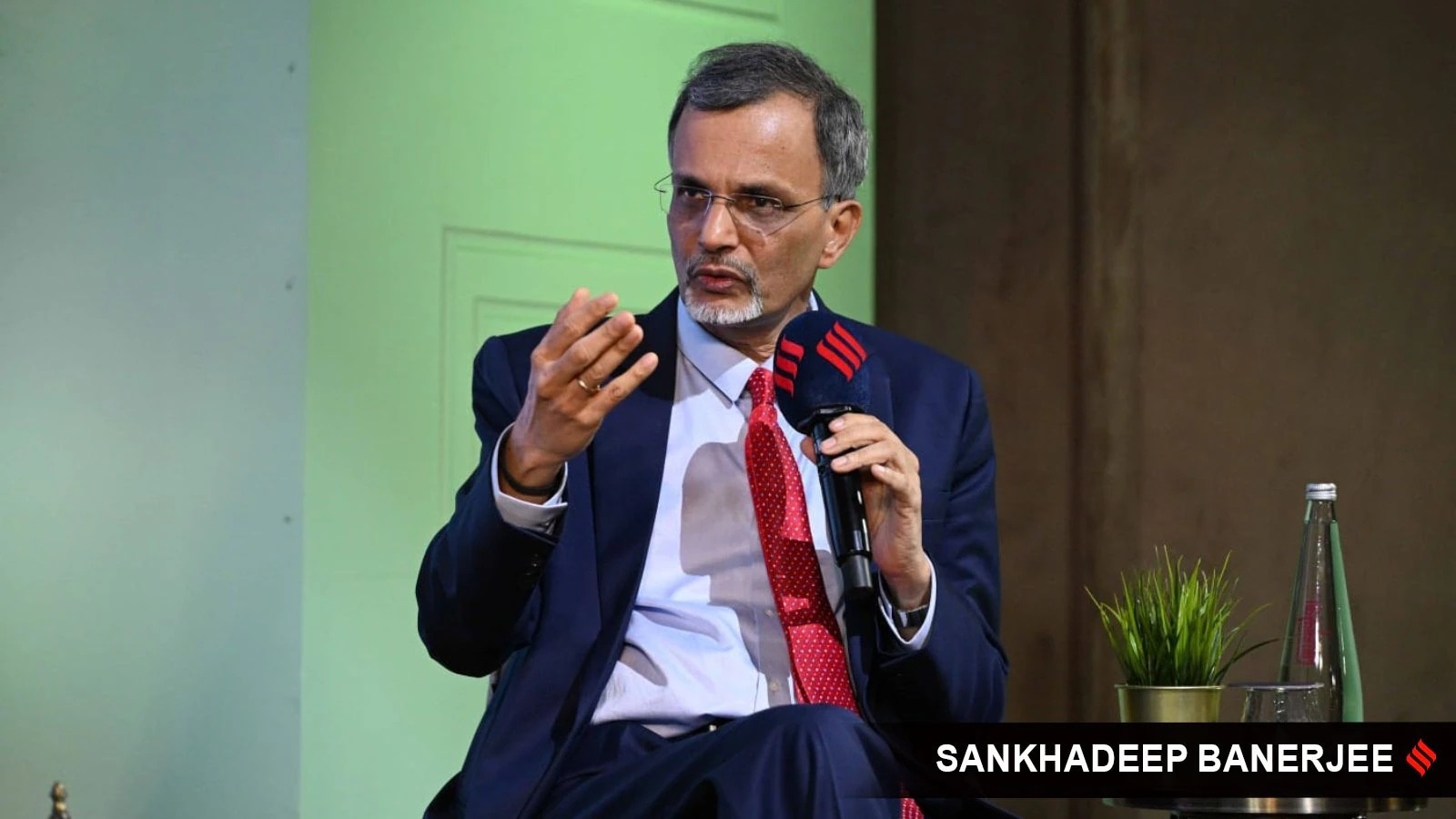
Terming the revision of the Consumer Price Index (CPI) an “important development”, Chief Economic Advisor V Anantha Nageswaran said on Thursday that inflation signals will now be “more closely matched” to prevailing economic conditions. This, he said, would improve the information basis for calibrating monetary and fiscal policy.
“…the new CPI series now provides policymakers with a more up-to-date basis for assessing real incomes, consumption trends, and purchasing power. Lower weightage for the otherwise volatile group of food and beverages may make the headline inflation also less volatile, ceteris paribus. Inflation now could become more driven by core rather than food (prices) and in that sense, monetary policy response in particular could become more focused on aggregate demand pressures rather than dealing with supply-induced inflation,” the government’s top economist said at the release of the updated CPI inflation series.

CPI inflation, which measures the change in consumer prices of hundreds of goods and services in a given month compared to the same month in the previous year, is the most important economic indicator in the country as it directly influences the level of interest rates set by the Reserve Bank of India (RBI). The central bank has a legal mandate to target a CPI inflation rate of 4% in the medium term within a tolerance band of 2-6%. As such, if inflation is seen above 4% on a sustained basis, the RBI increases its policy repo rate to weaken demand and bring down inflation.
Economists and policymakers have warned in the past that since the CPI basket had not been updated for more than a decade and the computation of the inflation rate contained some glaring problems, the CPI with 2012 as the base year ran the risk of not accurately representing the true level of inflation in India. This, in turn, could lead to policy errors.
As per the new CPI series released on Thursday, India’s headline retail inflation rate stood at 2.75% in January. This is more than double the 1.33% recorded in the final month of 2025 under the old series. While the Ministry of Statistics and Programme Implementation (MoSPI) has provided a ‘linking factor’ to connect the old and new data series, officials warned that making direct comparisons between the old and new inflation series may not be appropriate due to changes in the consumption baskets, item weights, and methodologies.
Economists do not expect the RBI to alter its interest rate policy anytime soon on account of changes in the inflation picture emanating from the new CPI series.
“We do not expect the new inflation series to materially influence policy in the near term. An extended rate pause looks likely, underpinned by a cyclical upturn in both growth and inflation and improving confidence following the conclusion of the US-India trade negotiations,” Madhavi Arora, Chief Economist at Emkay Global Financial Services, said. Madan Sabnavis, Bank of Baroda’s Chief Economist, concurred, saying that inflation may rise in the coming months.
Story continues below this ad
“This would mean a long pause from the point of view of the RBI on rates. There may not be too much of alteration in the inflation forecasts by the RBI for next year,” Sabnavis added.
Last week, the RBI left the policy repo rate unchanged at 5.25% after it lowered it by 125 basis points in 2025 as inflation under the old series fell to record lows, providing room to reduce interest rates sharply. The central bank has forecast average CPI inflation for the first three months of 2026 at 3.2%, 4% for April-June, and 4.2% for July-September. These forecasts were as per the old CPI series.
On Thursday, CEA Nageswaran said the Indian economy has undergone a “significant transformation” over the past decade, with consumption behaviour, market structures, and composition of household expenditure having evolved over time. These changes, he said, reflect in the new CPI inflation series, with the weight of food coming down from 45.86% to 36.75%, in line with Engel’s Law.
Named after German statistician and economist Ernst Engel, the economic theory states that as the income of a household rises, the proportion it spends on food reduces.
Story continues below this ad
“It also reflects the reallocation of certain items to other categories more discretionary in nature, such as restaurants and services. At a macro level, this reflects a progressive diversification of expenditure towards health, education, mobility, and connectivity, which is what you would expect to see from an economy which is seeing rising incomes and rising living standards,” Nageswaran added.
With the new CPI inflation series also measuring online prices for certain items in some major cities, the government’s top economist said the recognition of digital channels in price formation would help in better distinguishing urban and rural dynamics of inflation at the state level. Further, with a lower weight of food expected to make the headline inflation number less volatile than before, “fiscal expenditure volatility such as DA (Dearness Allowance) fixation, inflation indexed bonds, etc which are linked to CPI could also become more stable, predictable, and reliable and this could give better budget predictability and visibility as well to fiscal numbers,” Nageswaran added. Improvement in the measurement of consumer inflation could also enhance the targeting efficiency of welfare schemes, ensuring that benefits, subsidies, and social transfers are better aligned with actual regional price realities, he further said.
