

4 min readUpdated: Feb 13, 2026 11:38 AM IST
AS PROCEEDINGS to elect Mumbai’s 78th mayor got underway on Wednesday, a logistical constraint inside the Brihanmumbai Municipal Corporation’s headquarters came into sharp focus. As many as 26 elected councillors were left without seats inside the civic body’s century-old corporation hall.
Located on the first floor of the BMC headquarters, the rectangular hall was established in 1893, when Mumbai, then Bombay, had just 64 councillors. Over the last 133 years, the city’s population and civic jurisdiction have expanded substantially, leading to a steady rise in the number of elected representatives. However, the seating capacity of the hall has remained unchanged.

In the recently concluded civic elections, 227 councillors were elected. Earlier in January, the BMC added four administrative wards K North, K South, P East and P West by bifurcating two larger wards, K East and P North, covering Andheri East and Malad in Mumbai’s western suburbs. Officials said this administrative expansion makes an increase in the number of councillor seats likely in the coming years, especially since the current strength of 227 seats has remained unchanged since 2002.
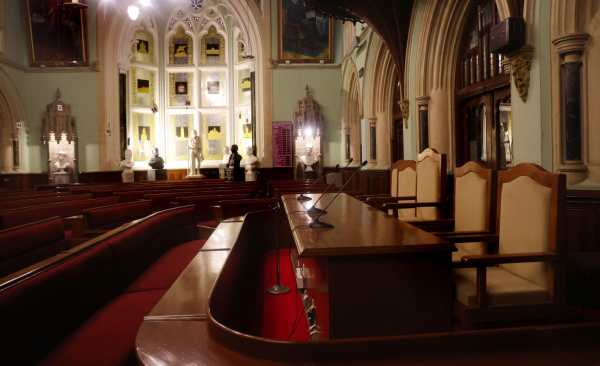 With 10 nominated councillors set to be appointed next month, up from five after the 2023 quota revision, civic officials admit the council hall no longer has enough seating to accommodate the full strength of the House. (Express Photo by Amit Chakravarty)
Further adding to the pressure on space, 10 nominated councillors are expected to be appointed next month. The number of nominated councillors was increased from five to 10 after the state government revised the quota in 2023. With this, civic officials acknowledged that the hall’s seating capacity is now inadequate to accommodate the full strength of the House.
“At present, the hall can accommodate a maximum of 150 to 175 persons at a given time. Usually, 20 to 30 councillors stay absent on an average during the day of the meetings. During the house proceedings, it is not just the councillors who are present in the hall, there are administrative officials also along with ancillary staffers, members of the press and personal assistants of each councillor. So even if 50 per cent of the current strength of total elected representatives are present in the hall, then also it will be difficult for everyone to sit inside comfortably,” an official told The Indian Express.
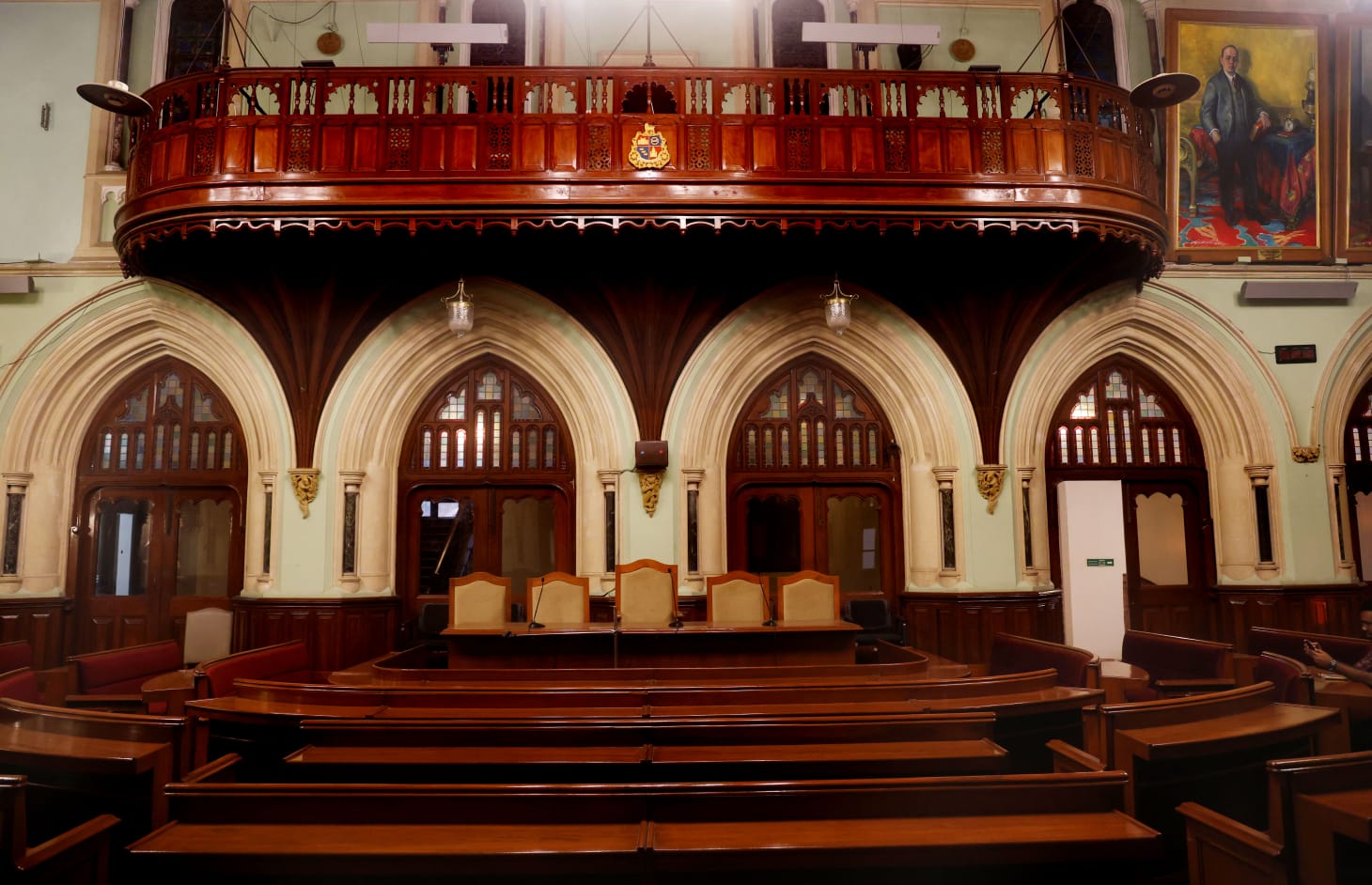
The corporation hall, listed as a heritage structure by the state government, is the epicentre of the BMC’s political and ceremonial activity. From the presentation of the annual civic budget to general body meetings where key resolutions are passed, all major proceedings are held in this hall. It is also where councillors raise arguments and points of order related to civic policy formulation and implementation.
Story continues below this ad
The hall features a central dais, surrounded by semi-circular seating meant for elected representatives. During major proceedings such as the budget session, the mayor, deputy mayor, municipal commissioner and the chairperson of the standing committee occupy the dais.
Architecturally, the hall draws inspiration from town halls in Glasgow and Birmingham. Its ceiling features moulded panels of Burma teakwood finished with gold leaf, while the flooring is made of Minton tiles. Three chandeliers dating back to the colonial era hang from the roof, and several busts representing Mumbai’s communities are displayed inside the hall, each engraved with the initials CB Corporation of Bombay.
“Earlier proposals were made to augment the seating capacity inside the hall. However, the plan never took off since the hall is a heritage structure and it will require a slew of permission for the civic body to start the work,” the official added.
Civic officials said an alternative proposal under consideration involves converting unused offices on the sixth floor of the BMC’s annexe building into a large meeting hall. However, the plan would require administrative approval before it can move forward.
Story continues below this ad
At the time of its inception, Mumbai’s municipal corporation had only 64 elected councillors, as the city limits extended only between Sewri and Mahim and voting rights were restricted to a small number of tax paying citizens.
The strength of the House was increased to 140 in 1963 after the suburbs were merged with the island city. It was later raised to 170 in 1982, and finally to 227 in 2002 following a fresh delimitation exercise.

