

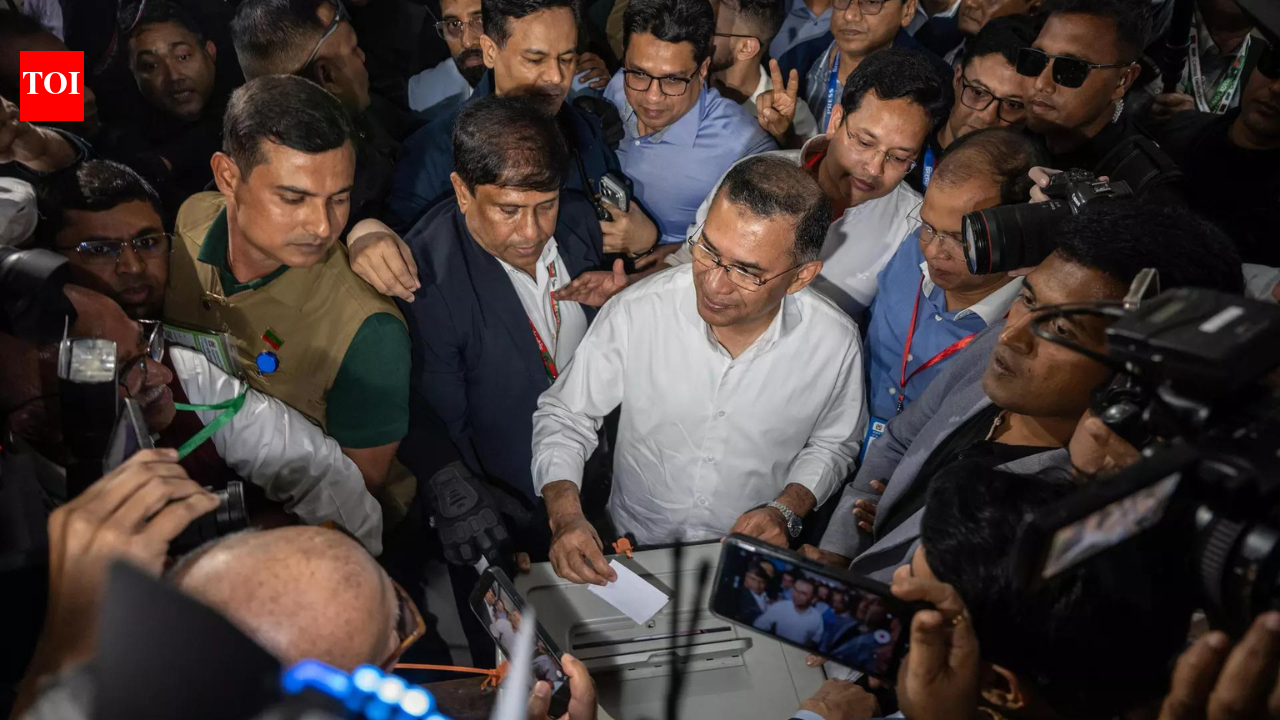
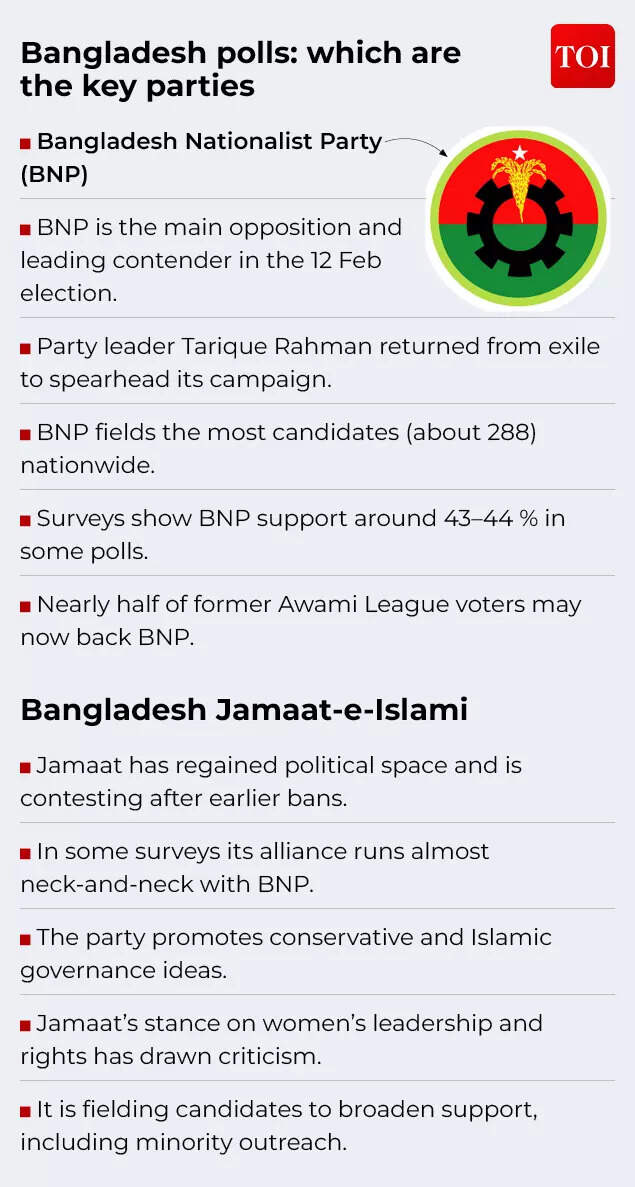
The Bangladesh Nationalist Party is heading for an overwhelming majority in the parliamentary elections in Bangladesh held since a deadly 2024 uprising.According to the latest trends, Tarique Rahman-led BNP, along with its alliance parties, is leading in 212 out of 299 seats in parliament, while the Jamaat-e-Islami-led alliance is ahead in 70 seats.
BNP chairman Rahman, who has won from both constituencies he contested — Bogra and Dhaka-17 — would likely take over as the next Prime Minister.Official results have not yet been delivered by the Bangladesh Election Commission, which is expected to issue its announcement on Friday.Here are the top developments from the Bangladesh election:‘Not a time for celebration’Claiming victory, BNP election committee spokesperson Mahdi Amin told reporters the party was on track to win at least two-thirds of seats.“Buoyed by strong public support, the BNP will secure a two-thirds majority and form the government,” Amin said, adding that party chief Tarique Rahman had won both seats he contested.
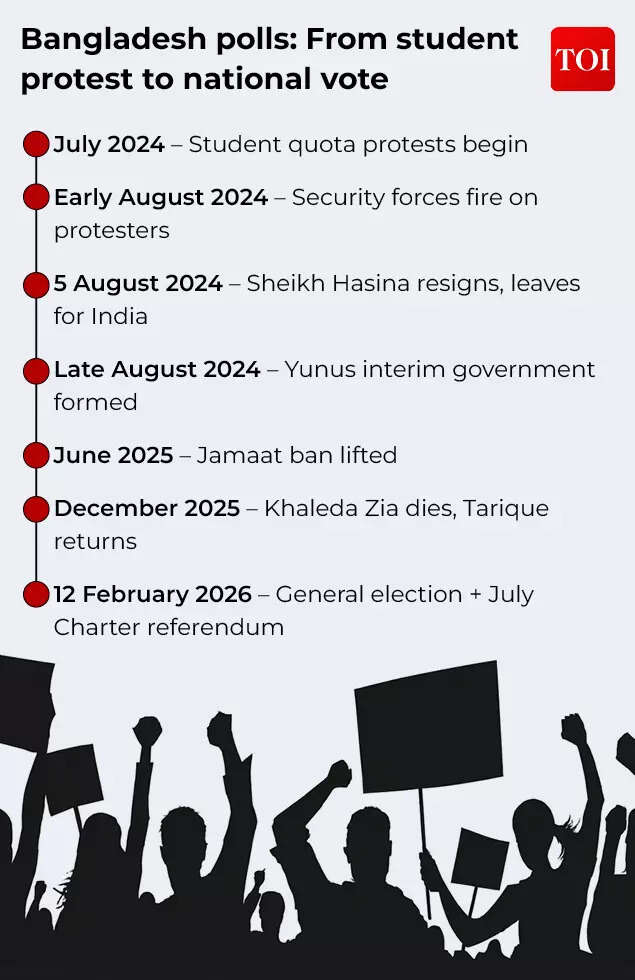
Meanwhile, BNP chairman Tarique Rahman requested that celebrations be postponed out of respect for the passing of his mother, Khaleda Zia, before the election. The party called for prayers for Khaleda Zia after the Friday congregational prayer.“This victory was expected. It is not surprising that the people of Bangladesh have placed their trust in a party capable of realising the dreams that our youth envisioned during the uprising,” said Salahuddin Ahmed, a senior BNP committee member.“This is not a time for celebration, as we will face mounting challenges in building a country free from discrimination,” he added.Jamaat candidate alleges foul playMeanwhile, Jamaat-e-Islami alleged discrepancies in voting in certain places.
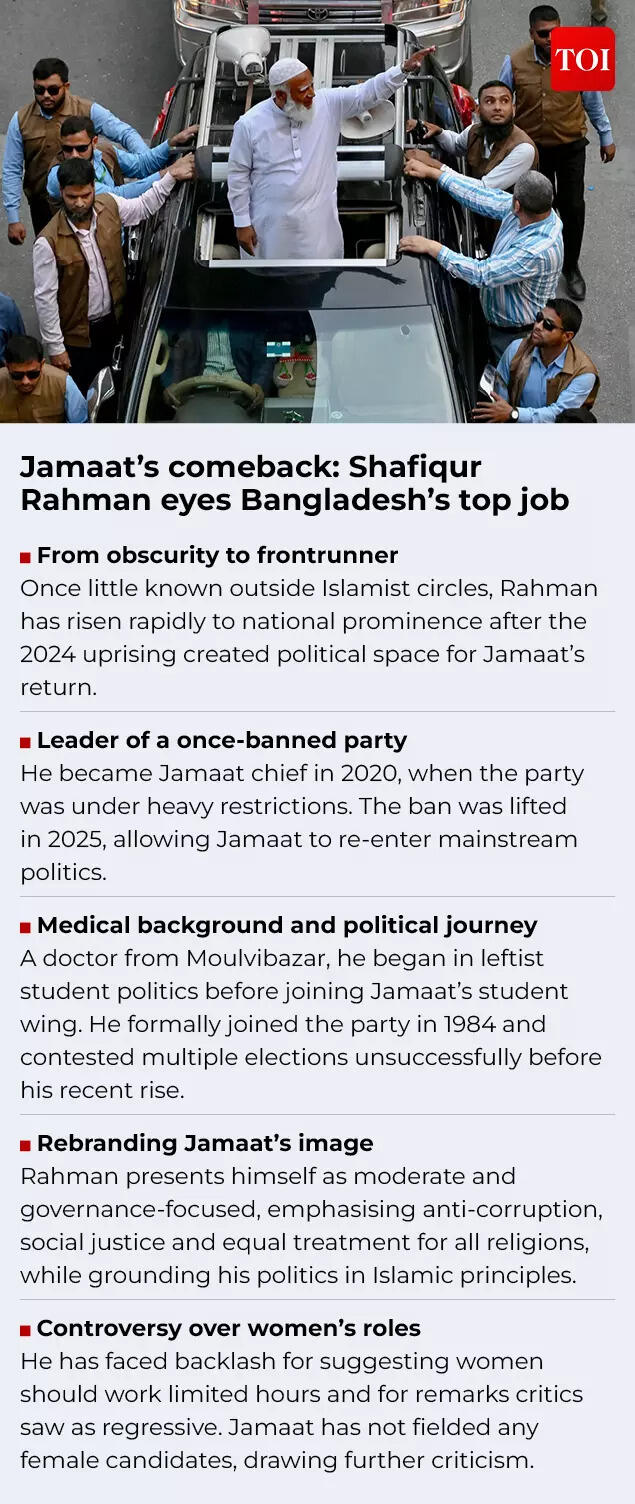
Addressing mediapersons, Khaleduz Zaman, a Jamaat-e-Islami candidate running against Tarique Rahman, said, “The situation is not good because without a polling agent, in a separate room, someone is sealing the papers.”“It is totally disappointing. I have seen this in some places. We were hopeful that Jamaat-e-Islami would win the election, but if this happens, how can we have hopes,” he added.Peaceful polls?BNP workers spent the whole night outside party offices.“We will join the nation-building effort led by Tarique Rahman,” Md Fazlur Rahman, 45, told AFP. “Over the last 17 years, we have suffered a lot, faced multiple politically motivated cases and lost a factory I owned.”However, according to police reports, political clashes killed five people and injured more than 600 during campaigning.Polling day was largely peaceful, according to the Election Commission, which reported only “a few minor disruptions”.‘Must remain united in the greater national interest’Chief adviser Muhammad Yunus, who will step down once the new government takes power, urged all sides to stay calm.“We may have differences of opinion, but we must remain united in the greater national interest,” he said.The 85-year-old Nobel Peace Prize winner has led Bangladesh since the ouster of Sheikh Hasina in August 2024.His administration barred her Bangladesh Awami League from contesting the polls.
After casting his vote, Yunus said the country had “ended the nightmare and begun a new dream”.‘Well-planned farce’The Bangladesh Awami League rejected the parliamentary election as a “well-planned farce,” claiming that the vote, conducted without the party’s participation, disregarded democratic norms and the Constitution.In a statement posted on its X handle after polling concluded and counting began, the party expressed gratitude to citizens — including mothers, sisters and minority communities — for rejecting what it called a “voter-less” election.The Awami League alleged that the farcical polling began on the evening of 11 February with seizure of polling centres, gunfire, distribution of cash, vote-buying, stamping of ballots and agents signing result sheets without voter participation.By 11 am on 12 February, just three and a half hours into voting, only 14.96% of eligible voters had reportedly participated, according to the Election Commission, while many polling stations — particularly in Dhaka and other major areas — had no voters at all.The party further claimed that in the days leading up to the election, its supporters, voters and minority communities faced continuous intimidation, arrests and attacks aimed at forcing compliance.
