

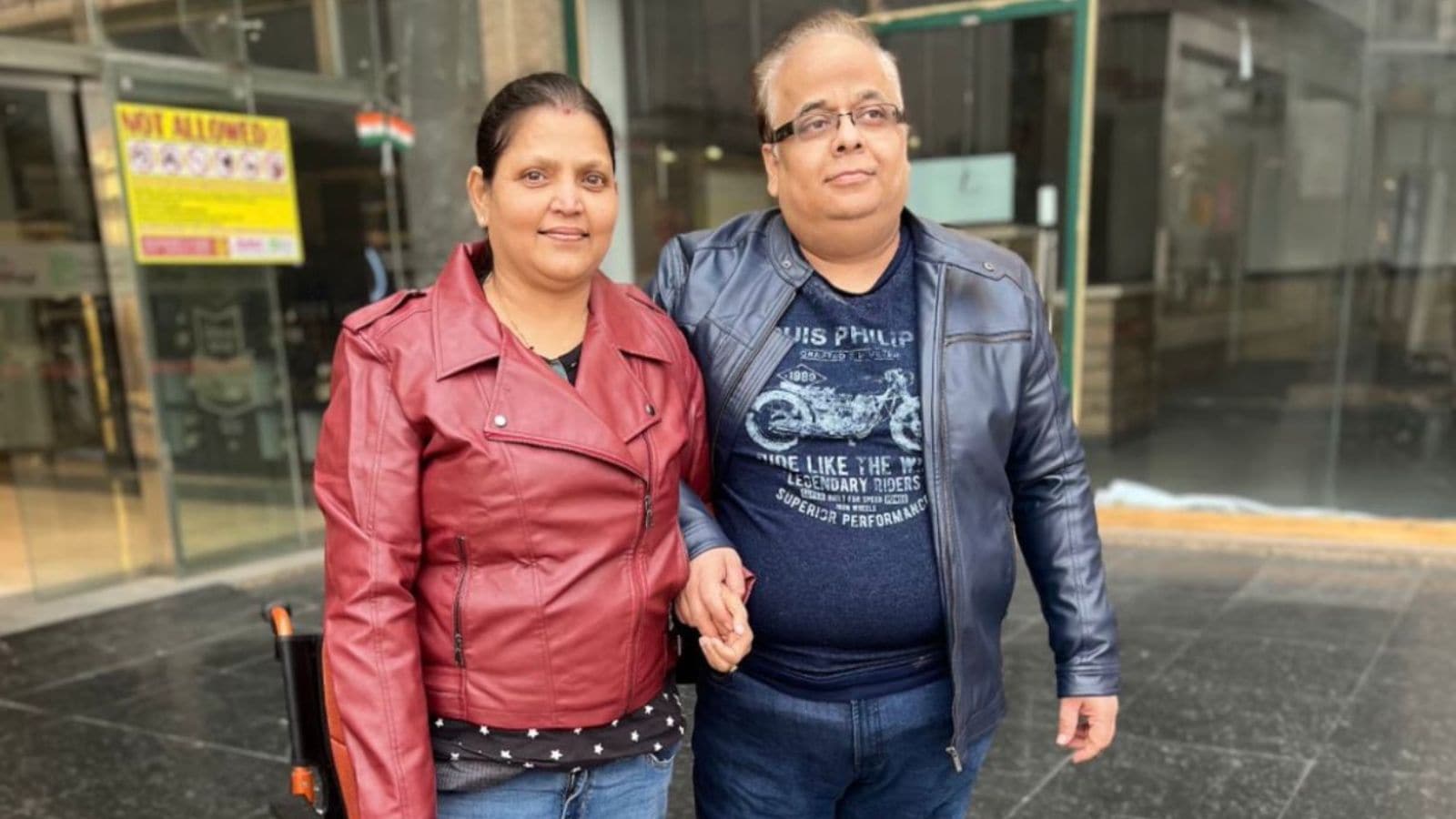
It was a four-day vacation at Andamans that made for a pretty picture of the Mohan family. Kabir held on to his wife Chhanda with one hand as she stood up from her wheelchair, his daughter with the other. Their son took the selfie, helping his father frame a happy moment. Nobody would, in a long shot, imagine that Chhanda is a heart attack survivor and on dialysis thrice a week because of chronic kidney disease (CKD). The daughter is autistic, who gets triggered by noise. Or that Kabir had used Chhanda’s weekend gap to plan this mini-break. “I measure everything in our lives to experience life to the fullest. I love Chhanda and the family we created, and I find a reason for them not to give up,” says Kabir.
ARTICLE CONTINUES BELOW VIDEO
 Kabir with Chhanda on a trip in Andamans (Credit: Kabir Mohan)
In fact, Kabir, who completely redesigned his life to turn a full-time caregiver, is the reason that Chhanda has been able to have a life of quality and dignity over a decade now. “Patients of CKD, characterised by a progressive loss of kidney function, can continue on dialysis for five to 10 years on average, though many live for 20 to 30 years with proper care, strict adherence to treatment and a healthy lifestyle. Chhanda has already had a heart attack and needs a wheelchair for mobility but Kabir has been so thorough with her diet, medication, liquid intake, minute-to-minute monitoring and ensuring a positive vibe always that she has managed to retain a stable condition over the years,” says Dr Yasir Rizvi, Director, Nephrology, Dharamshila Narayana Hospital, Delhi.

This story proves that proper caregiving can do what therapies alone cannot, prolong the lifespan of a kidney patient despite complications. “Kabir has absorbed every anxiety of his wife and daughter. That calmness has held them together,” says Dr Rizvi.
In sickness and in health
Kabir, who grew up in Africa, came to India in 1996 and set up a travel agency in Kolkata. He met and married Chhanda in 1999. “Her health issues began when she lost her father during his bypass surgery. She was seven months pregnant with our daughter then. She sank into depression ever since, never being able to process her trauma. That worsened when we found that our daughter was autistic; she had just turned two then. That’s when she developed severe hypertension,” says Kabir, who moved to Delhi so that they could get better therapies for their autistic daughter at the Action for Autism centre.
Chhanda’s hypertension worsened after the couple’s son was born. “That’s when she had to take multiple medications to manage her blood pressure. But by then, her kidneys had been damaged, her creatinine levels shot up despite controls and she has been on dialysis since 2015,” adds Kabir.
“Your kidneys filter waste from blood through tiny blood vessels. When blood pressure stays high for a long time, they become thick and narrow. The kidney cannot filter toxins as effectively then,” explains Dr Rizvi. To complicate matters, Chhanda had a heart attack during one of the dialysis sessions. “Dialysis removes extra fluid from the body. If too much fluid is removed quickly, the blood pressure drops suddenly, reducing blood flow to the heart and triggering a heart attack. Dialysis can also change levels of sodium, calcium and potassium, which can cause irregular heartbeats and trigger a sudden cardiac arrest,” says Dr Rizvi.
As one complication led to another, Kabir lived out his promise to be with Chhanda “in sickness and in health.” Realising that he could save his ailing wife and manage his daughter’s condition better if he was around them 24X7, he quit his business, took out all his savings and invested them wisely in mutual funds and other instruments. “I did the math, calculated insurance, medical bills, daily expenses, incidental expenses, emergency provisions, inflation. I arrived at a figure and invested accordingly so that I could get returns. There was a lot of careful planning and risk management,” says Kabir.
Story continues below this ad
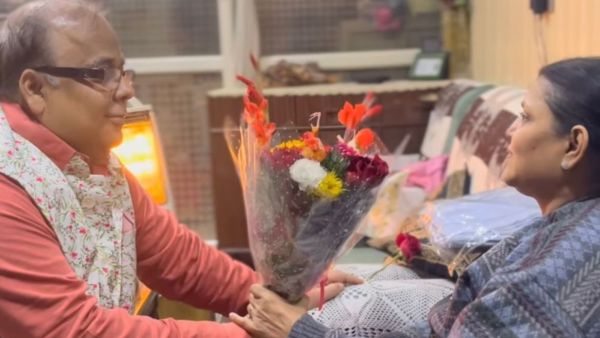 Kabir with Chhanda on their 25th marriage anniversary. (Credit: Kabir Mohan)
Caregiving is all about routine and discipline
Dr Rizvi says Kabir has become more than a family at Dharamshila. “It has been over a decade but he has been hands-on. Chhanda needs 12 cycles a month and Kabir has not missed a single cycle in over a decade, always holding his wife’s hand and guiding her through her sessions,” he says.
Kabir has memorised all of Chhanda’s parameters and reports. He micro-manages her activity patterns and particularly monitors her diet, remaining vigilant about protein, salt and water intake as well as water retention and swollen feet. “I always feed her to ensure portion control,” says Kabir, who bathes his wife and cleans her up to ensure hygienic surroundings. Although he manages the kitchen rations, he cooks when the help is on leave.
In between, he spares moments with his daughter. “I have read up on autism and know they become anxious and upset if they feel ignored or don’t get needed attention. But she feels secure with me around and sings beautifully. And because I take them out, she has gradually learnt to adjust to a social setting,” says Kabir, who plans their trips in such a way that they are near Delhi, have a medical facility nearby and are wheelchair-friendly.
Although Kabir admits that his son, who is studying to become a psychologist, has gotten the short shrift, he has hand-held him through his school years and exams.
Story continues below this ad
Doesn’t he feel stretched everyday? “I have to keep her alive, only then will we all feel alive. I listen to music and watch funny Youtube videos to unwind at the end of a busy day. I do not predict what’s coming tomorrow. After all, tomorrow is another day, a beautiful one,” says Kabir.
