

Over 200 years ago, the English economist Thomas Malthus’s An Essay on the Principle of Population introduced a seminal theory: population growth increases geometrically while food supply follows a linear trend. Simply, it warned against rising human populations by arguing that population growth would soon outstrip crop yields. And while it was dismissed as pessimistic, a very real “Malthusian fear” gripped China in the 1970s.
In 1976, the reformist leader Deng Xiaoping faced a ballooning population within a restrictive economy. A year after China began economic reforms, Deng initiated the One-Child Policy (OCP) in 1979, kick-starting a fundamental redesign of China based on a logic of maximising per capita resource concentration.

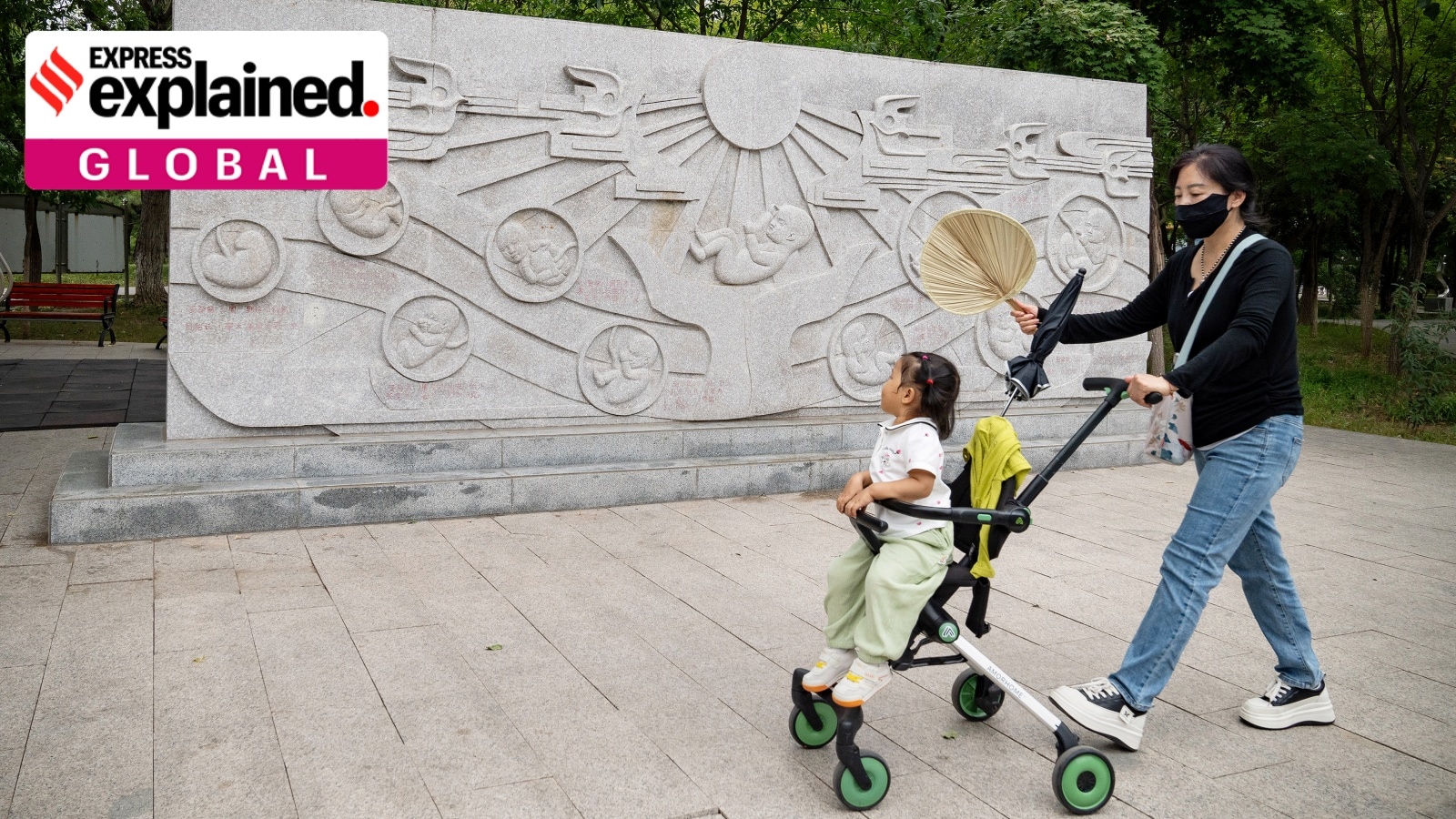
Today, a decade since the OCP’s reversal, the number of annual births in China has declined to a record low. The failure of subsequent pro-natalist policy reveals a critical reality: the Chinese government is attempting to legislate a future that its own social architecture is built to prevent.
The quality mandate: Improving ‘Suzhi’
The OCP was a pivot toward maximising quality of life (suzhi in Chinese) and the gains expected of the Four Modernisations of 1978, which were focussed on developing agriculture, industry, national defence and technology. This was done through strict enforcement across domains.
In housing, Hukou (the system of household registration) was linked to public services, with access denied to heihaizi (“dark citizens”, or children born outside the OCP). Consequently, it internalised a way of life where violating birth limits meant being frozen out of essential State services. This shifted Chinese culture from traditional filial piety toward a singular focus on pooling resources to maximise gains for each child.
Education: The funnel of scarcity
Dismantling the previous model of egalitarian mass education, the state established the ‘First Barrier’ to expansion through ‘Key Schools’. This system funnelled resources and manpower into a selected tier of institutes.
Around 70-80% of the local equipment budgets and virtually all senior-grade educators were redirected and concentrated into around 15% of schools. The result of such heavy investments was quantified by data released in the 1980s, marked by metrics such as per-pupil expenditure being three to five times higher than in schools outside this system.
Story continues below this ad
This distinction was entrenched by the time the first OCP generation entered school. For parents, having multiple children diluted a child’s access to quality education — something essential for social mobility.
Housing: The nudge towards 2+1
China’s increased urbanisation effectively weaponised the housing system to function as an indirect nudge promoting the One Child Policy. Housing was designed for a “2+1” model (50–70 sqm) by the government to account for the migratory boom in upcoming urban centres.
However, the weaponisation of this nudge was yet to be implemented. After tax reforms in 1994, the Central government centralised revenue, leaving local governments to fund 80% of their expenditure by monetising the land available to them. A key fundraising instrument was the Local Government Financing Vehicle (LGFV), where houses often served as the staple collateral.
Coupled with the pre-existing 50-70 sqm mandate, it spurred the construction of specific types of houses.
Health: Boom in privatised service
The shift to a market economy turned healthcare into a privatised commodity, with out-of-pocket medical expenses rising from 20% to 60% between 1980 and 2001. Top urban hospitals shifted towards a market-oriented outlook with high investment and low-volume treatment care plans, while rural areas lacked key health infrastructure.
Story continues below this ad
This infrastructure gap became a double-edged sword that threatened urban populations with highly concentrated healthcare costs, while rural households find themselves deprived of resources, further nudging them towards population control.
Together, these factors solidified the 4-2-1 pyramid structure — where one child supports two parents and four grandparents.
2016–today: Why reversal of the policy has been ineffectual
In 2016, China allowed two children, followed by a three-child limit in 2021. Treated as a question of permission, the policy saw a short-term spike in annual births, followed by a precipitous decline. So much so that since 2022, China has witnessed higher annual deaths than births, resulting in a contraction of the total population. Symbolic cash incentives (approx. $500/year) failed because child-rearing costs remained exponentially higher in both urban and rural areas.
The 2021 ‘Double Reduction’ policy, which banned private tutoring to lower costs for families, backfired amid the persistence of the Key Schools model, which simply moved the demand for tutors underground. By 2025, middle-class families were paying 18–22% more for tutoring than in 2021.
Story continues below this ad
Another key determinant is the rising opportunity cost of bearing children for women. In a system where state-led welfare has retreated, and the cost of living has risen, the task of child care and elderly care continues to disproportionately fall on women due to persistent gender norms.
With the transition to a three-child policy, for corporations, women are considered “high-risk” assets in a hyper-competitive job market where employers must bear the monetary cost of pro-natalist leave policies mandated by the Central government.
Without the state subsidising the employer’s maternity costs, firms favour men as candidates to avoid the productivity gap. In this architecture, a second child, or sometimes even having one child, is a significant financial decision that affects women’s long-term career prospects. Together, these have led to marriages and childbirth being pushed to later stages of life, and a section of women forgoing marriage and children altogether.
Lessons in designing systems
The ‘One-Child’ mindset has outlived the law; it is now a social reflex, hard-coded by decades of reinforcement. Education, housing, and healthcare have become structural walls. The changing demographics, in turn, are also affecting these systems.
Story continues below this ad
Take the case of the Local Government Financing Vehicles (LGFVs) and mounting debt. In 2026, Beijing property prices fell 8.5% year-on-year, with land sales revenue — the lifeblood of local budgets — dipping 65%. While the real estate sector has been facing a crisis for years now, one major reason is that fewer younger people means less demand for housing, which fueled China’s growth for years.
It also represents the disintegration of the ‘Shadow Treasury’ that once funded social pillars. As the collateral backing LGFVs evaporates, local governments cannot fund the nurseries or subsidies required for population expansion because their revenue has disappeared (detailed in the paper “The financing of local government in China: Stimulus loan wanes and shadow banking waxes”, published in the Journal of Financial Economics).
Crucially, falling prices have not made homes affordable. Instead, they have wiped out the ‘wealth effect’, or the assumption that a household holds assets which will continue to have value, spurring them to spend money. With 70–80% of household wealth locked in property, the slump psychologically impoverishes families, triggering a retreat into risk-aversion.
China’s failure on population growth is rooted in an inability to change a social infrastructure that continues to penalise growth. Ultimately, China is attempting to legislate a future which it spent 40 years architecting against.
But these problems may not all be exclusive to the OCP. As much of the world stares at plummeting birth rates, it has warnings for dependance of rigid systems influencing larger behavioural trends. As global attention shifts toward India as the world’s most populous nation, China’s struggles serve as a guiding lesson.
