

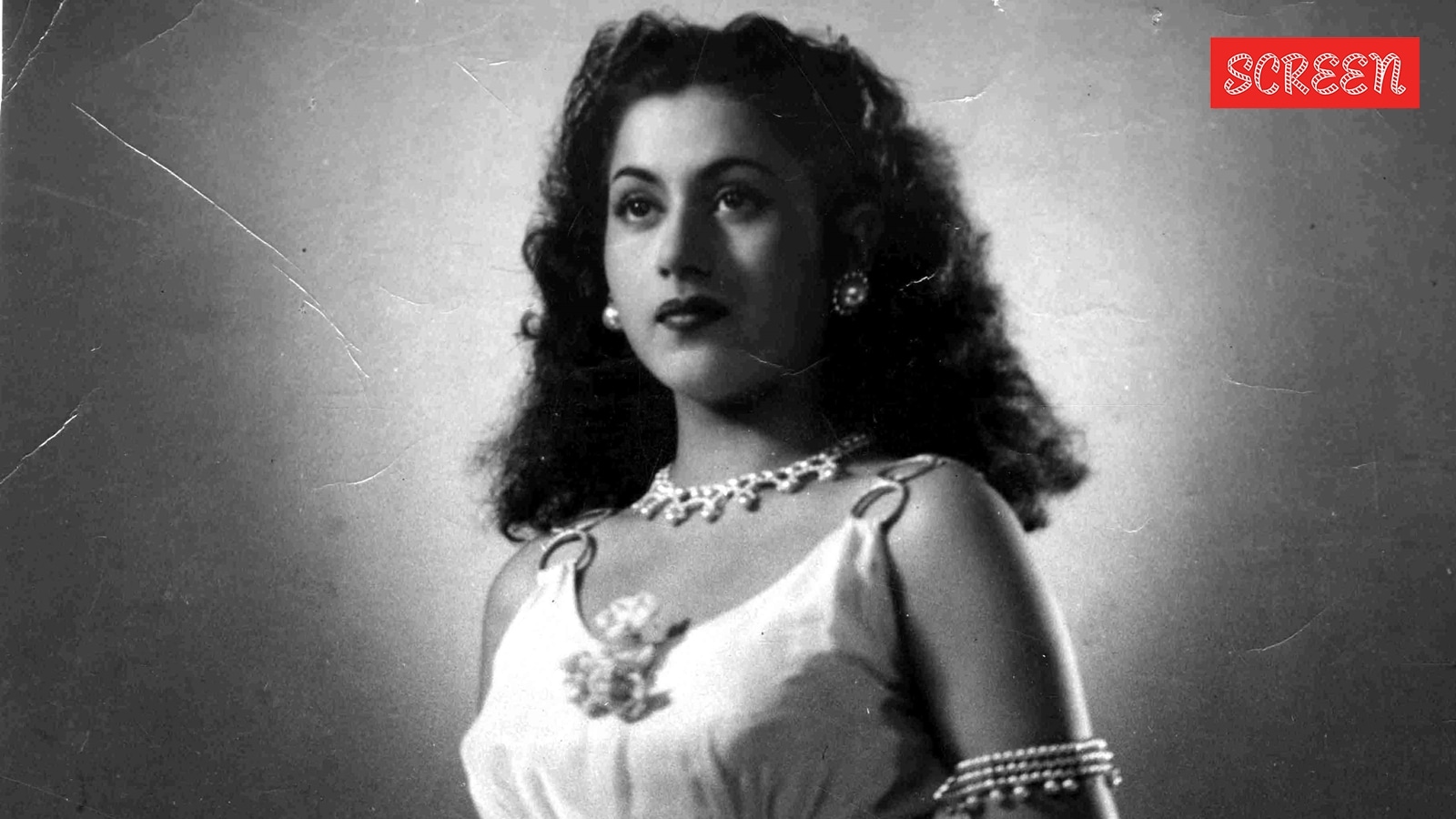
In the last few years, the Indian film going audience has become increasingly privy to the mechanics of the PR-run activities that are often used to put a star on a pedestal, and sometimes such shenanigans are blatantly obvious when the target is to malign a star’s image. Amitabh Bachchan, Deepika Padukone, Varun Dhawan, Ranveer Singh, Shah Rukh Khan, and many others have been on the receiving end of such campaigns, and while the audience might think that this is a new form of marketing, these kinds of campaigns, in one form or another, have been a part of the film industry since the 1940s. And one of the first stars who suffered because of this was Madhubala.
Celebrated as one of the most beautiful female actors of her time, Madhubala started working in the movies as a child actor. At 14, she starred in her first film, Neel Kamal, as a leading heroine, opposite a 24-year-old Raj Kapoor. She went on to star in 66 films as a leading lady and mesmerised the viewers with her performance in films like Mughal-E-Azam, Mahal, Chalti Ka Naam Gaadi, Mr and Mrs 55, among many others. But in her case, the conversation about her beauty always took precedence over her craft. When they ran out of synonyms to describe her beauty, her personal life became fodder for the tabloids.

How Madhubala outshone a 24-year-old Raj Kapoor at just 14
Director Kidar Sharma, who cast her in Neel Kamal was thoroughly impressed by her “intelligence and diligence” and even said that as far as her acting was concerned, she was “far superior” than Raj Kapoor, who later came to be known as the ‘Showman of Indian cinema’. “She worked like a machine, missed a meal, travelled daily in the over-crowded third-class compartments from Malad to Dadar and was never late or absent from work,” Kidar told Khatija Akbar for the book ‘I Want to Live: The Story of Madhubala’. Madhubala was deeply aware that she had to care for her family, and with her tyrant father, Attaullah Khan, she knew that there was no room to relax.
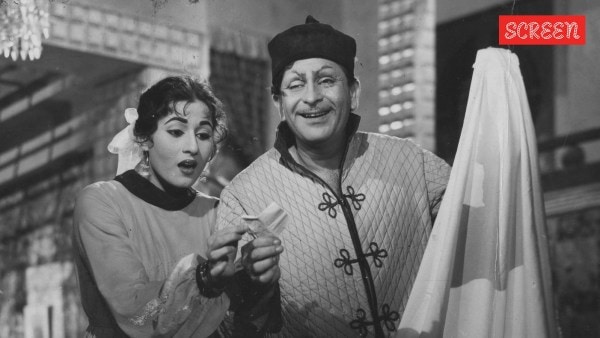 Raj Kapoor made his screen debut with Madhubala in 1947. (Photo: Express Archives)
In the next couple of years, Madhubala starred in almost a dozen films but her big break was Kamal Amrohi’s 1949 film Mahal, which also starred Ashok Kumar. But he, too, was deeply aware that it was Madhubala who carried the film on her young shoulders. She was just 16 then. Madhubala had announced her arrival in the movies. She was a bankable star who had the ability to draw in the audience just by her presence. Yet, when she had a few flops, she was downgraded to being called ‘box office poison.’
Why refusing to step into a pool triggered an industry-wide attack
This first happened when she appeared in a film titled on her own name. Madhubala (the film), released in 1950, was produced by Ranjit Studios’ Chandulal Shah. She agreed to star in this film out of a sense of debt that she owed to Shah as he had once financially helped her ailing mother when she was in dire need of medical assistance. She agreed to do the film without taking a penny since Shah needed her help, and now, she was in a position to do so. “It meant turning down a couple of starring roles, even returning the advance paid to me by one of them. It was my turn to stretch out a helping hand and I did so with my work in a film to which I even gave my name – Madhubala,” she said, as per Akbar. The film turned out to be a massive flop, and for some unexplained reason, this became the trigger point of a phase that eventually led to Madhubala carrying a revolver on her, for self defence.
Soon after this film’s release, which was Madhubala’s first massive flop since Mahal, the tabloid film press of the time, got wind of the fact that she had refused to shoot for a particular sequence of PL Santoshi’s film Nirala. Madhubala was very strict about the water and food she consumed and always carried everything from her home. So when during the shoot, she was asked to step inside a pool for a scene, she refused to do so for hygiene reasons. As soon as this factoid got out, an orchestrated attack on the actor commenced.
Story continues below this ad
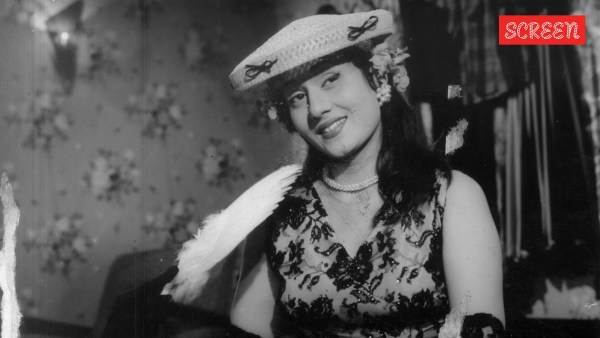 Madhubala was labelled as ‘box office poison’ after her first notable flop. (Photo: Express Archives)
The tabloids which were, until then, singing praises of her beauty and her unmatched talent, suddenly started asking unsavoury questions about her background and her family. With each passing day, the insinuations became more bitter and ultimately, Madhubala decided to respond. Upon her father’s recommendation, she banned the press from her film shoots and declared that if any member of the press visited the studio while she was shooting, she would walk out. Her producers supported her, but the tabloids did not take it kindly. Even after all these years, it is hard to pinpoint who laid the groundwork for this, but it would be safe to say that someone had been rubbed the wrong way, and they had a vendetta against her.
Morarji Desai personally provided Madhubala with security
Stories about her father begging on the streets, her introduction to Bombay Talkies’ Devika Rani were being spun in a fashion to imply that Madhubala was concealing a huge part of her life, and while no one had any evidence, the seed of speculation was sown repeatedly. The vicious commentary did not stop and it eventually started to take a toll on Madhubala’s health. She was living with a heart condition, and such mental pressure forced her to take measures that were unheard of in those days.
It was at this point that Madhubala, who genuinely felt scared for her life, was issued a licensed revolver by the state government that she was supposed to carry on her at all times. In the book Madhubala: Her Life, Her Films, Khatija Akbar shared that Morarji Desai, who later went on to become the Prime Minister of India, and was then serving as the Home Minister of the state, provided armed security to the actor. Actors walking with a huge group of bouncers might be a norm now, but it was an unusual sight in those days. For three months, Madhubala was escorted by armed guards, while she endured regular attacks on her character in the tabloids.
Story continues below this ad
This went on for the next year and it was at that point that film journalist BK Karanjia stepped in to resolve the matter. He was one of the few film reporters of the era who still had friendly relations with Madhubala and her family and so, he asked them to arrange a meeting with a few prominent journalists of that era. Madhubala and her father Ataullah welcomed journalists into their home and it was at this meeting that everything was resolved.
 Madhubala died in 1969. (Photo: Express Archives)
In the years after this, Madhubala continued to be a favourite of the media but no one made unnecessary, unsavoury remarks about her anymore. Through the next decade, she had a very public relationship, and break-up with Dilip Kumar. She even went through a legal case when BR Chopra decided to sue her for backing out of Naya Daur. It was understood that since she was one of the biggest stars of the country, her name was bound to end up in the papers, but the kind of character assassination that she was being subject to in 1950, stopped after she waved a white flag.
Madhubala passed away in 1969 at 36.
