


7 min readNew DelhiUpdated: Feb 15, 2026 12:28 PM IST
Rajasthan HC legal news: In a case spanning more than three decades, the Rajasthan High Court has given a fresh opportunity to a Jaipur-based doctor who claims his medical career was derailed in 1991 due to alleged institutional bias and criminal proceedings that later ended in acquittal.
Justice Bipin Gupta, in a judgment delivered on February 9, set aside a trial court order that had rejected one Gurdeep Singh’s request to file a civil suit as an “indigent person”, without paying heavy court fees, and sent the matter back for reconsideration.

An indigent person is an individual suffering from extreme poverty or lacking sufficient financial resources to afford the basic necessities of life, such as food, shelter, or, legally, the court fees and legal representation required for a lawsuit.
“The expression ‘indigent person’ has to be construed in a pragmatic and liberal manner, keeping in view the economic realities of the applicant and the purpose sought to be achieved by the legislation,” the court said.
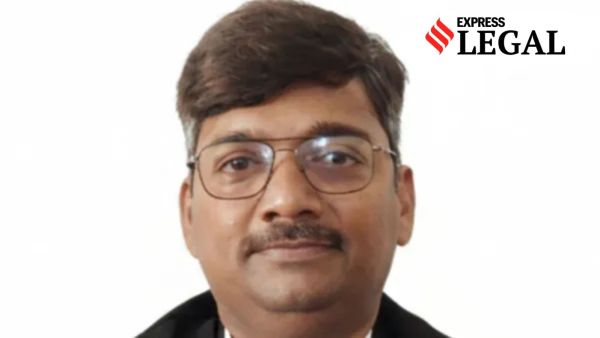 What matters is actual possession of realisable assets by which a person can pay the required court fees, said the Rajasthan High Court.
Focus only on financial capacity: High Court
- The employment status or hypothetical earning capacity is irrelevant.
- What matters is actual possession of realisable assets by which a person can pay the required court fees.
- It said that when deciding whether someone is indigent, the court must only examine whether the person actually has sufficient means to pay the court fee.
- The court did not decide whether the doctor is entitled to compensation.
- Instead, it ruled that the lower court must properly examine whether he genuinely lacks the financial means to pay nearly Rs 93 lakh in court fees before his damages suit can proceed.
- In simple terms, the court said that just because someone has a professional degree does not automatically mean they have money.
Procedural mistake by trial court
- The high court also found a technical but significant flaw.
- After issuing notice under Order 33 Rule 6 (which allows the opposite party to challenge indigency), the trial court did not properly allow the defendants to lead evidence to disprove Singh’s claim before dismissing it.
- Under the procedure laid down in the Civil Procedure Code (CPC), this opportunity is mandatory.
- Since this step was not properly followed, the high court said it would not decide the matter on merits at this stage. Instead, it sent the case back to the trial court for fresh consideration.
Dispute that began in 1991
- Gurdeep Singh completed his MBBS in April 26, 1991.
- He began his internship on May 7, 1991, at a primary health centre in Bikaner district, a mandatory step before a medical graduate can practice independently.
- But just two weeks later, on May 23, 1991, his internship was abruptly cancelled.
- According to Singh, the cancellation was not academic but retaliatory.
- He claims he was active in the student council and had raised issues about alleged irregularities in entrance examinations and the financial affairs of the institution.
- He alleges that this led to the manipulation of his academic records and ultimately derailed his medical career.
- The matter escalated further when a First Information Report (FIR) was registered against him in 1991.
- Though he was eventually acquitted due to lack of evidence, he claims the criminal case and media reporting severely damaged his reputation and employment prospects.
Degree issued after 26 years
- In 2008, Singh approached the Rajasthan High Court seeking issuance of his MBBS degree and permission to complete his internship.
- In February 2017, the high court allowed his writ petition and directed authorities to issue the marksheet and degree and permit him to undergo internship.
- However, by then, nearly 26 years had passed.
- Singh claimed that by the time he formally received his degree, his career had suffered irreversible harm.
- He filed a civil suit seeking damages running into crores of rupees, alleging wrongful acts by the authorities.
Financial hurdle: Rs 93 lakh court fee
- Before the court could examine his damages claim, Singh faced another major obstacle in the form of court fees.
- Because his compensation claim runs into crores, the court fee payable is approximately Rs 93 lakh.
- Singh told the trial court that he has no income, property, or assets and survives on financial help from his elderly mother, who receives a modest pension.
- Under Indian law (Order 33 of the Civil Procedure Code), a person who cannot afford court fees can apply to sue as an “indigent person.”
- If allowed, the case proceeds without upfront payment of fees.
What trial court did
- The trial court initially declared him indigent in 2022.
- But that order was challenged and set aside, and a fresh inquiry was ordered.
- A detailed financial inquiry was then conducted by the Chief Ministerial Officer, examining nine factors, including ownership of property, bank accounts, income tax returns, movable assets, loans and liabilities, and any recent sale or purchase of property.
- The report found no agricultural or residential property in his name.
- No PAN registration or income tax filings in the past five years.
- Around Rs 15,000 in his bank account.
- A one-time inheritance amount of Rs 4.51 lakh (already distributed among family members).
- Residence in rented accommodation in Jaipur.
- No independent source of income.
- The trial court even recorded that, at first glance, he appeared to be indigent.
- However, on July 20, 2024, the trial court dismissed his application.
- It held that the suit was time-barred (too late).
- There was no valid cause of action, and he was not an indigent person.
- Singh then appealed to the high court.
What next?
- The high court quashed the July 20, 2024 order.
- Sent the case back to the trial court.
- Directed that the defendants be allowed to challenge the claim of indigency.

© IE Online Media Services Pvt Ltd
