

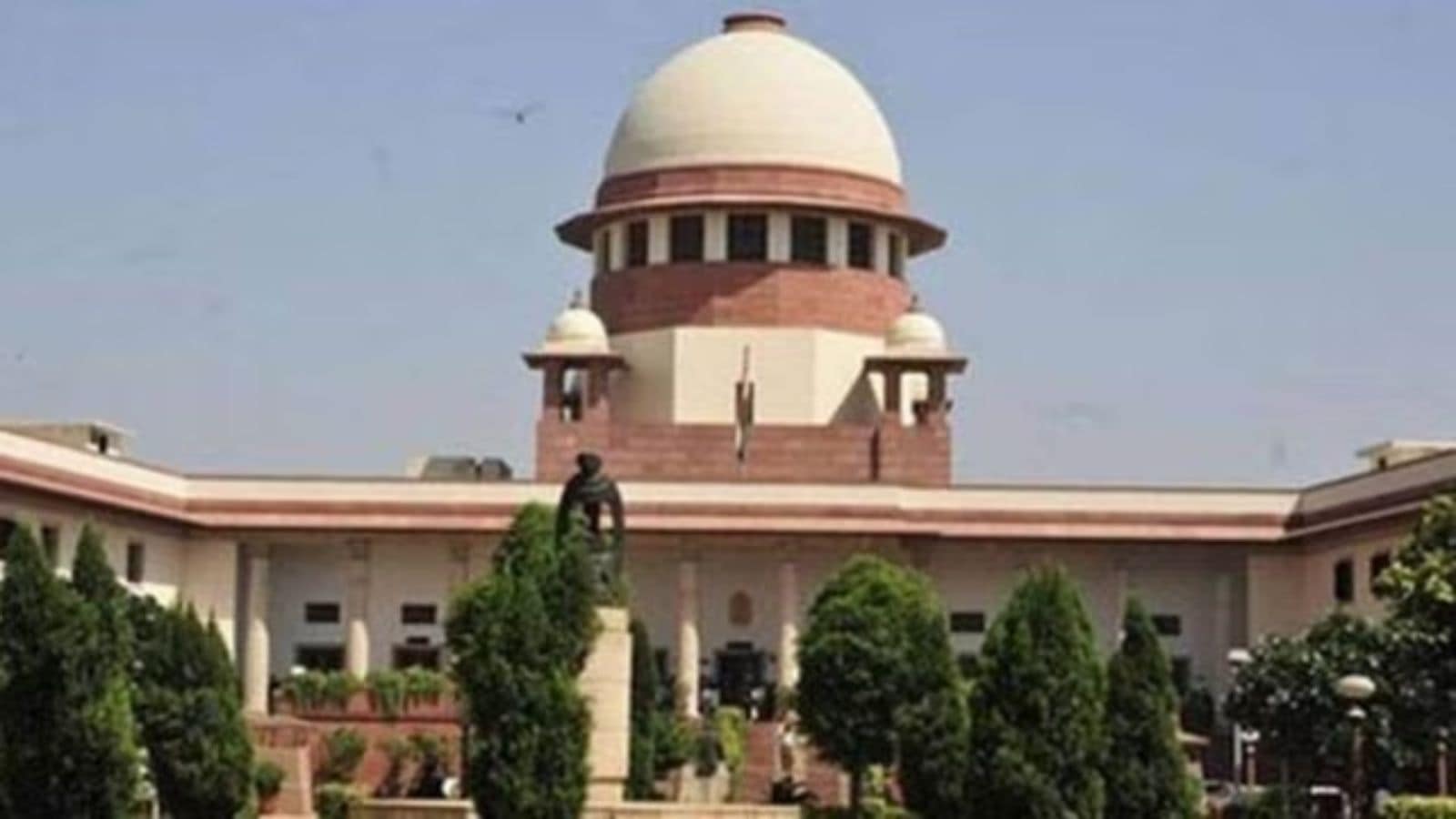
The Supreme Court recently urged Justice Aniruddha Bose, director of the National Judicial Academy in Bhopal, to constitute a committee of experts to prepare a comprehensive report on developing guidelines to promote sensitivity and compassion among judges, particularly in cases involving sexual offences and other vulnerable victims.
A bench of Chief Justice of India Surya Kant and Justices Joymalya Bagchi and N V Anjaria said the committee will consider the “previous measures undertaken, whether on the judicial side or the administrative side, to achieve such goals, as well as the varying results seen on the ground through the implementation of such measures”.

“After taking into account such previous endeavours and the variety of on-ground experiences faced by different stakeholders across the judicial system, prepare comprehensive recommendations. These recommendations shall be in the form of ‘Draft Guidelines for the Approach of Judges and the Judicial System When Dealing with Cases of Sexual Offences and other Similarly Sensitive Occurrences Involving Vulnerable Victims, Complainants, and/or Witnesses’,” said the February 10 order, which was made available Monday.
The committee of experts will be chaired by Justice Bose and will comprise four other domain experts, including practitioners, academicians, and social workers, the order said.
Rethinking attempt to rape
The need for setting up the committee arose as the SC was hearing a matter in which it had taken suo motu cognisance of May 2025 Allahabad High Court order modifying the order of summons dated March 26, 2023, issued by the special judge (Posco), Kasganj to two accused in a 2022 case lodged by a woman accusing them of attempting to rape her minor daughter.
While the trial court issued summons under Indian Penal Code (IPC) Section 376 (rape) read with Section 18 of the Protection of Children from Sexual Offences (Pocso) Act’s Section 18 (attempt to commit offence punishable under the Act), the high court revised it to be under a lesser charge under Sections 354(b) IPC (assault or use of criminal force to a woman with intent to disrobe), read with Section 9/10 (aggravated sexual assault) of the Pocso Act.
Story continues below this ad
The high court reasoned that a prima facie view of the alleged facts did not make out a case for an attempt to commit rape.
Also Read | Why Supreme Court is revisiting its guide on gender stereotypes
However, the apex court said the high court’s decision “hinges on whether the accused persons have only ‘prepared’ to commit the offence of rape or have moved beyond that to have ‘attempted’ to commit the said crime”. It said that there was a “premeditated intent” and as such, “the mens rea involved had begun to be executed.”
“This understanding is bolstered by the High Court’s own recording that the only reason why the crime was not furthered was the…intervention by third-party witnesses.”
Story continues below this ad
The apex court held that the accused’s actions amounted not just to preparation but to an attempt to commit an offence, and set aside the HC order and restored the original summons order dated June 23, 2023, passed by the Special Judge (Pocso), Kasganj.
During the proceedings, while taking note of the alleged insensitivity towards the minor girl in the HC order, the apex court said, “There is no doubt that some action is required to be taken to inculcate and nurture an inherent sensitivity and discernment into the approach of members of the judiciary, as well as into the accompanying court procedures.”
“Various steps, in this direction, have also been taken by the constitutional courts of this country, from time to time, on the judicial as well as administrative side. It seems, however, that the efforts thus far have not borne the fruit that was expected.”
However, it said that it does not want to attempt a “fresh and unguided attempt to lay down any guidelines” without first understanding what was done in the past.
‘Simple language comprehensible to laypersons’
Story continues below this ad
Setting up the committee for this task, it said given the linguistic diversity of India, “there are various examples of offensive words and expressions, the use of which would ordinarily constitute an offence under our penal laws, but they are openly spoken by members of our society in local dialects, ostensibly because of the absence of a clear understanding of the offensive nature of such saying.”
The top court asked the committee to also “identify and compile such words/expressions, from different languages, so that they do not go unnoticed, and the complainants/victims are empowered to give a better and fuller narrative of the trauma undergone by them.”
The court also urged the committee to “ensure that the Draft Guidelines are devised in a manner so that they may be understood and utilised easily by such persons…in simple language comprehensible to laypersons, whose interests the guidelines seek to protect”.
“The guidelines, we expect, will not be loaded with heavy, complicated expressions borne from foreign languages and jurisdictions. They must be contextualised in the real and lived experience of the stakeholders in the Indian judicial process, with direct reference to the ethos, values, and social fabric of our country.”
Story continues below this ad
During the hearing on February 10, CJI Surya Kant said that an earlier “Handbook on Combating Gender Stereotypes”, published by the Supreme Court in 2023 under the initiative of then CJI D Y Chandrachud, was too technical and Harvard-oriented.
The SC asked Justice Bose to constitute the Committee of Experts preferably within two weeks, and also urged the panel to complete its deliberations and submit a report, preferably within three months.
