

Did you ever think that there’s a certain significance to the shape of dumplings when you bite into them? Or that there’s a specific reason why you often see whole fish steamed and served in Chinese restaurants–and that reason has nothing to do with flavour? Or that spring rolls are considered a symbol of wealth and prosperity?
During Chinese New Year, which fell on February 17 this year, these and other delicacies—considered staples of “Chinese food” in India—are served not only for their symbolism, but also for their taste. Chinese New Year saw the transition from the Year of the Wood Snake to the Year of the Fire Horse, for the first time since 1966. The Fire Horse symbolises independence, ambition and energy. Chinese New Year celebrations last over a week, and Chinese families share a commonality with Indian families: they believe in celebrating with food, because for them, the most direct way to ensure fortune and prosperity is to eat it.

I have never had the privilege of celebrating Chinese New Year or being invited to a Chinese family’s home for the occasion, but each and every dish served during the Lunar New Year is so familiar. You’ll be surprised by the symbolism of each dish because each one signifies prosperity, and even their shapes and colours symbolise blessings.
These are 10 dishes I found most interesting, some because of their familiarity and others because I had never realised their significance in the Chinese way of life.
Dumplings are not just a symbol of wealth and prosperity; they are prepared by entire families during the Lunar New Year. Tradition brings families together to fold the dough into a half-moon shape, resembling ancient Chinese gold ingots.
The process itself is supposed to be an act of crafting good fortune for the coming year. Eating the dumplings is a promise of financial abundance. In fact, as with a fortune cookie, in some parts of China, a coin, a sweet, or a special nut is placed inside a random dumpling during the folding ritual. Whoever ends up with this dumpling is prophesied to have even more good luck than the others.
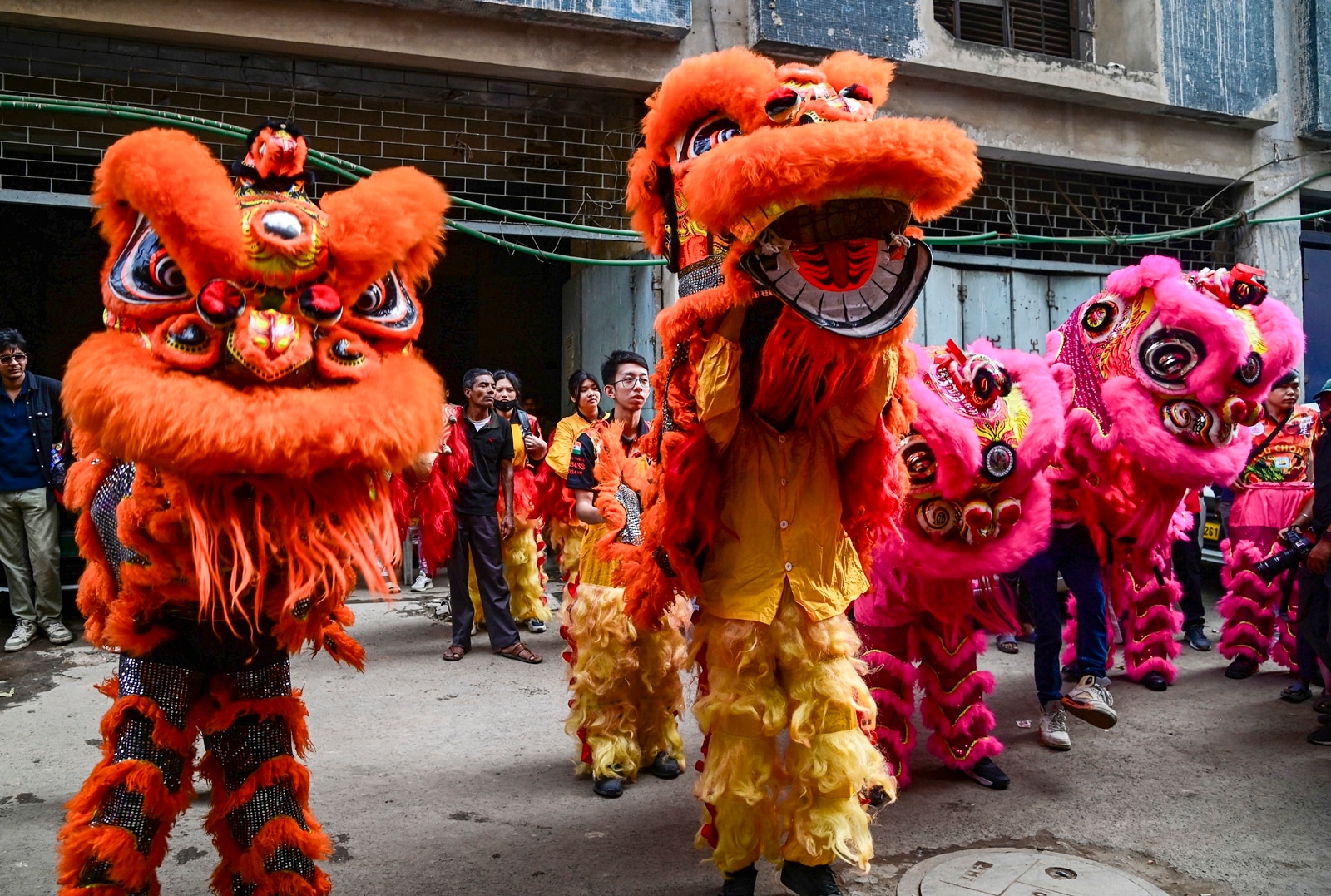 People from the Chinese community take part in Lunar New Year celebrations in Kolkata. (PTI Photo)
I have never eaten Gao, a dense cake or pudding, but it is a very common staple during the Lunar New Year. Many foods are chosen for the New Year because of their homophonic meanings. In Chinese, Gao sounds identical to the word for “tall” or “high”, which transforms the name to mean “reaching new heights each year”.
Story continues below this ad
There are three key versions prepared. The first is Nian Gao, which means “year cake”, and it is believed that eating this version will result in financial and social progress. The second – Radish Cake, made with daikon – is called Lo Bak in Cantonese. The name means “to gather good omens”. This is not a sweet cake. It is made with Chinese sausage for wealth, dried shrimp for happiness and laughter, and shiitake mushrooms for longevity. The last one is the Water Chestnut Cake, whose Chinese name is derived from its resemblance to a horse’s hoof and represents speed, vigour, and success.
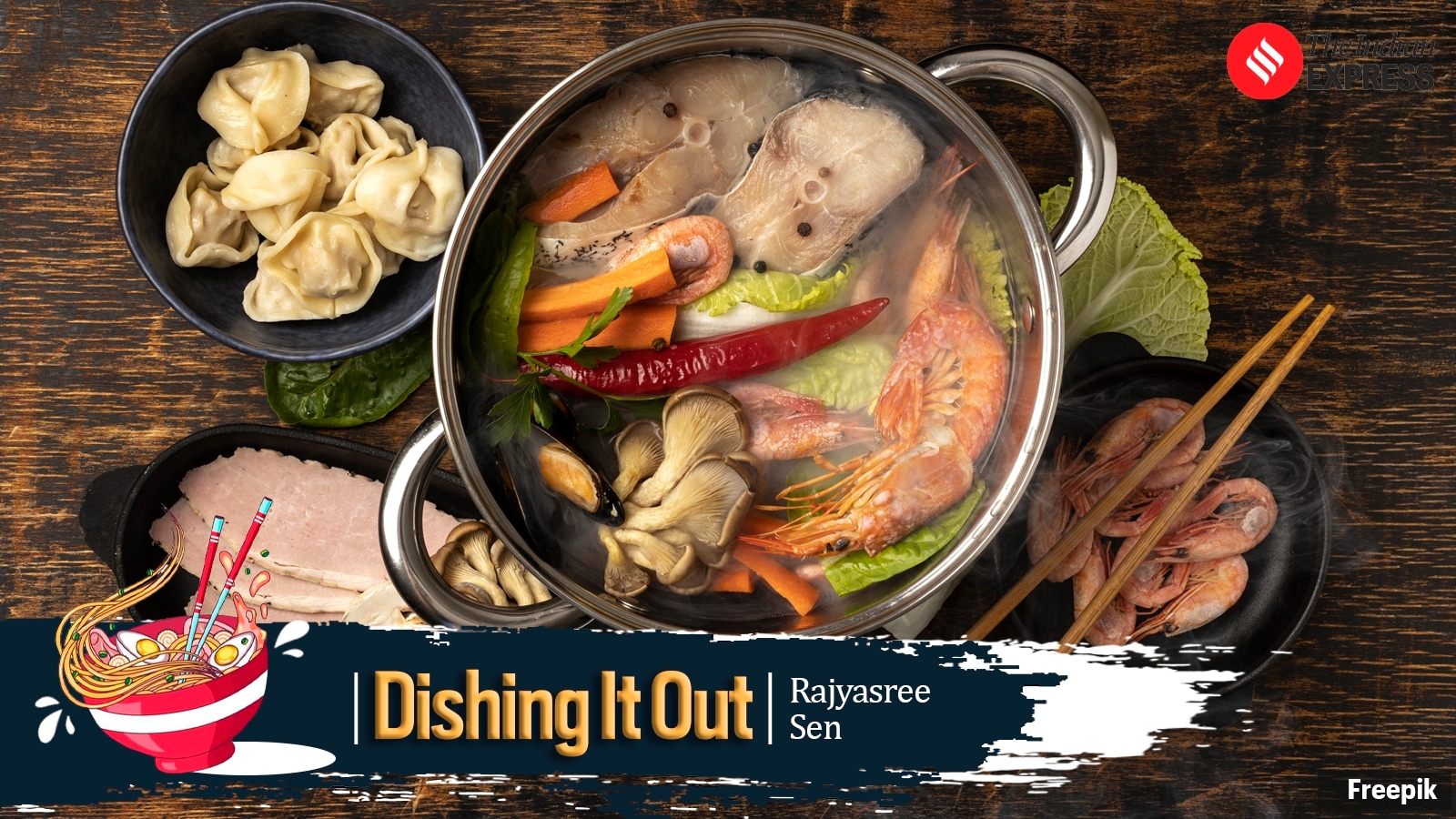
Poon Choi is an iconic dish, which means “basin dish”. It is a highly complex preparation with expensive ingredients such as abalone for wealth, other seafood for good fortune, meats for strength and vegetables for health, all served in a single large communal pot. The ingredients are layered, with the most expensive delicacies such as abalone or jumbo prawns on top. The idea is that when you dig through the layers, you uncover hidden treasures, and each layer signifies a successive level of good luck.
When you complete the entire bowl, it is seen as “finishing the year with a full basin”, ensuring that no luck is left behind. Its origins can be traced to the Song dynasty, considered one of China’s most prosperous periods. Poon Choi was created as a communal feast for villagers and soldiers to celebrate victory and unity. And much needed in today’s world, eating and gathering around this shared dish signifies harmony, the removal of social boundaries, and the fostering of equality.
My favourite is the whole steamed fish with either ginger, spring onions, or soy. Its Chinese name is Yu, which is also the homophone for the word meaning “surplus”. For everyone who wrinkles their nose at the sight of a whole fish, it’s actually critical that the fish be served whole, with its head and tail intact, because that signifies a complete and unbroken cycle of prosperity for the coming year.
Story continues below this ad
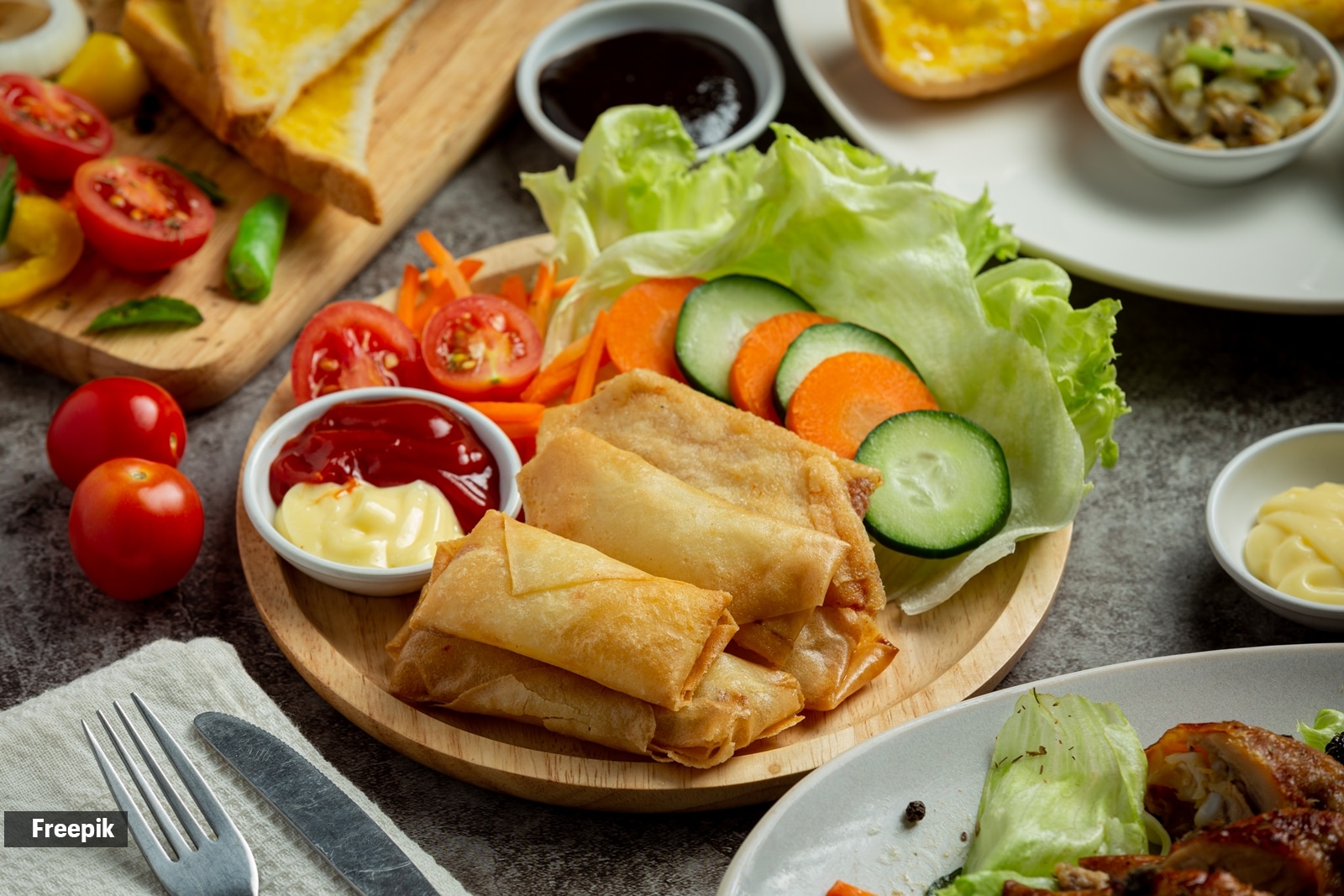 Did you know that the crunchy spring roll you bite into, dipped in chilli sauce, is actually a symbol of wealth and prosperity? (Photo: Freepik)
Even the steaming method is significant. The gentle cooking portends a smooth, uncomplicated, and harmonious year ahead, devoid of the chaos of “overcooking”. The traditional presentation uses garnishes of ginger and spring onion, which, while tasty, are actually symbolic of growth and vitality. Most importantly, it is customary to leave a portion of the fish uneaten–especially some of the flesh along with the head and tail.
I’m going to almost end with a staple at dinner parties and Chinese restaurant orders in India–the spring roll. Did you know that the crunchy spring roll you bite into, dipped in chilli sauce, is actually a symbol of wealth and prosperity? The golden colour and its physical resemblance to gold bars are why they are considered a Lunar New Year festival dish.
Called Chun Juan in Mandarin, it means “rolling in”. And signifies the rolling in of renewed energy, vitality, and spring, which is tied to renewal and growth. The act of tightly wrapping the filling within the spring roll covering carries its own significance—it symbolises that good fortune has been secured for the coming months.
I’m going to end with my favourite dish served during Lunar New Year–the Longevity Noodles. This dish is the most direct symbol of a long and healthy life in Chinese culture. The symbolism derives from their name and form, as the dish is prepared as a single, unbroken strand of noodle that can stretch up to several feet. This is supposed to be an analogy for the unbroken continuation of life. You are supposed to eat the entire noodle without breaking it into smaller pieces, as that would mean that you’ve symbolically “cut short” your life.
Story continues below this ad
This is prepared in a delicious, clear broth. Sometimes it is stir-fried and served along with leafy greens for vitality, and shiitake mushrooms and eggs for rebirth and completeness.
There are so many other interesting delicacies, many of which we eat whenever we enter a Chinese restaurant, but all carry deep significance beyond their flavour profiles. So the next time you bite into a spring roll or a dumpling, realise that you are savouring a mouthful of good wishes and prosperity.
