

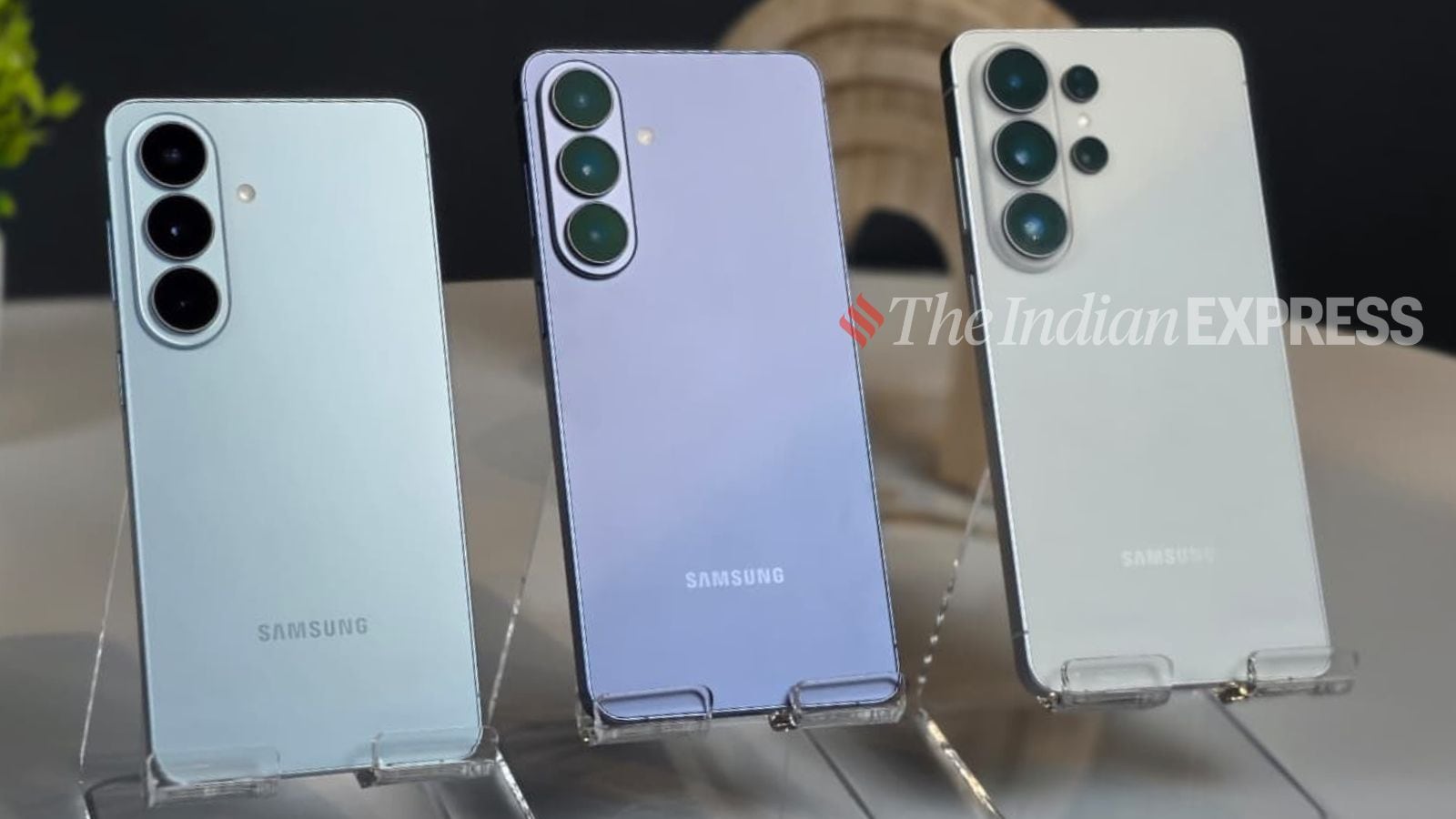
Something felt different at Galaxy Unpacked, held this week in San Francisco. On the surface, much like in previous years, Samsung launched its latest Galaxy S series lineup—this time, the Galaxy S26 family of smartphones, with the top-end S26 Ultra positioned as the world’s best smartphone. We knew the script: how Samsung would position its new phones and the broader messaging that typically comes out of a big event like Unpacked. However, the hero of the event wasn’t the hardware or the phones themselves, but how strategically ‘Galaxy AI’ was placed at the centre. It was unexpected from Samsung, a company traditionally known for its hardware.
The fact that software features were prominently highlighted shows how important artificial intelligence has become for Samsung as it competes with Apple and other Chinese smartphone makers. It also provides insight into how Samsung aims to take ownership of the consumer AI space.

For years, Samsung has been known for its hardware and the way it packages its devices. Every time the company introduces hardware upgrades, people flock to Samsung stores to buy the latest Galaxy phone. For one, Samsung is an enormous company that makes nearly every key component that goes inside its phones, from displays to memory chips. That is still true today, but an upgraded camera, a new design, or a faster processor is no longer enough to sell an expensive smartphone to consumers.
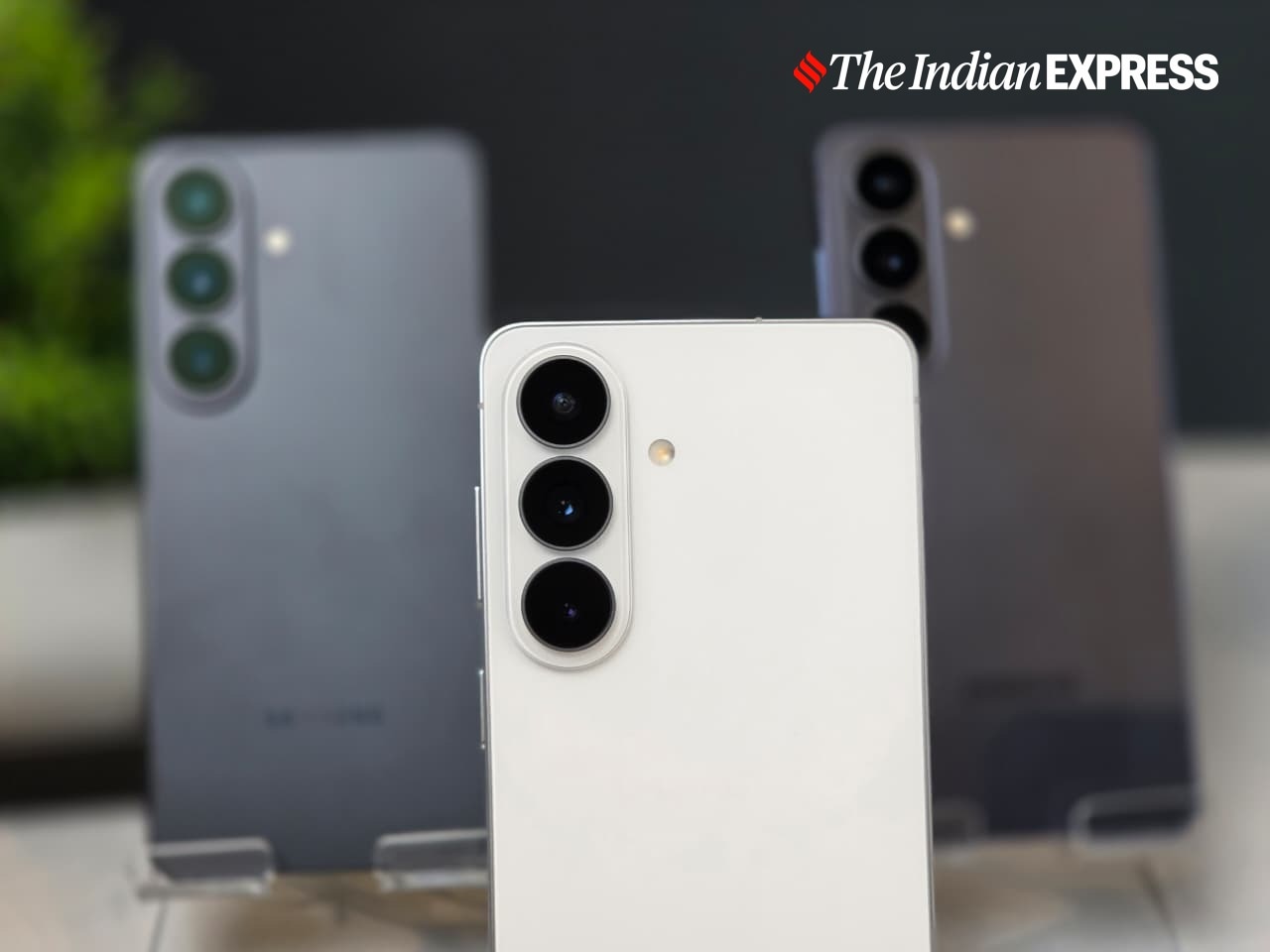 Familiar Galaxy design, but now positioned as a gateway to Samsung’s agentic AI future. (Image: Anuj Bhatia/The Indian Express)
There is no guarantee that the old tricks work anymore. Sure, hardware is needed to support new features, but as people hold on to their phones for longer, it is the software that needs to be compelling enough to convince them to upgrade. And now, Samsung may have found a major opportunity in a somewhat unexpected place: AI.
Artificial intelligence now has the power to dictate the kind of features companies like Samsung can introduce in their smartphones—features that weren’t possible before. In fact, the hardware had long been ready; neural engines had been built into chips for years, but AI simply wasn’t advanced enough at the time.
Preparing for agentic AI
As it introduced three new phones in the Galaxy S26 series on Wednesday, Samsung executives didn’t shy away from admitting that the new devices are designed for the agentic AI era. The company showcased a slew of artificial intelligence features on stage.
Now Nudge, for example, analyses what’s currently on your screen and offers timely suggestions before you even ask. Meanwhile, AI-assisted editing and creation tools bring the ability to capture and edit photos and videos into a single app experience, so users no longer have to switch between multiple apps to complete their edits.
Story continues below this ad
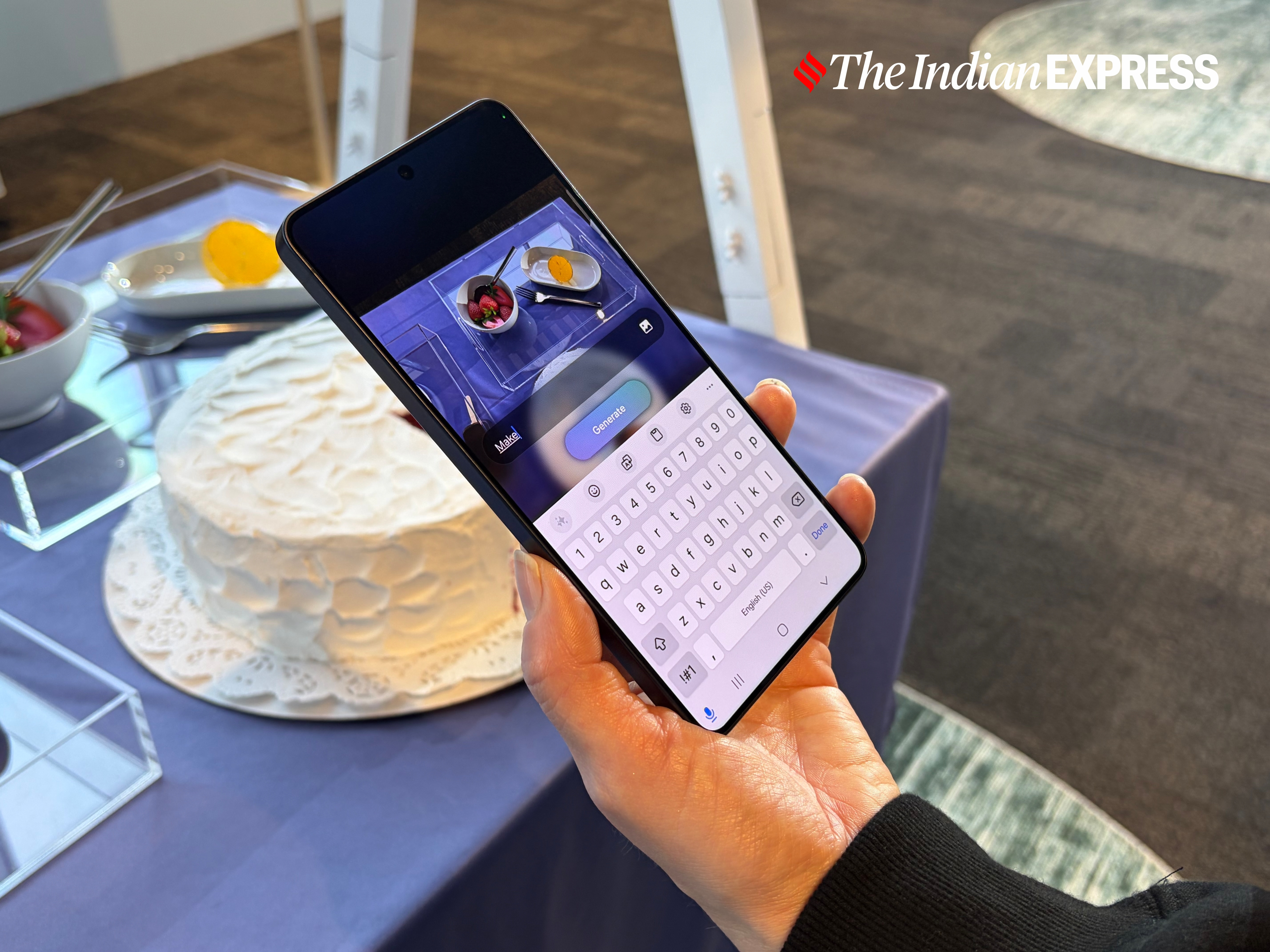 Galaxy AI in action on the S26 series, highlighting Samsung’s push toward proactive, on-device intelligence. (Image: Anuj Bhatia/The Indian Express)
Samsung is betting on an agentic AI future, where AI assistants carry out tasks on users’ behalf. However, agentic AI differs from generative AI in several ways. Unlike generative models, which respond to isolated prompts, agents are proactive. They analyse intent, orchestrate multi-touch outreach, and coordinate follow-ups.
For example, they can take action and execute multi-step workflows independently. At least, that’s what Samsung is aiming to bring to a flagship device like the Galaxy S26 Ultra. However, it is a multi-year journey, and right now, agentic AI is still in its infancy. Even so, we are already beginning to see what the agentic AI future may look like.
Galaxy AI push
Samsung may not have the advantage that Apple has with its own operating system, as it relies on Android, the operating system installed on more than three billion devices globally, many of which are smartphones. However, Samsung has turned this perceived weakness into a strength. It has a deep relationship with Google, which is itself heavily investing in AI, while Samsung is building its own AI platform, called Galaxy AI, which sits on top of the operating system. Galaxy AI isn’t powered solely by Google’s Gemini; Samsung also has its own large language model (that powers text-generation tools, including the ability to summarise web pages, or help you get started on a topic) that resides on the handset and can run in offline mode, keeping user data on the device.
But that openness is changing smartphones—for good. At Unpacked, Samsung announced that Galaxy AI now supports multi-agent functionality with Perplexity integration, aiming for a broader range of capabilities beyond Google’s Gemini. Samsung plans to integrate Perplexity deeply across its AI ecosystem. Not only is Perplexity becoming a part of Bixby for web searches, but it will also be embedded in several first-party apps, including Notes, Clock, Gallery, Calendar, and Reminders.
Story continues below this ad
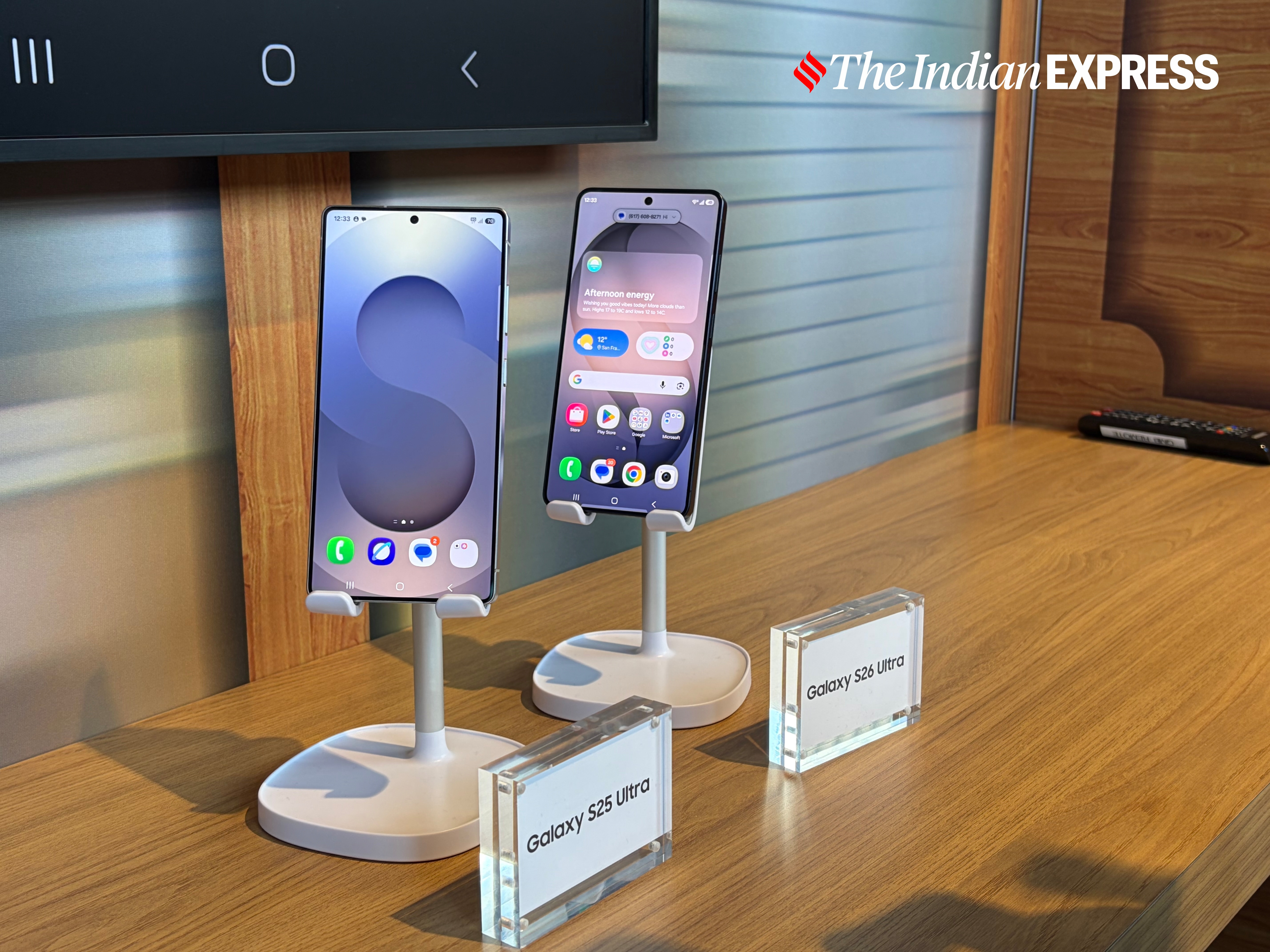 The Galaxy S26 lineup on display, signalling Samsung’s shift from hardware upgrades to an AI-driven experience. (Image: Anuj Bhatia/The Indian Express)
By bringing multiple AI agents into Galaxy AI, Samsung is capitalising on the possibilities enabled by agentic AI. It’s no wonder that agentic AI could be a value add, as the tool can adapt its thinking to continually improve. This represents a different approach to integrating AI into the daily smartphone experience, something very different from how Apple approaches AI. Apple views AI as a connection between your apps, Samsung, on the other hand, applies AI to specific, individual tasks.
While Galaxy AI started as something more centred on communication and productivity, it has now evolved into a semi- or fully autonomous system, capable of perceiving, reasoning, and acting on its own. It is not fully there yet, but the intention is for AI to handle tasks on your behalf.
However, there is a subtle distinction between AI agents and the broader category of agentic AI, although most people still use the terms interchangeably. Many view agentic AI as systems that incorporate multiple, distinct agents working together to orchestrate a task. But one thing that may be missing at the moment is that AI agents lack personality. When we say AI agents can think like a human and initiate tasks like a human, they should have personalities that complement those of humans, something that is currently not present.
Birth of a new kind of smartphone—but powered by AI
AI won’t kill the smartphone, but it will force companies to go back to the drawing board and reimagine what a smartphone can be. Phones are the ultimate pocket-sized computers, centred around apps and networked communication. Samsung’s vision for a smartphone—at least from what was evident during Unpacked—is neither a screen-free experience nor an absurd idea like putting a phone in a pendant. Instead, it is a smartphone infused with AI in its operating system and comes with more intelligent AI-powered agents, which have greater cognitive capabilities than the current generation of AI bots.
Story continues below this ad
The phone may still look like a phone, with a screen (perhaps a better one, such as the privacy display seen on the S26 Ultra), a more intelligent camera, and an AI system that learns the user’s behaviour, performs complex tasks with greater autonomy, takes initiative, makes decisions, and acts on them.
