

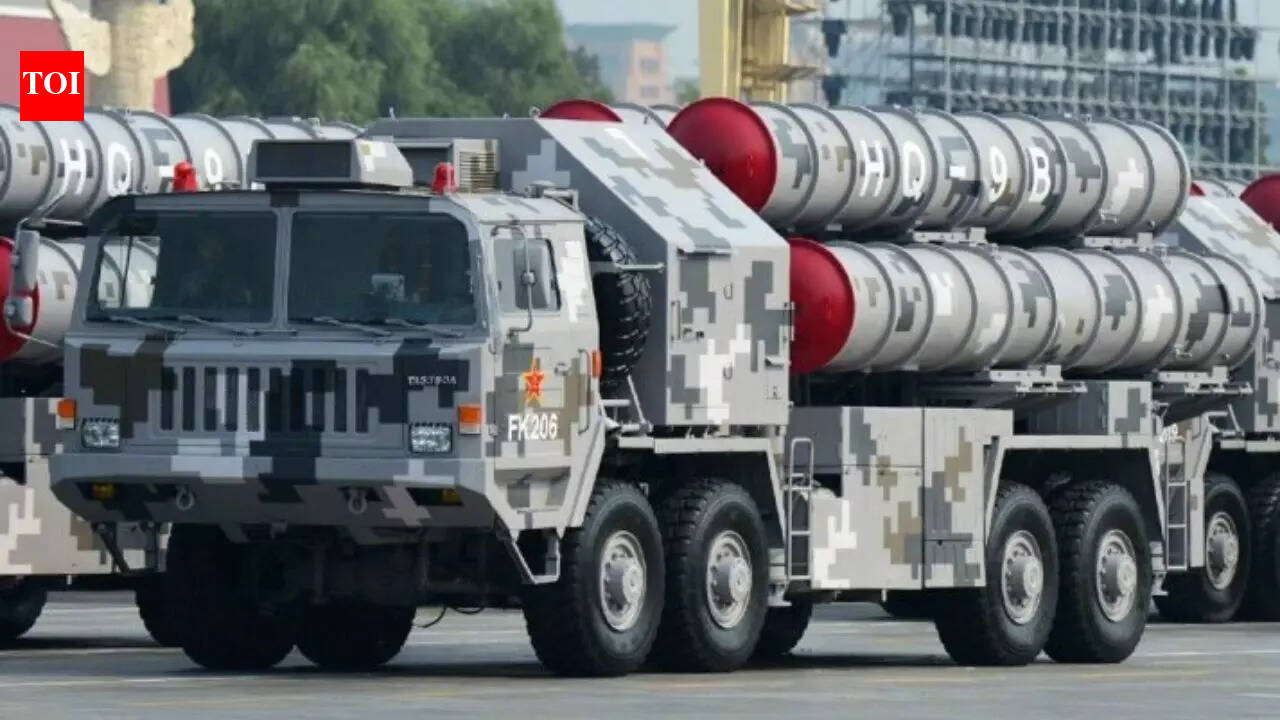
Mass destruction across more than 20 Iranian provinces following coordinated US and Israeli airstrikes has raised serious questions about the performance of Tehran’s air defence network, particularly the Chinese-origin HQ-9B surface-to-air missile system that Iran is believed to have recently acquired.The strikes, which targeted military infrastructure and key installations, have placed the spotlight on whether the HQ-9B, touted as one of China’s most advanced long-range air defence systems, was able to perform as advertised. Combat analysts are now examining whether the system suffered from technical shortcomings or whether it was simply overwhelmed by the scale and sophistication of the combined US-Israeli offensive.The scrutiny has intensified after reports that the HQ-9B also failed to adequately protect high-value targets in Pakistan during India’s Operation Sindoor, launched in response to the Pahalgam terror attack.
Widespread destruction despite layered defences
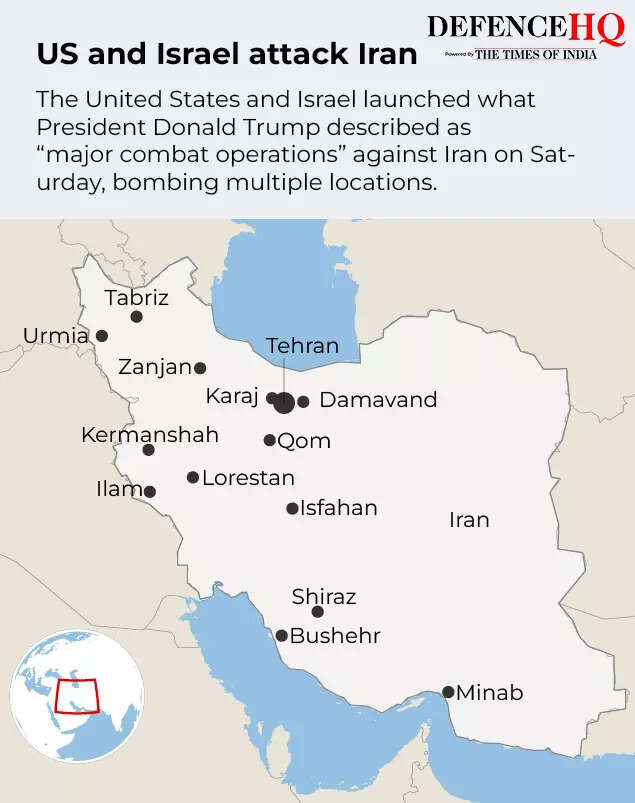
The coordinated strikes by Washington and Tel Aviv hit multiple Iranian cities and strategic sites, reportedly killing more than 200 people and damaging infrastructure across much of the country, including Tehran. The scale of the operation suggested the use of advanced fighter aircraft, stand-off weapons, cruise missiles and possibly stealth platforms designed to penetrate layered air defence networks.
.
Iran’s air defence structure was meant to operate in tiers. The long-range layer was reportedly anchored by the HQ-9B, supported by Russian-origin S-300PMU-2 systems and Iran’s indigenous Bavar-373. Medium-range systems such as Khordad-15 and Raad were expected to fill coverage gaps, while short-range systems including Tor-M2, Pantsir-S1, Zolfaqar and shoulder-fired MANPADS were intended to defend against low-flying threats and precision-guided munitions.
.
The HQ-9B was likely deployed around critical assets such as the Natanz nuclear complex, the Fordow enrichment facility, Islamic Revolutionary Guard Corps missile and UAV bases, and major airbases near Tehran and Isfahan. Yet, the reported damage indicates that large numbers of incoming projectiles were able to penetrate or overwhelm these defences.
.
What is the HQ-9B
Developed by the China Aerospace Science and Industry Corporation, the HQ-9B is a long-range surface-to-air missile system inspired by the Russian S-300PMU and the American Patriot PAC-2, though it has since evolved into what Beijing describes as a fully indigenous platform.First tested in 2006 and operational for over a decade, the HQ-9B is reported to have a maximum engagement range of approximately 260 kilometres and an interception altitude of up to 50 kilometres. It is designed to counter aircraft, cruise missiles and certain classes of ballistic missiles.The system reportedly incorporates active radar homing and a passive infrared seeker, features intended to enhance effectiveness against stealth aircraft and electronic countermeasures. It is said to be capable of tracking up to 100 targets simultaneously and engaging six to eight at a time.China has deployed the HQ-9B in Beijing, Tibet and the South China Sea, regions central to its strategic posture. That deployment pattern suggests the system forms a core element of China’s own air defence grid.
Did Iran receive the system
Reports that Iran procured the HQ-9B emerged amid rising tensions in the Gulf and repeated threats of military action linked to Tehran’s nuclear programme. According to media accounts, the system may have been part of an oil-for-weapons arrangement between Beijing and Tehran.Senior Iranian lawmaker Abolfazl Zohrevand, a member of the National Security Committee, said China would supply HQ-9 systems to close “critical operational gaps” against high-altitude threats. China has publicly denied delivering the HQ-9B to Iran.Despite Beijing’s denial, Iranian officials indicated that the package included long-range surveillance radars and electronic warfare systems, signalling a broader attempt to modernise air defences after shortcomings were exposed in previous clashes.Iran’s previous reliance on the Russian S-300PMU-2 reportedly proved inadequate during the 2025 conflict with Israel. That performance appears to have accelerated Tehran’s search for alternatives.
Why analysts are questioning its performance
The latest strikes have led analysts to consider two broad explanations for the HQ-9B’s apparent failure.The first possibility is technical limitation. Even advanced systems have constraints in radar coverage, reaction time and interceptor inventory. If attackers use saturation tactics by launching large numbers of missiles and drones simultaneously, even high-end systems can struggle.The second explanation is operational overwhelm. The combined airpower of the United States and Israel includes stealth aircraft, electronic warfare platforms, precision-guided munitions and cyber capabilities. Coordinated strikes could have targeted radars, command-and-control nodes and missile batteries in the opening phases, degrading the air defence network before the main wave of projectiles arrived.There is also the possibility that the HQ-9B network in Iran was deployed rapidly and not fully integrated into an optimised command structure. Building an effective layered air defence requires years of calibration, training and interoperability testing.
Broader regional fallout
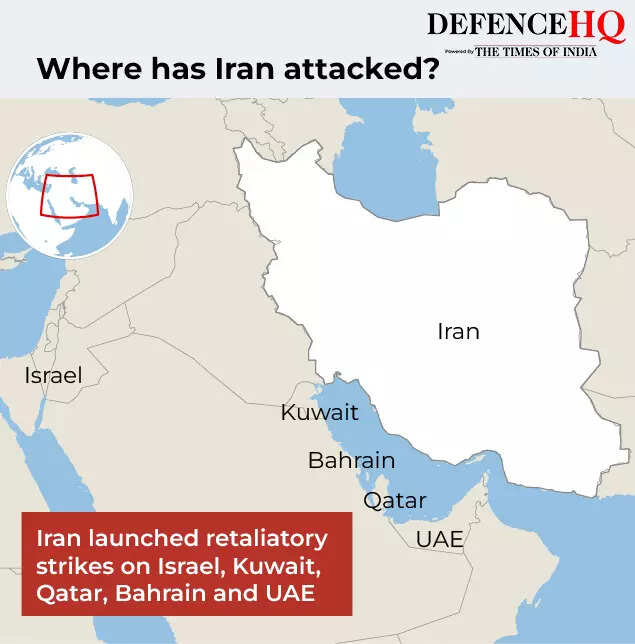
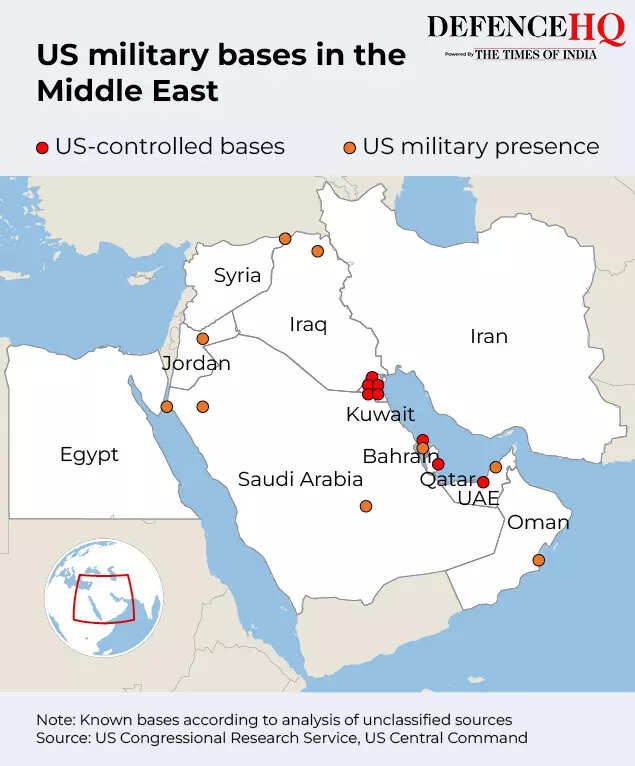
The conflict has widened beyond Iran’s borders. Dubai International Airport, one of the world’s busiest aviation hubs, was forced to close temporarily amid regional airspace disruptions. Iran retaliated by targeting US allies such as Qatar and the United Arab Emirates, signalling that states siding with Washington or Tel Aviv could face consequences.Iran’s Supreme Leader Ayatollah Ali Khamenei was killed in the strikes, dramatically escalating tensions. Tehran has vowed what it described as the “most ferocious offensive operation in history” in response.US President Donald Trump described Khamenei as “one of the most evil people in history” and said American operations would continue “as long as necessary” to achieve their objectives.
Strategic implications for China and Iran
The HQ-9B’s performance carries implications beyond Iran. If confirmed that the system was unable to shield key installations from sustained, high-end air assault, questions could arise about the effectiveness of China’s export-grade air defence technology.For Iran, the episode highlights the difficulty of defending a vast territory against technologically advanced adversaries. Even with layered defences, air superiority by the attacker can prove decisive.At the same time, it remains unclear how many interceptors were launched, how many threats were neutralised, and whether some incoming projectiles were intentionally allowed to strike secondary targets while priority assets were protected.Independent verification of battlefield performance is limited amid the fog of war. What is clear, however, is that the destruction across Iranian cities has exposed vulnerabilities in Tehran’s defensive shield and placed one of China’s most prominent air defence exports under unprecedented scrutiny.As the conflict unfolds, analysts will continue to examine whether the HQ-9B’s shortcomings were intrinsic or situational, and what that means for future procurement decisions and regional military balances.
