

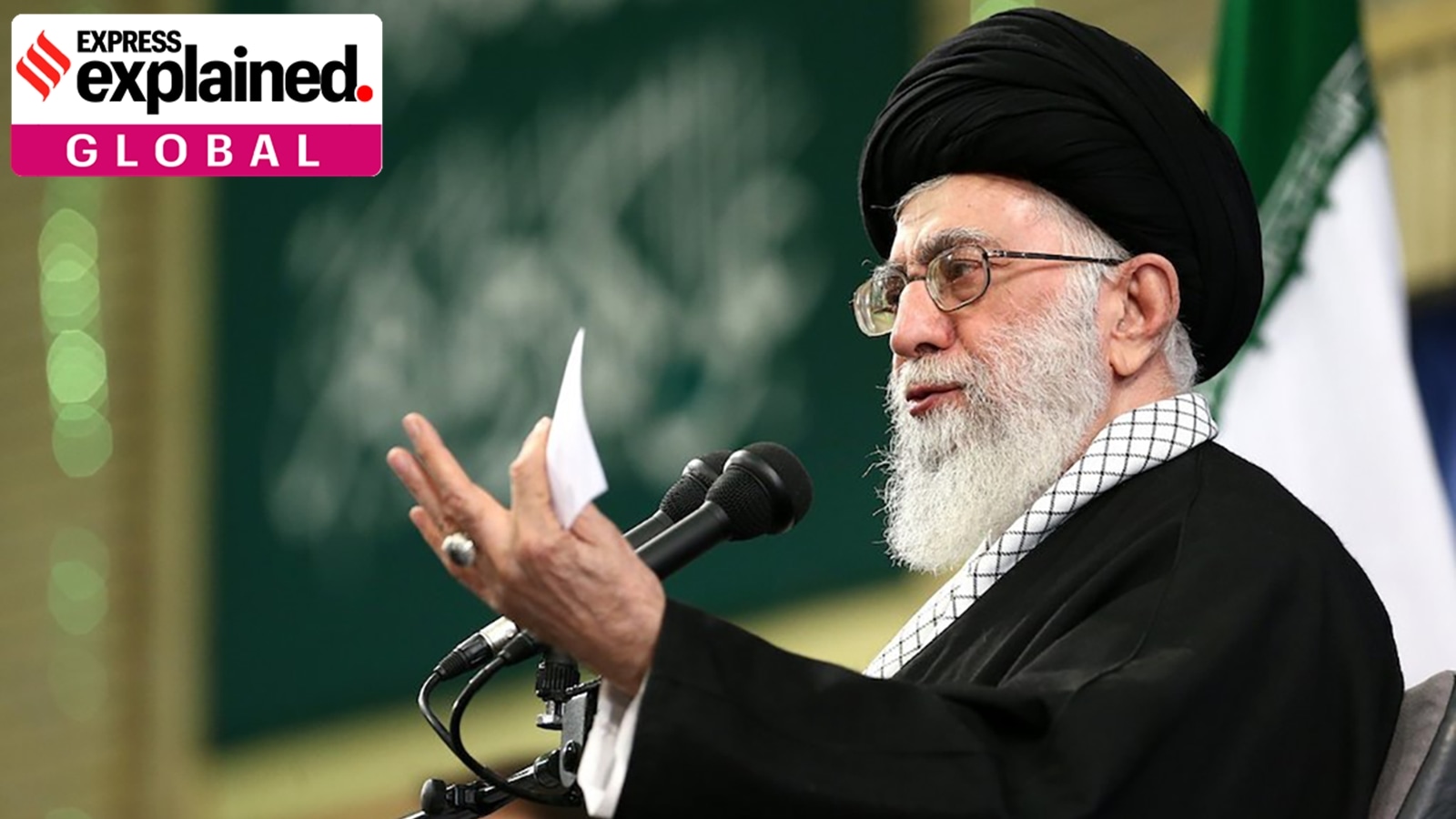
The assassination of Ayatollah Ali Khamenei, 86, the Supreme Leader of the Islamic Republic of Iran, marks the end of a significant figure of a style of leadership that the Islamic Revolution of 1978-79 and the country’s post-revolution politics have produced.
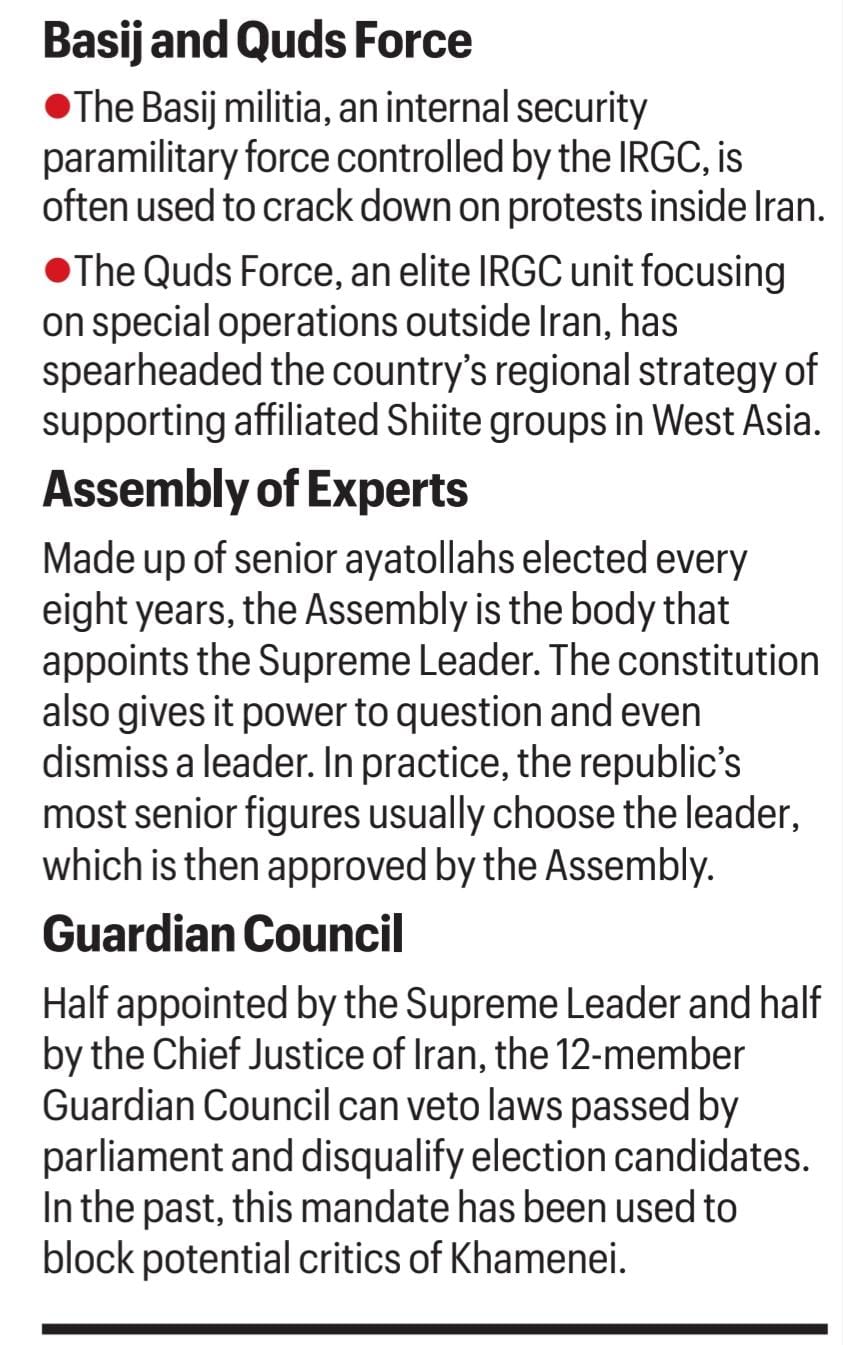
Khamenei was killed in an attack by the US and Israeli forces, and a process to find his successor was set in motion immediately, so that the Assembly of Experts, a deliberative body, can choose the next leader.
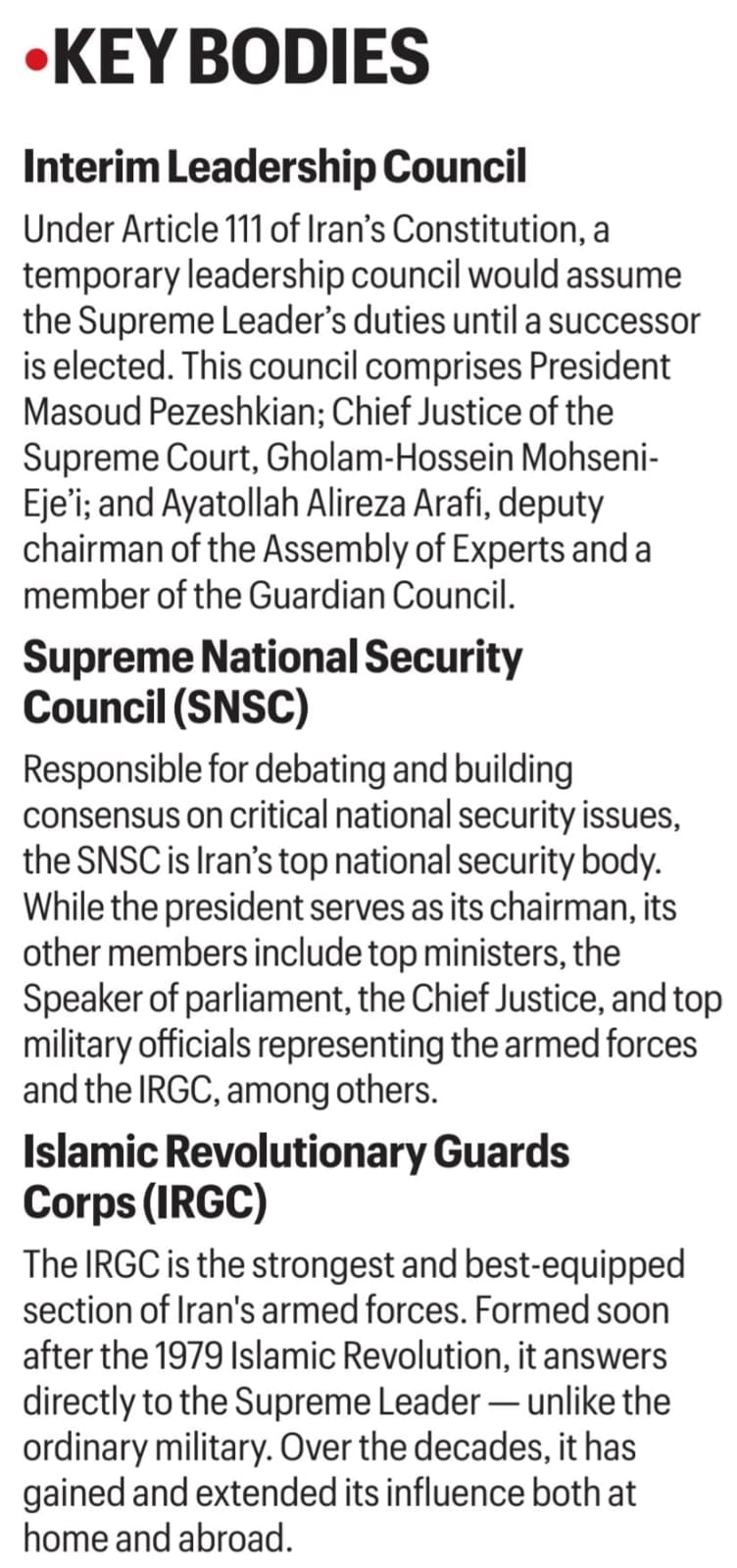
Meanwhile, the three-member Interim Leadership Council that will assume the duties of the Supreme Leader has already been formed under Constitutional provisions. The events showcase the established procedures that the Iranian political system has in place for times of crisis.]
Threads of religion and politics
Ayatollah Khamenei represented and led a political system consisting of hierarchical but interrelated institutions and a political culture developed through a variety of processes over the last 47 years, since the revolution.
The close linkages between religion and politics in the Shia-majority Iran have a history that predates 1979. The anti-monarchist ethos of Shia religious leaders and their participation in a range of political movements in modern Iranian political history warrants recognition here.
Key examples include the Tobacco Movement of the 19th century, launched against concessions granted by the Iranian royals to the British, the Constitutional Revolution of 1906-11 for a constitutional monarchy, agitations against a reform package under Muhammad Reza Shah Pahlavi in 1963 (called the White Revolution), and the 1979 revolution. An anti-monarchist stance was visible in the participation of religious leaders.
The ideological leadership provided by the first Supreme Leader, Ayatollah Khomeini, while remaining in exile in France, for the 1979 revolution was crucial in shaping the character of both the revolution and the Islamic Republic established after its success.
Story continues below this ad
While almost every section of the Iranian population participated in the anti-Shah protests of the late ’70s, including the communists and workers, the religious section was able to muster more legitimacy and popularity during and immediately after the Revolution due to its ideological and strategic leadership.
The strategic advantage for the Shia clergy can be attributed to multiple factors, a significant one being the role of mosques as a major site of political activism. The Friday prayer gatherings became a pivotal point of religio-political assembly. This was because the Shah’s apparatuses, like his secret police known as SAVAK, surveilled public places, leaving mosques among the few bast (sanctuary) in a repressive society.
Khomeini and Khamenei
The ideological leadership of religious scholars and intellectuals further lent a revolutionary interpretation of religious texts and practices. It enabled people to link the transformative potential of their belief system to the requirements of anti-monarchist and anti-imperialist political action.
While Islamic interpretations given by intellectuals like Ali Shariati did not envisage a political leadership of the clergy, Ayatollah Khomeini’s interpretations on the linkages between Islam and politics projected the idea of Islamic Government under the leadership of the religious jurisprudence. Khomeini’s idea of velayat-e-faqih (rule of the jurisprudent) thus became a cornerstone of the political system, covering not only his political theology, but also the post-revolutionary government.
Story continues below this ad
The Islamic Republic’s Constitution drew heavily from Ayatollah Khomeini’s ideas mentioned above and from the republicanism of the French political system. The overarching power of the Supreme Leader in the 1979 Constitution is adopted from the rule of the jurisprudent idea.
Ayatollah Khomeini was followed by Ayatollah Ali Khamenei as the Supreme Leader after Khomeini died in 1989. The Constitutional changes in 1989 led to some reassigning of roles and the abolition of the position of the Prime Minister, but the system broadly maintained its original character. The level of power that Khomeini wielded was curtailed to an extent and the Prime Minister’s functions were distributed to the President and the Speaker of the Majlis through a constitutional amendment.
The Supreme Leader, selected by the elected Assembly of Experts, a popularly elected President and the Majlis (the Parliament) represent different facets of the political system. The selection of Khomeini’s successor was not without controversy. Even though Ayatollah Montazeri was designated to the position, it ultimately went to Ayatollah Khamenei, who was already President of Iran for two terms between 1981 and 1989.
His presidency saw the eight-year Iran-Iraq war. It was a time of both a war on the external front and internal consolidation of the republic’s power. As someone who fought in the war, as Supreme Leader, he made it a point to regularly visit the families of martyrs of the war, even until his death.
Story continues below this ad
In that sense, Ayatollah Khamenei fit both religious and political roles well. Usually known for his hardline politics internationally, and seen as a pragmatic leader by some Iranian analysts, his leadership came under severe scrutiny in recent years. The Mahsa Amini protests of 2022 and the recent demonstrations over economic frustrations pointed to domestic concerns over the regime’s authoritarian rule and Iran’s global economic isolation — particularly in the West. His idea of a resistance economy — one that is self-reliant to confront economic sanctions — was not enough to overcome Iran’s economic woes.
After Supreme Leader
The political system of Iran has seen elections being regularly held for the presidency, the Majlis and local governments. The ideological divergence among the so-called reformists and hardliners has remained a major feature of Iranian politics for decades now. Ayatollah Khamenei, even while supporting hardline candidates in presidential and parliamentary elections, developed a political practice of the Supreme Leader to manage differences and to work with different factions. For instance, his fatwa on the non-use of nuclear weapons and his approval of various nuclear negotiations including the signing of the Joint Comprehensive Plan of Action (JCPOA) in 2015 with Western nations, showed that ideology and pragmatism could co-exist in important realms of state conduct.
Another component of the state’s power is the Islamic Revolutionary Guard Corps (IRGC), founded immediately after the Iranian Revolution of 1979. It expanded its activities not only in the general sense of defending the revolution but also in projecting Iran’s power in the West Asian region through support for militant organisations like Hamas in Gaza and Hezbollah in Lebanon. Ayatollah Khamenei also considered it an integral factor in ensuring the political system’s stability.
However, continued sanctions, Iran’s international isolation and the Iranian people’s desire to have more say in the affairs of the country, along with a more meaningful participation, created a significant divergence between the system and its people.
Story continues below this ad
After 47 years of the Islamic Republic, there are many legitimate questions that arise out of the gap between people’s demands and perceptions on the one hand, and the delivery and conduct of the state on the other. The ongoing war, the attack on its sovereignty and the assassination of its leadership place unprecedented challenges to the political order in Iran.
Ramakrishnan taught at the Centre for West Asian Studies, School of International Studies, JNU.
