

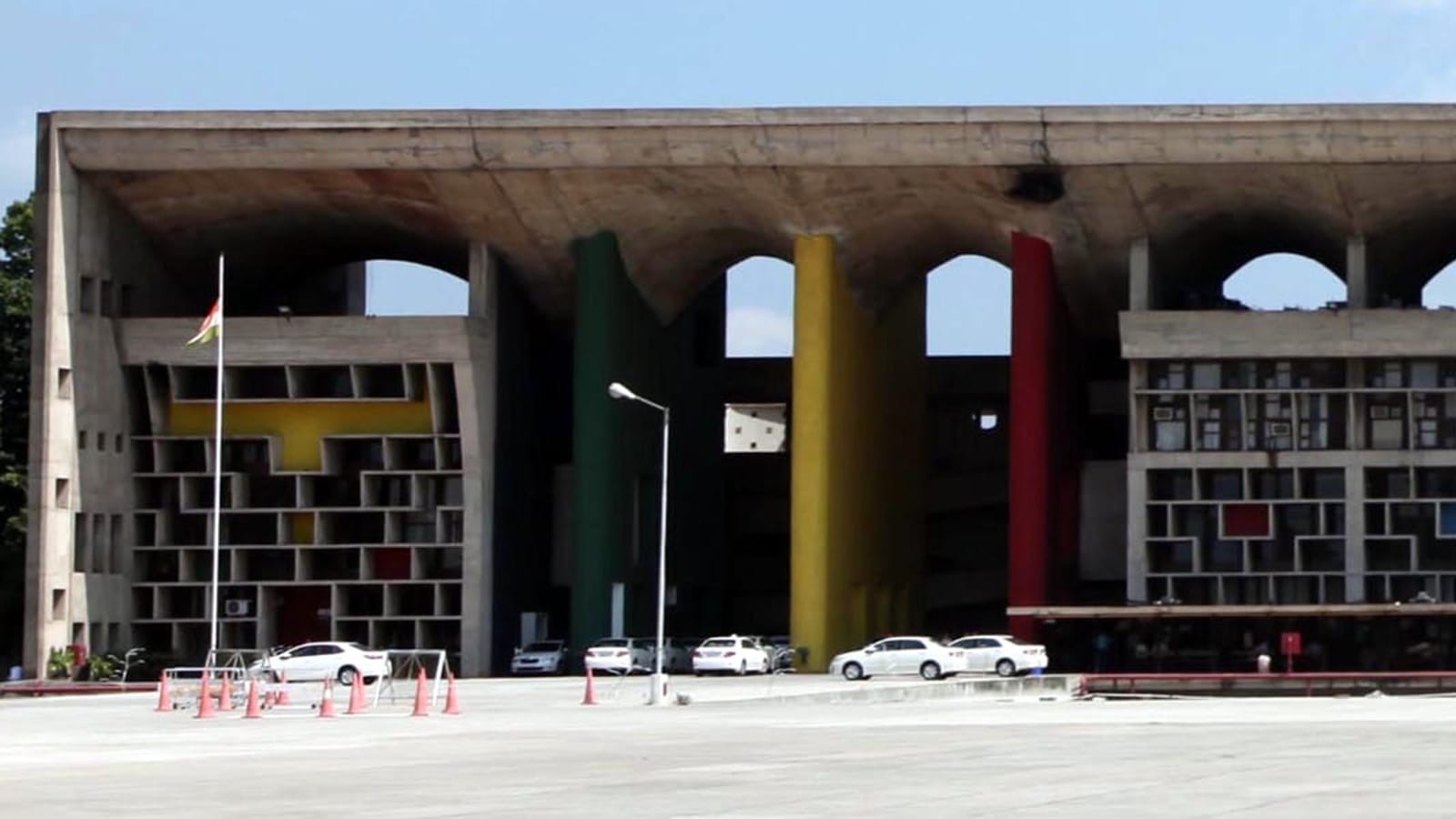
The Punjab and Haryana High Court Thursday directed government agencies and project proponents seeking permission to fell trees in Punjab to place detailed material on record, including photographs from multiple angles and Google images of the sites, before it considers their pleas to relax an earlier ban on tree cutting.
Hearing a batch of civil miscellaneous applications in an ongoing public interest litigation, a division bench headed by Chief Justice Sheel Nagu said the court could not “close its eyes” to the scale of tree felling being proposed in the state.
“I would like to find photographs shot from different angles of the area in question so that the thickness of the foliage and the age of the trees can be deciphered,” the bench, also comprising Justice Sanjiv Berry said while directing the applicants to place at least 10 photographs of the areas concerned along with Google images on record.
When counsel for one of the applicants submitted that aerial surveys had already been carried out by the Union government while preparing a forest working plan, the court said the material must still be placed before it.
“If you do not want to follow the directions, either challenge those directions or withdraw your application,” the Chief Justice said, adding that even permissions granted earlier could be reviewed.
“Do not treat this as adversarial litigation. Even if permission has been granted, it can always be cancelled,” the bench observed.
The court was hearing applications filed by various organisations seeking modification of an earlier order imposing a complete ban on the felling of trees.
Story continues below this ad
During the hearing, the bench also raised concerns over large-scale tree felling proposed for infrastructure and development projects in Punjab, noting that the state already had a very low green cover. “Punjab only has about 4 per cent green cover,” the bench remarked.
Counsel appearing for different agencies informed the court that several projects required limited or specific tree felling and that the necessary approvals had either been obtained or were being sought in compliance with forest laws.
The Punjab State Power Transmission Corporation submitted that approval had already been granted for two projects involving the felling of around 716 trees: 329 for creation of a substation and 387 for expansion of another substation aimed at reducing load on existing infrastructure.
The court, however, questioned the scale of tree cutting, remarking that the number appeared “huge” and asking whether alternatives had been explored. Counsel responded that the projects were meant to address rising power demand and that electricity infrastructure was essential for residential as well as industrial supply.
Story continues below this ad
Applications were also moved by the National Highways Authority of India in connection with highway works, including the Zirakpur bypass and the Nadampur–Patiala bypass greenfield project. Counsel told the court that around 1,115 trees were proposed to be cut in one project and 2,480 in another, taking the total to 3,495. It was submitted that compensatory afforestation had been planned and land had already been transferred to the Punjab government for planting around 20,667 trees.
Another application related to the Bhanupali–Bilaspur–Beri railway line project, where counsel said permission had earlier been granted in 2020 for cutting 5,125 trees. Of these, most had already been felled and around 1,204 trees still remained to be cut for completion of the railway track.
The Punjab State Forest Development Corporation also sought permission in connection with felling trees as part of a 10-year forest management working plan approved by the Government of India. Counsel submitted that the plan envisaged cutting around 60,531 trees over a decade as part of scientific forest management, including removal of dead or diseased trees and fresh plantation.
The bench expressed concern over the numbers, observing, “Will any trees be left?” It further noted that monetary compensation or afforestation could not immediately replace mature trees, pointing out that a new tree would take years to grow to the same size.
Story continues below this ad
“How do you compensate for that cut? The same tree will now take at least 20 years to come up,” the Chief Justice observed.
The court also heard applications relating to a petrol pump and a gas station on a national highway, where counsel said only four to five trees would need to be cut for constructing an approach road.
After hearing the submissions and examining documents placed on record, the court said it would scrutinise the applications and supporting material before passing further orders.
