


Three decades after the Gulf War, oil depots are burning again in the Middle East. As the Israel-US war with Iran escalates, Israeli missile strikes have targeted fuel storage complexes across Tehran — hitting the Aghdasieh oil warehouse, the Shahran oil depot, and an oil refinery in the city’s south, among others.
Iran’s foreign ministry called the strikes an act of environmental sabotage, warning that the attacks are “releasing hazardous materials and toxic substances into the air, poisoning civilians”. The oil well explosion impact of such targeting, both immediate and long-term, is something history has already documented in grim details.

What happens when oil infrastructure explodes?
When an oil well or depot is struck by a missile or ignited by explosives, the results are immediate and catastrophic. Burning crude releases a toxic cocktail of gases — sulphur dioxide, carbon monoxide, hydrogen sulfide, and nitrogen oxides. Not just these, dense clouds of soot, packed with partially burned hydrocarbons and heavy metals are also released, which significantly spike the pollution in a particular region.
These plumes don’t just rise harmlessly into the upper atmosphere; they spread at ground level, embedding themselves in soil, water… and human lungs.
The health effects can be swift and severe. The US Department of Veterans Affairs says that exposure to oil fire smoke causes skin irritation, respiratory distress, and aggravation of asthma. The damage to surrounding environments can linger for decades. A 2005 report — Gulf War and Health: Fuels, Combustion Products and Propellants — states, “Exposure to combustion products during the Gulf War could be associated with lung cancer in some veterans.”
Non-burning wells are equally dangerous: dissociated hydrogen sulphide and highly volatile gases like methane and benzene can trigger massive ground-level fuel-air explosions if ignited.
The Gulf War: History’s worst oil well catastrophe
Perhaps the most notable illustration of an oil well explosion impact is the Kuwait incident of 1991. Retreating Iraqi forces, executing Saddam Hussein’s “scorched earth” policy, systematically blew up more than 700 oil wells.
Story continues below this ad
The fires started in January-February 1991 as the allied ground offensive began.
The scale of destruction was almost unimaginable. Every single day before firefighters could even approach the blaze, the burning wells dumped 40,000 tons of sulphur dioxide, 3,000 tons of hydrogen sulphide, and 500,000 tons of carbon monoxide into the atmosphere, as per a research published by Taylor and Francis. The incident also dumped 50,000 tons of greasy soot particles over the Arabian Gulf.
Following the disaster, “black rain” fell over the Himalayas, 2,700 km away. Acid rain was recorded as far as China, another research stated. Roughly 5 million barrels of oil were lost every day the fires burned.
NASA later documented that soot and oil mixed with desert sand to form hardened “tarcrete” across 5 percent of Kuwait’s landscape. Around 300 lakes of oil remained even after the last well was capped in November 1991 — nine months after the fires started. The cost of extinguishing them: $1.5 billion. “The thick black smoke, traveling in a southwest direction near the surface, rose in altitude and was picked by the east-flowing sub-tropical jet stream between 16,000 feet (4,880 metres) to 25,000 feet (7,625 metres) and blown to the east and northeast out over the Persian Gulf,” NASA said.
Story continues below this ad
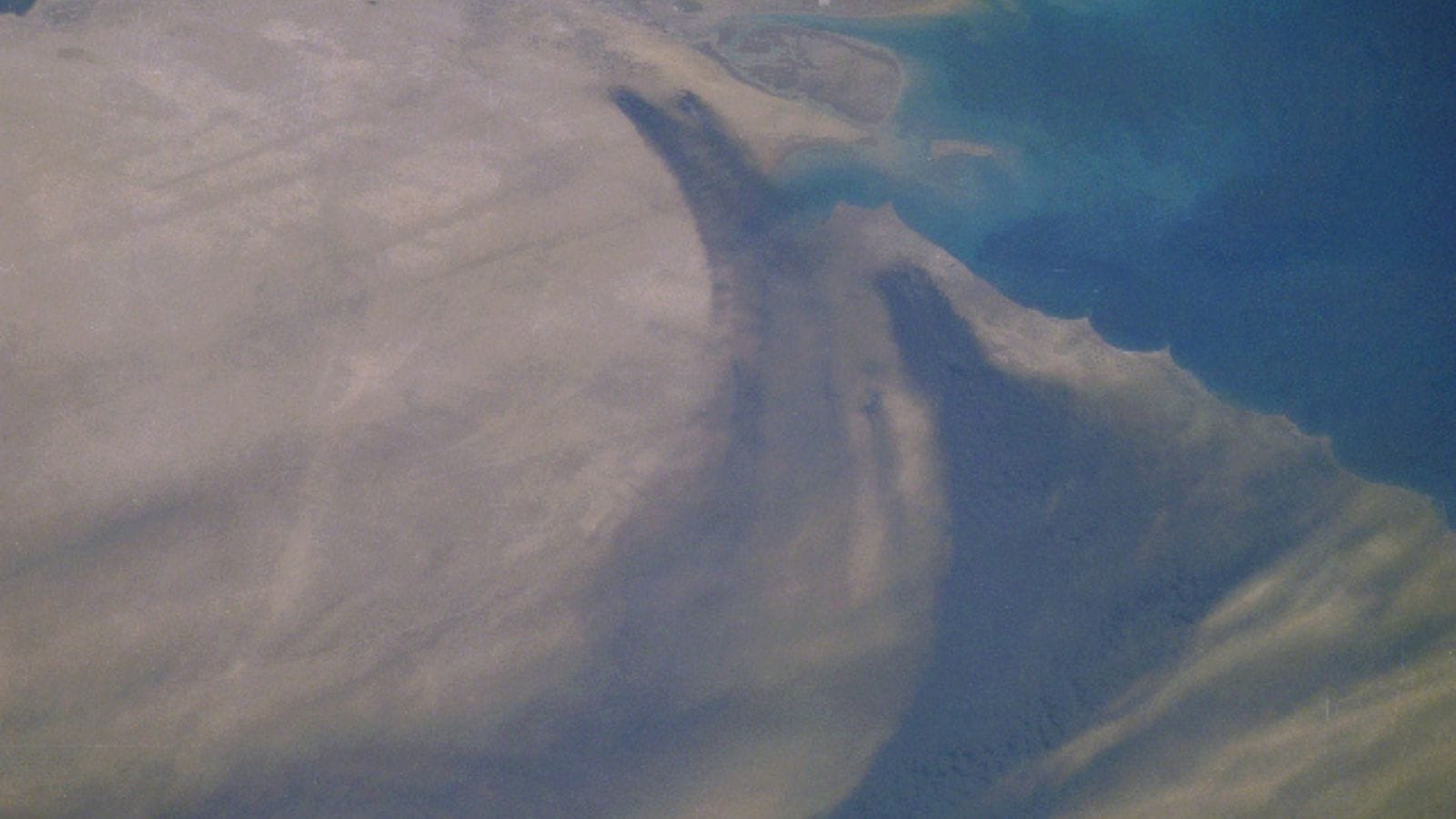 The Kuwait oil fields of Al Sabiriyah and Al Rawdatayn in the north (above centre) and the Al Burqan in the south (right of centre) burning and producing heavy black smoke (Image: NASA)
As they set fire to the oil wells, Iraqi forces also dumped roughly 4 million barrels of crude oil directly into the Persian Gulf — 12 times the volume of the Exxon Valdez spill. These completely devastating coastal ecosystems, fishing industries, and coral reefs. Salt marshes were still contaminated more than a decade later. Bechtel, which was contracted to help fight the disaster, quotes its chief of the disaster fighting team saying: “It’s black, smelly, and filled with death.”
Why this matters right amid the ongoing Iran war
The Iran-Israel war has already demonstrated that oil infrastructure is very much a frontline target. Iran’s Iranian Oil Refining and Distribution Company confirmed that oil depots in the provinces of Tehran and Alborz were hit by missiles and set on fire.
Israel, meanwhile, suffered its own Iran oil refinery strike — an Iranian ballistic missile struck the Bazan Group’s refinery in Haifa Bay in June 2025, killing three employees and forcing a complete shutdown of facilities. The refinery supplied around 65% of Israel’s diesel, 59% of its gasoline, and 52% of its jet fuel, as per Times of Israel.
The fallout of these military strikes is already visible as Iran received ‘black rain’ right after the attacks on the refinery in Tehran. The WHO has warned “the black rain and acidic rain that’s been falling in Tehran after the strikes is indeed a danger for Iranians”. Iran authorities also issued an alert advising citizens to avoid venturing outdoors in the wake of the on oil warehouses.
Story continues below this ad
WHO spokesperson Christian Lindmeier said: “Iranian strikes on oil infrastructures in Bahrain and in Saudi Arabia also raised concerns of wider regional pollution exposure.” He feared that this can have long-term effects of pollutants, which affect respiratory health and contaminate water.
ALSO READ | Black rain in Tehran explained: How Israeli strikes triggered a toxic fallout

© IE Online Media Services Pvt Ltd
