
Close Menu
  • Home
  • Education
  • Health
  • National News
  • Politics
  • Relationship & Wellness
  • World News
What's Hot

40 years ago March 16, 1986: Killings in Punjab

March 17, 2026

After Anthropic hit, Infosys, TCS & other Indian IT stocks tank on Nvidia’s new AI system news; what’s happening – The Times of India

March 17, 2026

BMC removes flasher lights from Mayor Ritu Tawde’sofficial vehicles

March 17, 2026
Facebook X (Twitter) Instagram
Global News Bulletin
SUBSCRIBE
  • Home
  • Education
  • Health
  • National News
  • Politics
  • Relationship & Wellness
  • World News
Global News Bulletin
Home»Business»From shopkeeper to teacher under a metro bridge: How this man is quietly changing the future of India | – The Times of India
Business

From shopkeeper to teacher under a metro bridge: How this man is quietly changing the future of India | – The Times of India

editorialBy editorialMarch 17, 2026No Comments5 Mins Read
Facebook Twitter Pinterest LinkedIn Tumblr Email Telegram Copy Link
From shopkeeper to teacher under a metro bridge: How this man is quietly changing the future of India | – The Times of India
Share
Facebook Twitter LinkedIn Pinterest Email Copy Link
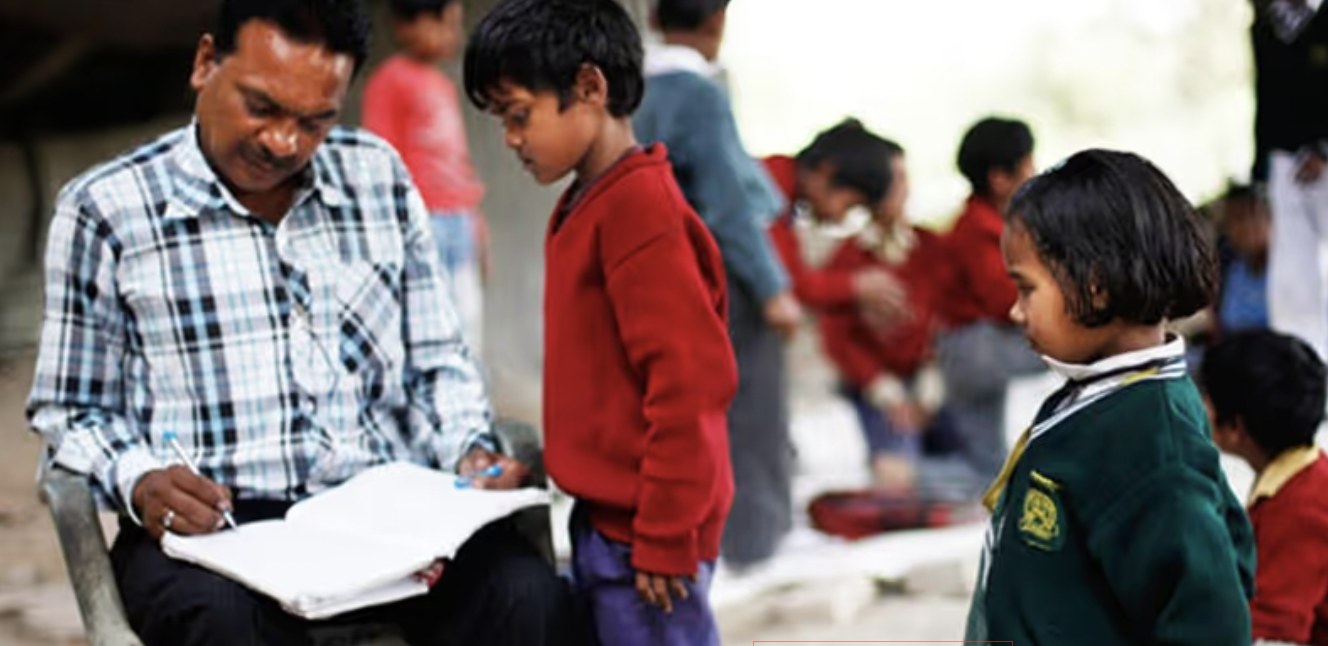
On a dusty stretch beneath the elevated tracks of the Yamuna Bank metro station in Delhi, a classroom quietly takes shape every day. It sits under concrete pillars painted with alphabets and numbers, where the sound of passing trains mixes with the voices of children reciting lessons. What began as a small, improvised effort has grown into a school that has educated hundreds of children from nearby slum settlements. At the centre of this unusual classroom stands Rajesh Kumar Sharma, a grocery shopkeeper who transformed an empty space beneath a metro bridge into an open-air school for children who had nowhere else to learn. Scroll down to find out how it all began.

How it began

Sharma’s journey into teaching did not begin in a classroom but in a small grocery shop he ran in East Delhi. Years earlier he had enrolled in college but had to leave his studies midway because of financial pressures at home. Education remained unfinished business in his life.In 2006, while walking near the banks of the Yamuna, he noticed several children spending their day playing in the mud rather than attending school. When he asked them why, the answers were simple and stark. Their families could not afford school fees, many parents were daily wage labourers or ragpickers, and formal schools felt distant from their lives.
2

Instead of walking away, Sharma returned the next day with a notebook and chalk. He sat down with two children under the metro bridge near Yamuna Bank Metro Station and began teaching them basic reading and arithmetic. The following day a few more children joined. Within weeks the number grew steadily. Without planning to start a school, Sharma had created one.

What the school looks like today

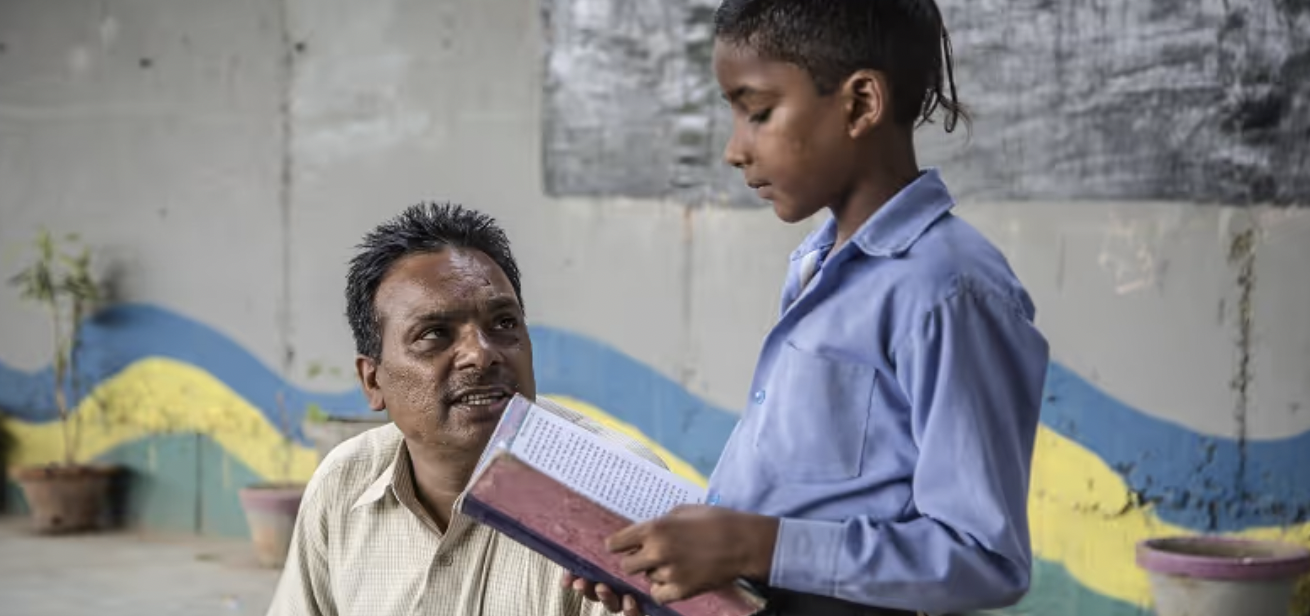
The initiative gradually came to be known as the Free School Under the Bridge, an informal learning space that operates beneath the elevated tracks of the Delhi Metro Rail Corporation network.Instead of traditional classrooms, the concrete pillars of the bridge serve as blackboards. Letters, multiplication tables and simple diagrams are painted directly on the surfaces. Children sit on mats spread across the ground, holding notebooks and pencils donated by well-wishers.Over the years, the school has taught hundreds of children from nearby slum clusters. At different points the daily attendance has ranged between 200 and 300 students. To manage the numbers, classes are conducted in shifts, often separating younger and older children so lessons can be taught more effectively.
3

Volunteer teachers play an important role. Students from nearby colleges, working professionals and local residents often offer a few hours of their time to teach English, mathematics or basic science.The environment is far from quiet. Metro trains rumble overhead every few minutes. Yet the rhythm of the classroom continues uninterrupted, the children accustomed to the background noise of the city.

The backroom realities

Running a school without walls also means running it without steady funding. Sharma still operates his grocery shop to support his family while dedicating large parts of his day to the school. The effort survives largely on small donations from individuals who provide books, stationery or mats. At times volunteers contribute chalk, drinking water or basic teaching materials.Despite widespread media attention over the years, the school has not operated with formal institutional funding. That makes its survival dependent on persistence and community goodwill.The open-air setting also creates practical challenges. During extreme heat, winter fog or monsoon rain, conducting classes becomes difficult. Yet the school has continued for nearly two decades, sustained by the determination of both the teacher and the students.
4

For many children in the nearby settlements, the bridge classroom offers their first experience of structured learning. Some students who begin their education here later realise their potential and transition into formal government schools once they acquire basic literacy and confidence.Teachers who have visited the site often describe the environment as simple but powerful. The children learn to read, count and write in a place that once held no educational purpose at all.Beyond academic lessons, the school provides something equally important: routine and aspiration. Children who might otherwise spend their days working or wandering now gather daily to study, play and organise their days around learning and hope for a different future.In a city where educational opportunities often mirror economic divides, the school under the metro bridge stands as a reminder that learning can emerge in unexpected spaces.

A quiet lesson in persistence

What makes Sharma’s work remarkable is not scale or infrastructure but persistence. The school did not grow from funding programmes or institutional planning. It grew from a simple decision made in 2006 to sit down with two children and begin teaching.Nearly twenty years later, that decision continues to ripple outward through the lives of hundreds of students who have passed through the open-air classroom.Under the shadow of a metro bridge, amid the noise of trains and traffic, a modest school still gathers every day. Its existence reflects a belief that education does not always begin with buildings or budgets. Sometimes it begins with one person who refuses to ignore a problem and instead chooses to act.

Follow on Google News Follow on Flipboard
Share. Facebook Twitter Pinterest LinkedIn Tumblr Email
Previous ArticleOscars 2026: No mention of Dharmendra on ‘In Memoriam’ televised segment, Academy honours him in a separate ‘list’
Next Article Mojtaba Khamenei: Where is Iran’s new supreme leader? How Mojtaba Khamenei escaped the ‘Blue Sparrow’ strike that killed his father – The Times of India
editorial
  • Website

Related Posts

After Anthropic hit, Infosys, TCS & other Indian IT stocks tank on Nvidia’s new AI system news; what’s happening – The Times of India

March 17, 2026

'Succeeded admirably': Amid Strait of Hormuz blockade, Congress recalls 'Suez Canal crisis' and VK Krishna Menon’s resloved it | India News – The Times of India

March 17, 2026

Mojtaba Khamenei: Where is Iran’s new supreme leader? How Mojtaba Khamenei escaped the ‘Blue Sparrow’ strike that killed his father – The Times of India

March 17, 2026

‘Iran has crossed every red line’: Gulf nations’ message to US amid escalating Middle East tensions – The Times of India

March 17, 2026

'Lawrence Bishnoi 007': How Pakistani handlers are using ‘blend in’ tactic to get live feed on troop movement | Delhi News – The Times of India

March 17, 2026

Chaos in Atal Tunnel: Over 1,000 vehicles trapped, tourists spend freezing night in cars as heavy snow blocks Manali highway — watch | Chandigarh News – The Times of India

March 17, 2026
Add A Comment
Leave A Reply Cancel Reply

Economy News

40 years ago March 16, 1986: Killings in Punjab

By editorialMarch 17, 2026

2 min readMar 16, 2026 07:00 AM IST First published on: Mar 16, 2026 at…

After Anthropic hit, Infosys, TCS & other Indian IT stocks tank on Nvidia’s new AI system news; what’s happening – The Times of India

March 17, 2026

BMC removes flasher lights from Mayor Ritu Tawde’sofficial vehicles

March 17, 2026
Top Trending

40 years ago March 16, 1986: Killings in Punjab

By editorialMarch 17, 2026

2 min readMar 16, 2026 07:00 AM IST First published on: Mar…

After Anthropic hit, Infosys, TCS & other Indian IT stocks tank on Nvidia’s new AI system news; what’s happening – The Times of India

By editorialMarch 17, 2026

Indian IT stocks had already experienced a notable drop earlier this year.…

BMC removes flasher lights from Mayor Ritu Tawde’sofficial vehicles

By editorialMarch 17, 2026

2 min readMumbaiMar 16, 2026 06:55 AM IST Amid flak drawn by…

Subscribe to News

Get the latest sports news from NewsSite about world, sports and politics.

Facebook X (Twitter) Pinterest Vimeo WhatsApp TikTok Instagram

News

  • Education
  • Health
  • National News
  • Relationship & Wellness
  • World News
  • Politics

Company

  • Information
  • Advertising
  • Classified Ads
  • Contact Info
  • Do Not Sell Data
  • GDPR Policy
  • Media Kits

Services

  • Subscriptions
  • Customer Support
  • Bulk Packages
  • Newsletters
  • Sponsored News
  • Work With Us

Subscribe to Updates

Get the latest creative news from FooBar about art, design and business.

© Copyright Global News Bulletin.
  • Privacy Policy
  • Terms
  • Accessibility
  • Website Developed by Digital Strikers

Type above and press Enter to search. Press Esc to cancel.