

THE SUPREME Court has rejected a writ petition seeking an inquiry into the import of animals for Vantara, the wildlife rescue and rehabilitation centre of Reliance Foundation, the philanthropic division of Reliance Industries, in Gujarat’s Jamnagar.
A bench of Justices P K Mishra and N V Anjaria said in its March 9 order that the issues raised in the plea had already been examined by an SIT set up by it in an earlier matter. It further said disturbing the settled life of the animals “after lawful import, may… result in cruelty”. The plea by Mumbai-based NGO Karanartham Viramah Foundation alleged violation of the Convention on International Trade in Endangered Species of Wild Fauna and Flora (CITES) by Vantara.

It urged the court to direct the Central government, Central Zoo Authority, Director General of Foreign Trade (DGFT) and Wildlife Crime Control Bureau (WCCB) to produce the record pertaining to permissions, recognitions and import/ export licences granted to Vantara since 2019, together with all CITES permits relied upon, internal evaluations, minutes of the Central Zoo Authority and any correspondence exchanged with the CITES Secretariat or foreign management authority in this connection. The petitioner also requested the court to constitute an independent national wildlife trade compliance monitoring committee, chaired by a retired Supreme Court judge and comprising eminent experts in wildlife biology, international trade regulation and environmental law, with the mandate to verify the legality and authenticity of all CITES import, export and re-export permits connected to DGFT and WCCB.
It further prayed that appropriate proceedings under the Wild Life (Protection) Act, 1972, including suspension or cancellation of zoo recognition, be initiated if the inquiry reveals contraventions of law or misuse of recognition by Vantara or any other associated entities. The top court, however, said the “subject matter of the petition, in substance, is the same which was the subject matter of consideration” in September 2025 when the SIT constituted by it had gone into the matter and found no violation. “Those matters stood examined by the SIT constituted by this court and the final report of the SIT has been accepted by this court on 15.09.2025. The same categorically records that no violation of any domestic or international law was found,” the Court said.
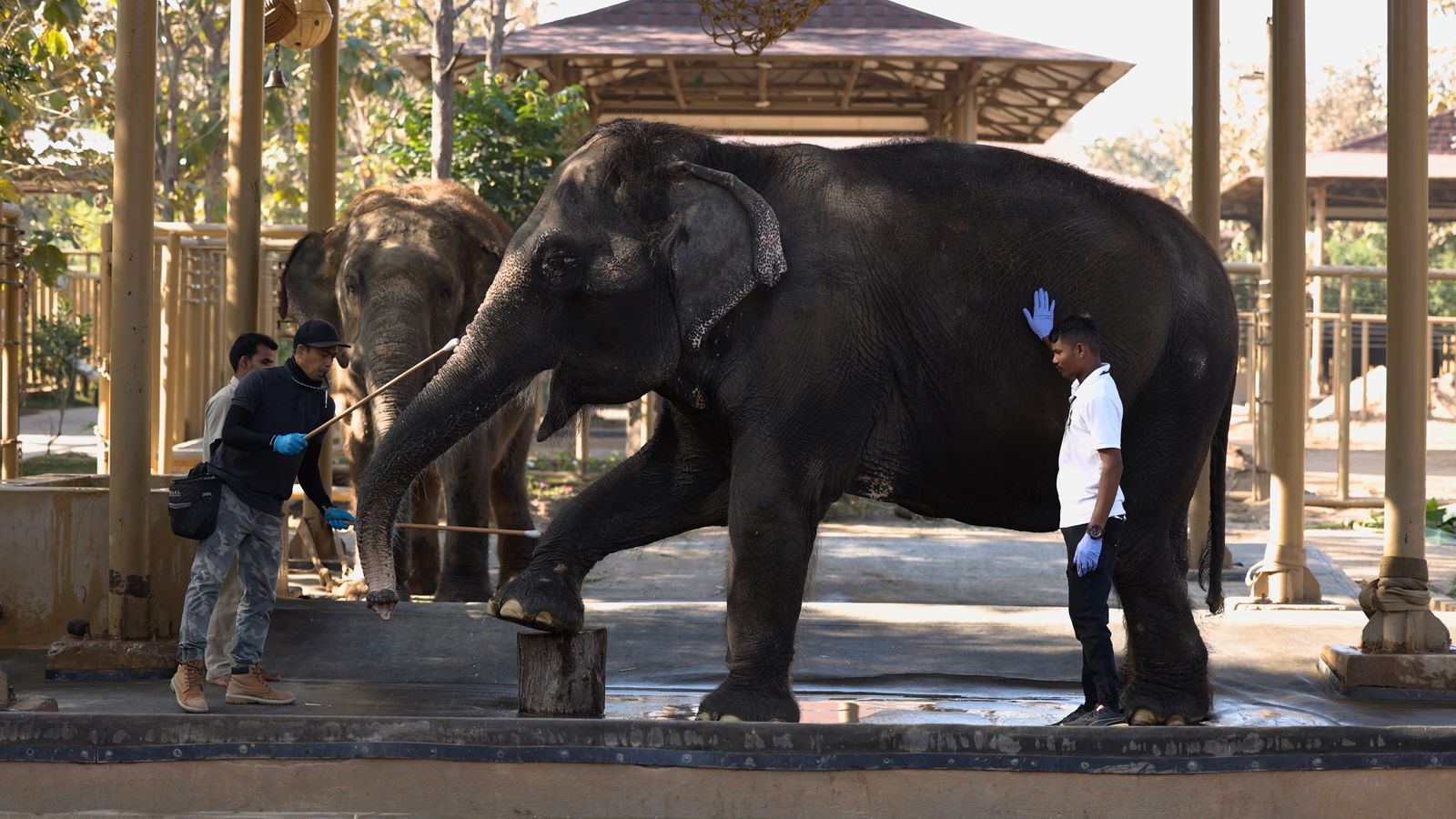
The SIT headed by former SC judge Justice J Chelameswar, also included former Chief Justice of Uttarakhand and Telangana High Court Justice Raghavendra Chauhan, former Mumbai Police Commissioner Hemant Nagrale and Additional Commissioner Customs Anish Gupta. It was appointed on the basis of two PILs filed in the wake of a controversy over the shifting of an elephant from a temple in Kolhapur to Vantara.
The SIT “after thorough probe in coordination with agencies, concluded that there was no violation of the Wildlife (Protection) Act, 1972, Recognition of Zoo Rules, 2009, CZA guidelines, Customs Act, 1962, Foreign Trade (Development and Regulations) Act, 1992, Foreign Exchange Management Act, 1999, PMLA, 2002, BNS, 2023 or the Convention on International Trade in Endangered Species of Wild Fauna & Flora”.
The SC had in its September 2025 order said that based on the SIT report, it is “of the opinion that the receipt of animals by… Vantara, by rescuing them from various situations and housing them in the rescue centre for conservation and breeding programmes, have gone through a complex multi-layered/ multi-jurisdictional statutory approvals, procedure and documentation. The imports of the animals have been made only after issuance of valid permits. Once the import of animals is fully documented and supported by valid permits, it is not open for anyone to go beyond the said permits and to dispute the validity attached to such permits or official acts. The import clearance in India is after various checks and compliances which are regulated and enforced by multiple statutory authorities as recorded by the SIT in the summary of the report.”
Story continues below this ad
In its March 9 order, the SC said, “The CITES Secretarial Document relied upon by the petitioner does not assist his case. On the contrary, the said document records that CITES Secretariat found no evidence that the animals had been imported without the requisite CITES documentation or import permits and there is no evidence that such imports were for commercial purposes.” Thus, the said “conclusion is in consonance with the findings recorded by the SIT, and accepted by this court”, the top court said.
The court said “once an import has been effected under the valid permission, same cannot subsequently be treated as prohibited qua the importer merely because the objections were raised thereafter”. Dismissing the petition, it said, “More importantly, disturbing the settled environment, custody and air of living animals, including rescued animals after lawful import, may itself result in cruelty.”
