

3 min readMumbaiMar 22, 2026 10:17 AM IST
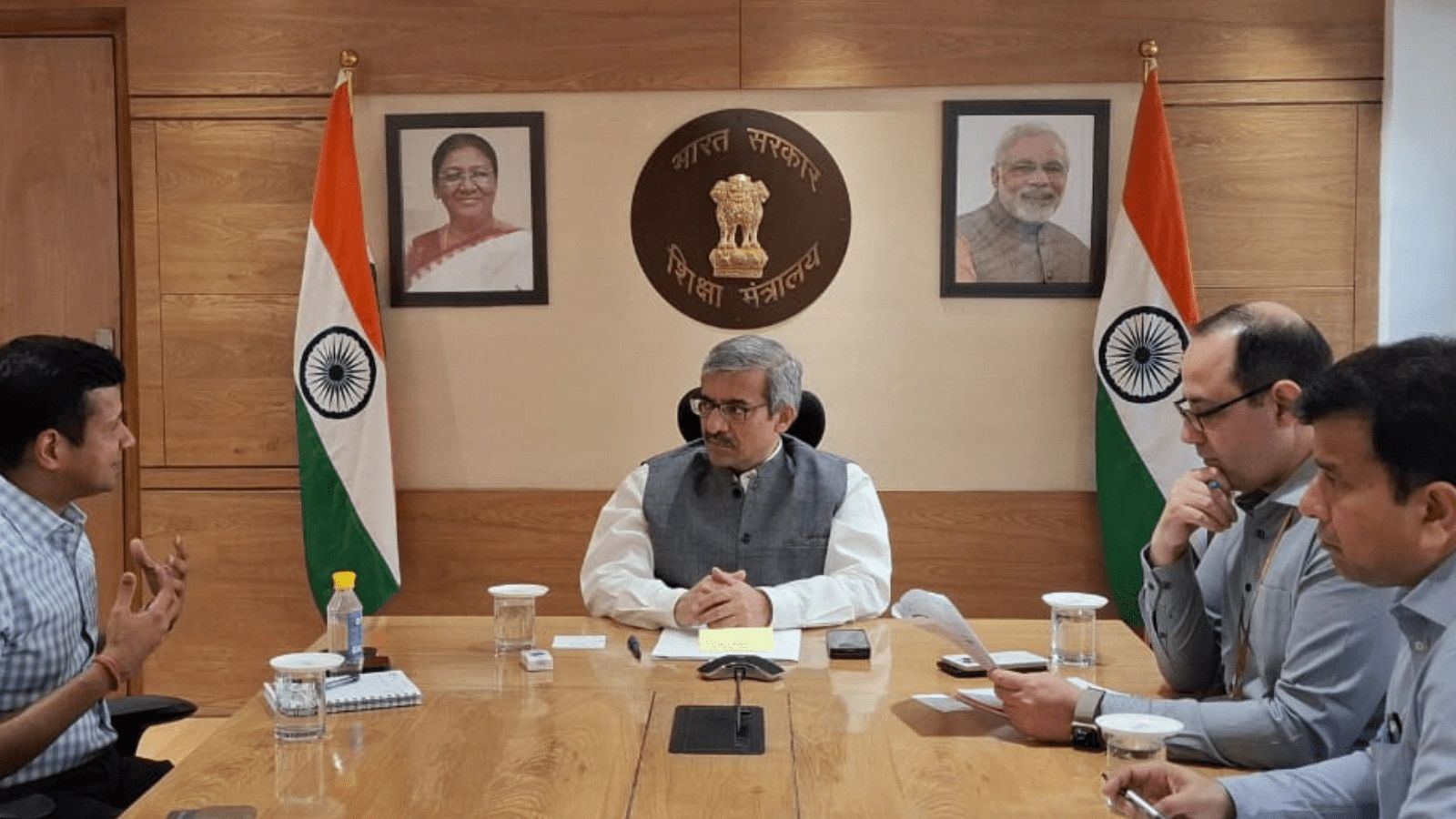
Emphasising the need for urgent transformation in the way education is delivered in India, particularly in higher education institutions, Dr Vineet Joshi, Secretary, Department of Higher Education, called for revisioning curricula, teaching methods and evaluation systems to make them relevant in a fast-evolving world.
Noting that in many cases what is being taught today closely resembles what professors themselves studied decades ago, Joshi expressed concern over the pace of change. “From times when changes took 15-20 years to occur, it is now evolving within just 15-20 months. And educators need to realise that… We are exhorting our vice chancellors or directors of the institutes to ensure that the changes are made to the curriculum,” he said.

Joshi was speaking at the inaugural ceremony of the Bharat Innovates Deep-Tech Pre-Summit, a national showcase of India’s emerging deep-technology startups. The two-day event, being held at ASPIRE – IIT Bombay Research Park Foundation, opened its exhibitions on Saturday.
“Events like this stir the education system across the country to motivate all stakeholders – students, teachers, institutes – to think about how and what changes need to be brought to the curriculum to make it relevant for the fast-evolving world,” said Joshi, adding that the idea is to bring industry closer to innovation.
The pre-summit serves as a precursor to the “Bharat Innovates 2026” international showcase to be held in France later this year as part of the India-France Year of Innovation 2026, announced by the Prime Minister of India Shri Narendra Modi. The initiative aims to present India’s most promising deep-tech ventures to global investors and partners.
At the pre-summit, a total of 137 deep-tech start-ups are showcasing their innovations to Indian investors and corporates. Around 120, including some nominated by experts, will be selected to participate in the France showcase.
Noting that the final selection will be based on multiple factors evaluating the potential of these ventures, Prof Ajay Kumar Sood, Principal Scientific Adviser to the Government of India and Chairperson of the Prime Minister’s Science, Technology & Innovation Advisory Council (PM-STIAC), said, “India already has one of the world’s largest start-up ecosystems. Our goal now is to increase the share of deep-tech start-ups within it, as that is what will truly strengthen the country’s technological prowess.”
Story continues below this ad
Among others present at the inauguration were Prof Abhay Karandikar, Secretary, Department of Science and Technology; Dr K Radhakrishnan, Chairperson, Board of Governors, IIT Bombay; and Prof Shireesh Kedare, Director, IIT Bombay.
The showcase featured several deep-tech start-ups, including around 12 innovations from IIT Bombay. These included Nirixense Technologies, which enables inspection of concrete structures using smart sensors and AI for timely intervention and reduced repair costs. Another innovation on display was an AI-enabled camera device developed at the Koita Centre for Digital Health at IIT Bombay, capable of detecting early signs of oral cancer among tobacco users.
