

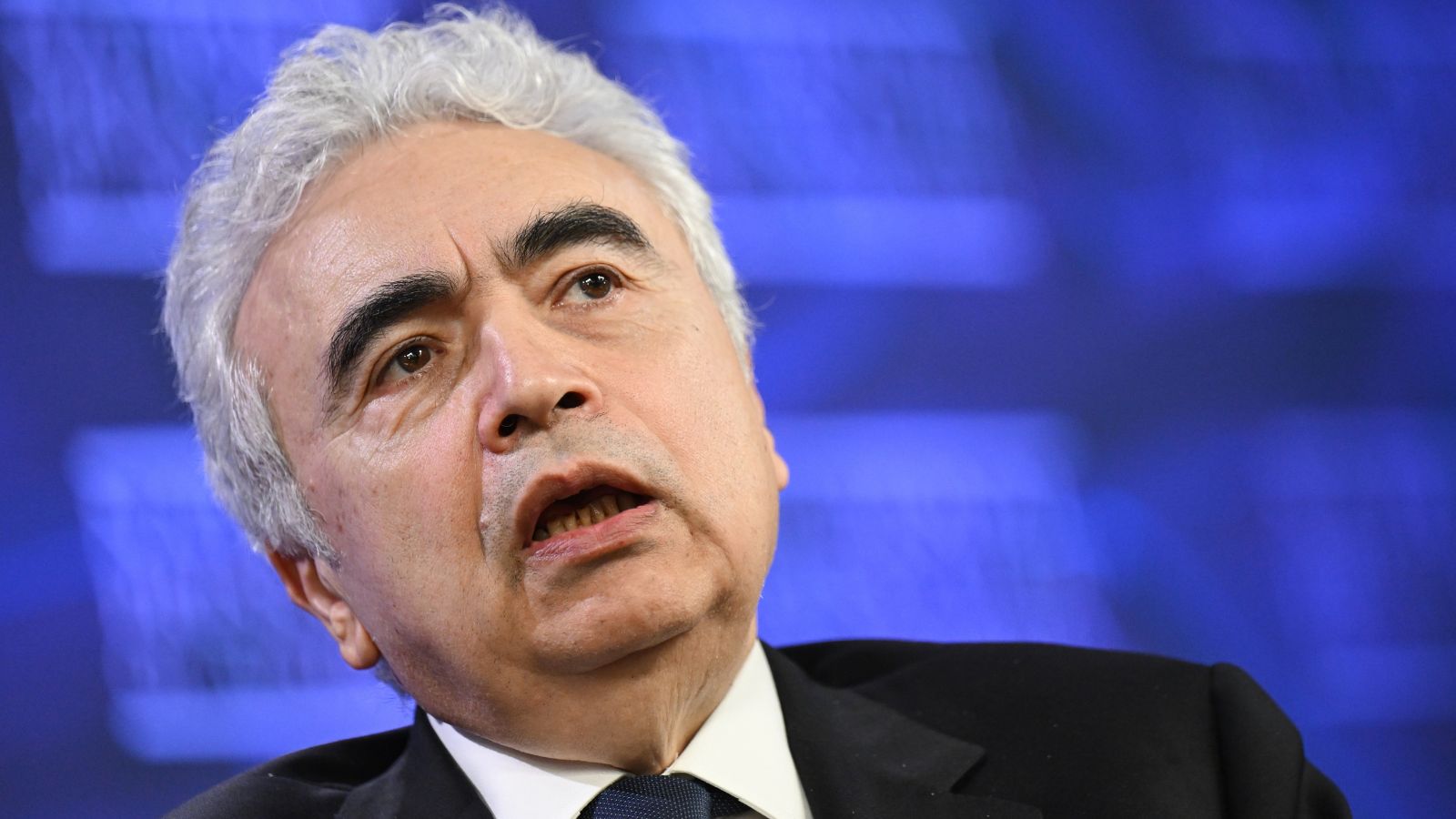
The energy crunch owing to the ongoing war in West Asia is worse than the 1970s oil crisis and Ukraine war combined, International Energy Agency (IEA) chief said on Monday, as Iran holds a fifth of global energy supplies hostage with its blockade of the Strait of Hormuz.
The world is losing 11 million barrels of oil per day, more than the 1973 and 1979 energy shocks combined, The Guardian reported, quoting Fatih Birol. He added that the conflict has had a bigger impact on natural gas supplies than Russia’s war in Ukraine.
Tehran blocked the maritime chokepoint, between the Persian Gulf and the Gulf of Oman, following the US-Israeli assault on February 28, sending fuel prices spiralling worldwide. Benchmark Brent crude went from $73 a barrel before the war to averaging $100 a barrel.
Prices peaked at $119.50 last week as both sides battered each other’s energy installations in tit-for-tat strikes with Washington’s Gulf partners caught in the crossfire.
To tackle the crisis, the body, representing a coalition of 32 countries, decided to release 400 million barrels of oil from its reserves earlier this month. In comparison, only 182 million barrels were released in 2022 after Russia invaded Ukraine and the West imposed sanctions on Moscow’s oil.
The US committed 172 million barrels from its Strategic Petroleum Reserve as part of IEA’s decision this month.
Sanctions waiver for adversaries
Grappling with surging fuel prices at home, the US lifted sanctions on 130 million barrels of Russian crude stranded at sea, and later went on to waive sanctions on 140 million barrels of Iranian oil in ships, effectively funding its adversaries amid the conflict.
Story continues below this ad
However, experts argued the move is not enough to offset the disruption caused by the Hormuz closure, maintaining that the only reliable fix is reopening the strait itself, Newsweek reported.
On the other hand, the Iranian parliament is mulling leveraging its hold by placing tolls and taxes for vessels passing through the Strait, Reuters reported earlier.
Earlier, while defending the military campaign, US President Donald Trump argued that the US gets only “1%, 2%” of its oil from the Strait, but American consumers have begun feeling the cascading effects of the closure.
About 55 per cent of respondents said that they have “somewhat” been impacted by rising gas prices, according to a Reuters/Ipsos poll last week. Among Republican supporters, 42 per cent said the same.
Story continues below this ad
The US mid terms are scheduled for November, this year, and the widespread unpopularity of the war – a poll by The New York Times noted only 41% public support for it – could tilt the numbers in the Democratic Party’s favour in Congress.
Trump rode a wave of anti-interventionist sentiment into office, criticising Joe Biden’s administration for its investment in the war in Ukraine and arguing that the White House should focus on domestic issues first. His actions thus far have contradicted the promises he made during his election campaign in 2024.
Another major escalation likely
Fuel prices may see another major surge as stability in the Gulf hinges on Tehran’s compliance with a recent ultimatum issued by Trump.
The Republican President, late Saturday (local time), gave Iran a 48 hour deadline to unblock the Strait, threatening to “obliterate” Iran’s power plants. The deadline ends soon.
Story continues below this ad
“If Iran doesn’t FULLY OPEN, WITHOUT THREAT, the Strait of Hormuz, within 48 HOURS from this exact point in time, the United States of America will hit and obliterate their various POWER PLANTS, STARTING WITH THE BIGGEST ONE FIRST,” Trump wrote on Truth Social.
However, Israel and Iran exchanged blows after the threat was issued.
Following Trump’s statement, the Iranian military’s operational command Khatam Al-Anbiya said that Tehran will retaliate with strikes on “all energy, information technology, and desalination infrastructure belonging to the US and the regime in the region”, Fars news agency reported.
Last week, the Pentagon reportedly sought $200 billion dollars in additional funds from Congress for war, and greenlit a large-scale deployment of naval assets and troops in the theatre.
Story continues below this ad
Tehran’s selective approach
Tehran has been selectively allowing vessels to pass through Hormuz. Iran’s representative to the International Maritime Organization (IMO) said that the Strait “is open to everyone except enemies”, CNN reported, citing local media.
Dealing with an LPG crisis, New Delhi received some respite last week with the two tankers – Shivalik and Nanda Devi – safely reaching Gujarat ports around March 16 and 17 from the Gulf, bringing approximately 92,700 metric tons of LPG to Indian shores.
Two more tankers — Pine Gas and Jag Vasant – from Sharjah, UAE, crossed the Strait on Monday.
Prior to the conflict, the Strait accounted for about half of India’s total oil imports, 60 per cent of its LNG imports, and a whopping 90 per cent for LPG.
Story continues below this ad
Currently an associate member, India has been seeking a full membership in the IEA.
Alternate routes
In the meantime, Saudi Arabia, the world’s largest exporter of crude, has been routing its oil to the Red Sea, bypassing Tehran’s blockade.
The terminal at Yanbu, which came under attack on Thursday, is set to surge 3.8 million barrels per day (bpd), Reuters reported last week. The outlet can pump up to 7 million bpd. Earlier, Saudi Aramco’s Ras Tanura oil refinery, the largest of its kind in West Asia, was also targeted.
On Thursday, Prime Minister Benjamin Netanyahu suggested that pipelines should be built to transport oil and gas across the Arabian Peninsula to Israeli ports to avoid threats posed by Iranian drones and missiles.
Story continues below this ad
“Just have oil pipelines, gas pipelines, going west through the Arabian Peninsula, right up to Israel, right up to our Mediterranean ports and you’ve just done away with the choke points forever,” Netanyahu said.
