


Actor-performer Shakti Mohan recently gave a house tour of her three-story Mumbai home, sharing anecdotes and memories from her time there with her sisters and parents. From an extended terrace garden with over 400 plants to her spacious bedroom, Shakti’s house is nothing less than a sanctuary.
Shakti Mohan revealed that her sisters—Neeti Mohan, Mukti Mohan, and Kriti Mohan—have moved out, leaving just her parents in the house, which is equal parts luxurious and homely. She opened the house tour with her cosy living area, featuring traditional cabriole sofa sets in brown tones.
With a giant TV in place and an air purifier on the side, the cabriole sofas are positioned perfectly, making the TV easily accessible to everyone. At the centre lies a vintage square-shaped table with plants, a napkin box, and condiment containers.

Living area with traditional patterns
The living area also features a large Buddha frame and a statue in each corner. On the TV cabinet, a photo frame featuring Neeti and her husband, Nihar Pandya, is displayed. Behind the sofa, the living space has another glass table with several wooden pieces, giving it a traditional touch. Mukti also shared a heartfelt moment when the creative heads of Dance India Dance (DID) gifted her a dancing Lord Ganesha idol.
“My parents designed the house with Indian patterns, and this area holds a lot of memories,” Mohan said in the video shared by Mashable India.
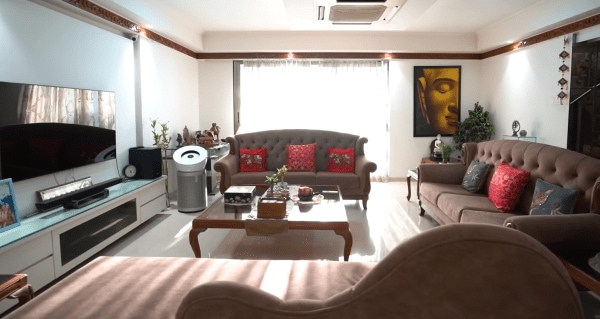 Shakti Mohan’s Mumbai house living area (Image source: Mashable India/YouTube)
8-seater dining table
Mukti shared that there are eight members in the family, including her two brothers-in-law. The eight-seater dining area features a glass table with a wooden base and neutral-toned chairs with wooden legs, embracing a minimalist aesthetic. On the sides, the area also has wooden frames with intricate carvings of Indian patterns, adorned with colourful wall hangings.
“We have eaten a lot at the dining table—my sisters have eaten more than I did,” Mohan shared.
Story continues below this ad
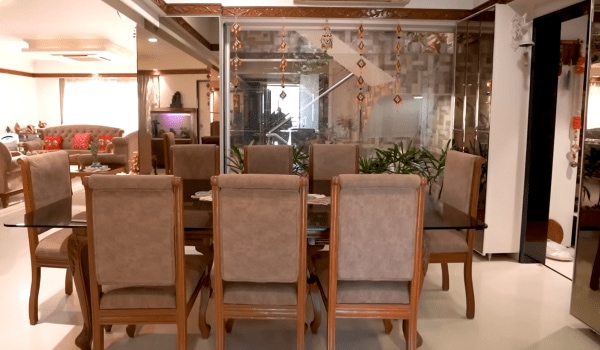 Shakti Mohan’s dining area (Image source: Mashable India/YouTube)
Shakti Mohan’s personal den
Walking down to the first floor, Mohan’s bedroom reflects a minimalist, comfortable aesthetic. The room features a white wardrobe and cabinets with several books arranged on them. The TV area consists of a table with miscellaneous items and a sofa placed beside it. The room is also attached to a beautiful balcony with a scenic view.
“This was my room before I moved out,” Mohan said, adding, “My father has occupied this room ever since I moved out.”
Terrace garden with over 400 plants
Mohan’s terrace garden remained the highlight of the house, with more than 400 plants lined up. From purple bougainvillaea to a chiku tree, “Mohan Bagaan” features a variety of shrubs and plants, providing a peaceful space for meditation and relaxation.
Sharing an anecdote, Mohan said she was once almost attacked by vultures and eagles while performing *savasana*, a yoga posture.
Story continues below this ad
“They thought I was dead, and they started circling me. I quickly stood up and shooed them away with my yoga mat,” she shared.
Dr Krithishree Somanna, Consultant Physiatrist, KMC Hospital, Mangalore, explained that gardening plays a crucial role in reducing anxiety, tension, and mood disturbances. “When a person takes ownership of nurturing plants and spends time caring for them, it fosters empathy and emotional stability. Small milestones like blooms or harvested produce create a sense of achievement, building confidence and reinforcing positive thoughts,” she said.
“At the same time, being close to soil, greenery, and natural surroundings strengthens one’s sensory connection with nature, much like mindfulness exercises that help individuals step away from daily stress,” Dr Somanna added.
Highlighting the psychological benefits of even a small balcony garden, Dr Somanna shared that it fuels a sense of responsibility, accomplishment, and connection with nature.
Story continues below this ad
“It helps improve mood, reduce negative thoughts, and enhance attention span and creativity by engaging the mind in a purposeful activity. Over time, such engagement supports cognitive functioning and may even have long-term benefits in reducing risks of cognitive decline. It also builds confidence and self-esteem, as individuals take pride in nurturing something and seeing it grow,” she stressed.
