

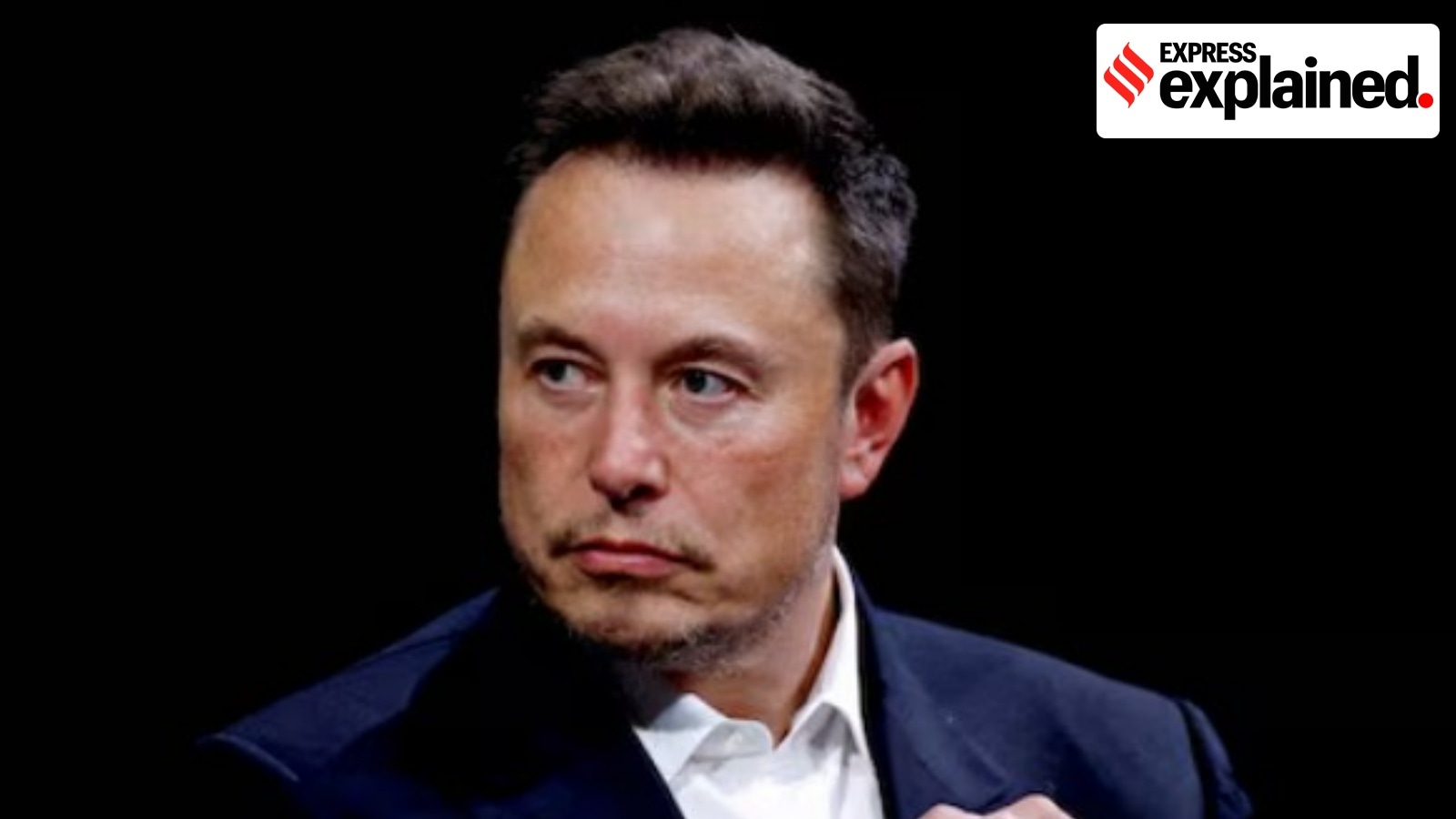
Responding to The NYT report, the Ministry of External Affairs said Saturday, “the telephone conversation on March 24 was between Prime Minister Modi and President Trump only”. “We have seen the story. The telephone conversation on 24 March was between Prime Minister Narendra Modi and President Donald Trump only. As has been stated earlier, it provided the opportunity for exchange of views on the situation in West Asia,” MEA spokesperson Randhir Jaiswal said.

The NYT report said, “It is unclear why Mr. Musk was on the call or whether he spoke”. It said Musk did not return multiple requests for comment and the White House declined to comment on Musk’s inclusion.
Past instances under Trump
While it is extremely rare and unusual to have a private citizen to be part of phone conversations between world leaders, The NYT said “as with many norms, Mr. Trump has chosen his own path on this matter: Jared Kushner, the president’s son-in-law, has no official US government role and yet has been tasked with negotiations in the Middle East, where Mr. Kushner has business interests, and on Russia’s war in Ukraine”.
During a meeting or a call-on, depending on the context, there are moments when family members of world leaders do participate, sources in the Indian government pointed out. For example, Modi had met US Vice President J D Vance with his family members in France last year. In fact, when Musk had met Modi in the US last year, he was accompanied by his then partner, kids, and their nanny.
Musk’s interests in India, Iran fallout
Musk’s reported presence during the phone call comes amid concerns his companies are exposed to some fresh vulnerability due to the war in Iran. It also suggests he has got some leverage back in the administration in DC, a public fallout with Trump last summer after his departure from the government. Musk had thrown his weight behind Trump in the run up to the latter’s Presidential bid.
Story continues below this ad
The NYT report said that Musk has “looked to India as a potentially lucrative market for his automotive, space and artificial intelligence companies. Tesla, his electric automaker, had previously faced hurdles to selling vehicles in India because of tariffs on foreign manufacturers. Starlink, the satellite internet provider from Mr. Musk’s SpaceX, is awaiting final clearances to operate in the country and is still “pending regulatory approval,” according to a company website.”
For context, his companies have taken on “significant investment from sovereign wealth funds in countries in the Middle East, including Saudi Arabia and Qatar. Mr. Musk has also long coveted a greater commercial presence in India. And SpaceX, his private rocket company, has been considering an initial public offering later this year, which could be thrown into turmoil if global economic conditions worsen”, The NYT reported.
But beyond these public-facing entities that Musk controls, the overall disruption in global supply chains due to the blockade of the Strait of Hormuz could have far-reaching repercussions for the billionaire. For instance, the shortage of helium or petrochemicals.
Musk’s SpaceX uses helium to pressurise the propellant tanks of Starship and Falcon 9. Given that Qatar produces one-third of the world’s helium, the continued blockage at the Strait of Hormuz has resulted in spot prices of helium nearly doubling. Similarly, Tesla’s semiconductor supply chain is reliant on helium for etching at fabs belonging to South Korean companies such as SK Hynix or Samsung, analysts said.
Story continues below this ad
Musk has a vested interest in the supply chains returning back to normal, an analyst said. This also seems to have given him a window to claw his way back into favour in an administration that unambiguously pivots towards securing specific business interests. A senior government official in Delhi said that Musk believes that India could play a role in helping normalise the disruptions to the supply chains.
India is, after all, a market where his interests have increasingly been growing, and have, at times, pitted him directly against the government.
Last year, Tesla launched retail operations in India, with showrooms in Mumbai and Delhi-NCR. Though its EVs haven’t yet seen an overwhelming purchasing response, this was the first time the carmaker officially started selling its cars in India, where EV adoption — while overall low — seems to be picking steady pace, accounting for over 8 per cent of total cars sold.
While the company does not appear to have any immediate manufacturing plans in India, Tesla has ramped up recruitments in the country. Last year, it announced it was hiring for 13 roles: store manager, service advisor, business operations analyst, and customer engagement manager among others.
Story continues below this ad
Earlier, Tesla had looked at possibly setting up a manufacturing unit for which it had made some hires in 2022. However, the company, at the time, had put its plans on hold. Musk has been critical of India’s high import tariffs on EVs of around 100 per cent, and the company has tried to get some duties eased.
India has also announced a new EV policy allowing the import of completely built-up (CBU) cars at a 15 per cent import duty, a move largely seen as placating criticism levelled by Tesla.
Musk’s satellite communication company Starlink has also received security clearance from India to offer connectivity services in the country, though a formal launch is yet to happen. The company has already partnered with the two biggest telecom operators in India — Jio Platforms and Bharti Airtel — to bring Starlink’s internet services to the country.
The deal, particularly with Jio Platforms, surprised many as the two companies were seen on opposite ends on how spectrum for satellite communication should be assigned to companies — with Jio calling for an auction, but SpaceX insisting on the administrative route. The government has decided to go with administrative allocation.
Story continues below this ad
Musk’s social media platform X, and its artificial intelligence (AI) service Grok have been at loggerheads with the government of India in recent months, even as the market remains a major user base for the company.
Last year, X sued the Indian government, alleging the creation of a parallel online content blocking regime. The company lost the case in Karnataka High Court, and has since appealed it. Earlier this year, Grok also came in the crosshairs of the government after it started adhering to user prompts of generating obscene pictures of women, without their consent, raising questions over their privacy and dignity online. The government sent a missive to the company to stop the feature, a request that the company agreed to.
