

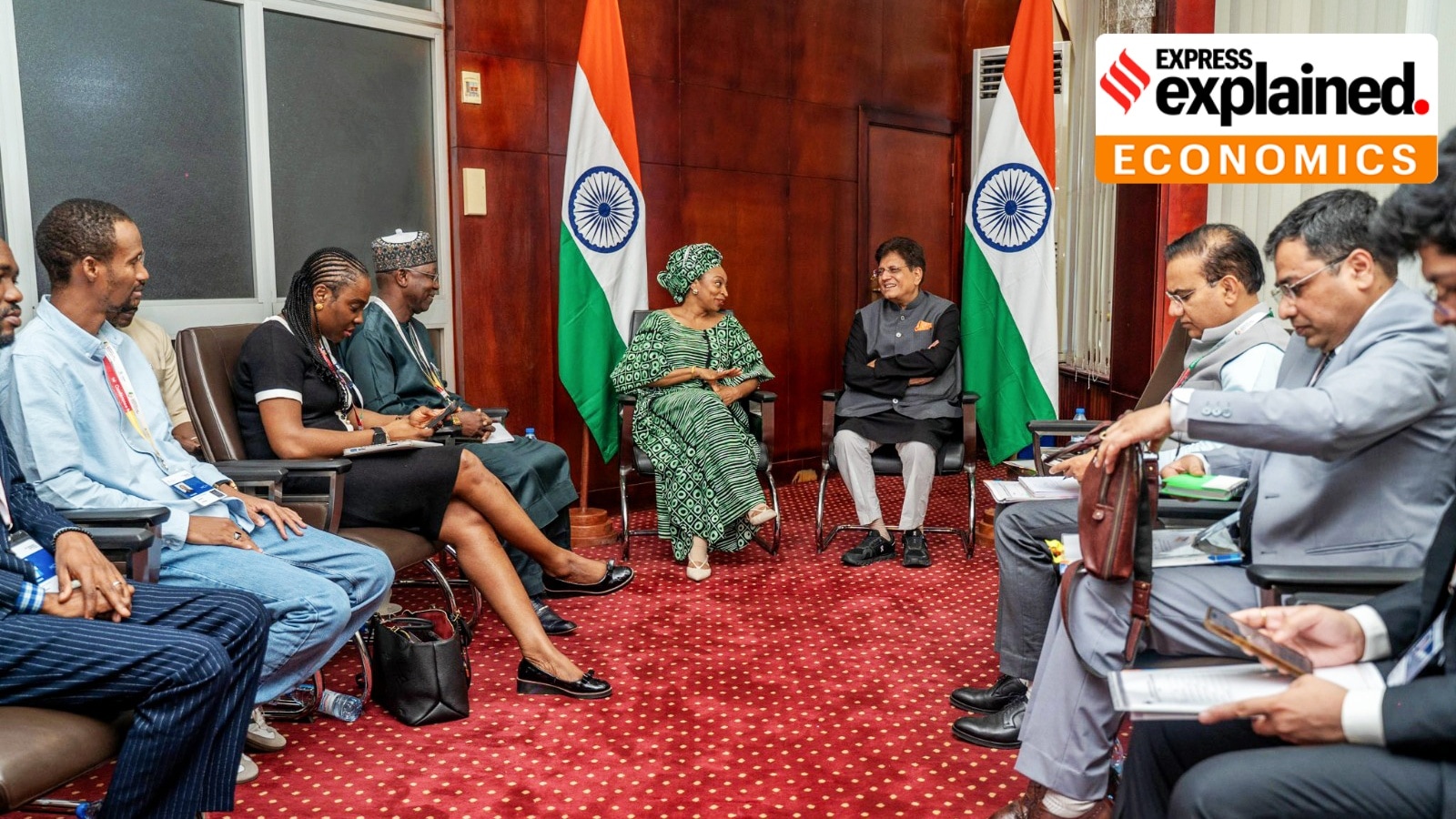
The Director-General of the World Trade Organisation (WTO), Ngozi Okonjo-Iweala, kick-started the 14th Ministerial Conference (MC14) in Cameroon earlier this week with a warning, stating that the world trading system is experiencing the “worst disruptions” in 80 years.
The world order and multilateral system have “irrevocably changed”, she said.
Stressing that members must now look to the future and have clearer conversations about “what’s not working”, Iweala pitched for reforms to move the WTO forward. However, rich and developing countries have arrived at MC14 with starkly different visions for the multilateral body facing a crisis of confidence, at a time when trade tensions are already running high.
The divide
The ongoing pulls and pushes were reflected in South Korea’s opening submission, which stated that efforts to advance reforms have proven difficult. “Too often, we look at the same challenges through different lenses of national interests, and what should be a shared problem begins to appear differently to each of us,” Seoul said.
“And when we move while facing different directions, we cannot move forward together. If we fail to act now, the challenge before us will not simply be institutional inefficiency. The very purpose of the WTO itself could begin to erode,” Seoul’s representative said.
While members continue to engage to revive the multilateral body, a fresh trade war is brewing between the United States and China. In March, Washington launched two Section 301 investigations on scores of countries, including India and China, citing structural excess capacity and overproduction in certain manufacturing sectors, which could culminate in a new tariff architecture by May.
Mirroring the probes, China, too, launched two investigations into US trade practices this week. However, the division is not limited to the most powerful countries. Developed, developing and Least Developed Countries (LDCs) have pitched divergent ideas on core issues such as plurilateral deals, agriculture, e-commerce moratorium, as well as dispute settlement, indicating why effective outcomes from WTO ministerials have been few and far between in recent years.
Story continues below this ad
Multilateralism vs Plurilateralism
One of the sharpest divisions between members is on how future agreements should be reached. Since its inception, the WTO has operated primarily on a consensus-based decision-making model, where all 166 members must agree on decisions.
However, several developed nations are seeking plurilateral agreements, where members can sign agreements among themselves without including all countries, arguing that progress is slow in the consensus-based method.
Developing countries such as India, Indonesia, Vietnam, and Namibia have insisted that the WTO must remain a “member-driven” and “consensus-based” organisation. India said that the incorporation of plurilateral outcomes into the WTO framework should not impair existing rights of non-parties or cast additional obligations on them. Namibia also argued that for small economies, multilateral rules are an “economic necessity”.
However, the US, European Union and the UK have advocated for a “more flexible framework” that allows like-minded partners to move forward with closer cooperation when a full consensus cannot be reached.
Story continues below this ad
“This will lead to increased cooperation and progress. Instead of wasting years and even decades to agree on a lowest common denominator, like-minded partners can achieve progress in the near term on current and emerging issues… the benefits will accrue to those partners – not to free riders or countries that undermine fair, market-oriented competition,” the US said.
Conflict over Special and Differential Treatment
Another core debate concerns Special and Differential Treatment (S&DT), a provision in the WTO agreement that gives developing countries more time or flexibility to implement rules, such as phasing out certain subsidies. Rich countries have pushed for a relook at S&DT, but developing nations consider it the bedrock of multilateralism.
The US has come up with the most aggressive position on S&DT provision, saying that its priority is using “objective criteria” to determine eligibility for such treatment because it is “politically unacceptable” for significant, wealthy, or influential members to gain benefits intended for “countries truly” at a different and low level of development.
This was largely aimed at China, which announced in September 2025 that it would no longer seek S&DT in future WTO negotiations. The UK has also pitched for a “case-by-case approach” where more members voluntarily opt out.
Story continues below this ad
Developing nations such as India and Namibia have maintained that S&DT is a “treaty-based right” and must be “precise, effective and operational” to enable their meaningful participation in global trade. “S&DT must be safeguarded as a treaty-based right and as an enabler for developing Members to participate meaningfully in and fully benefit from the multilateral trading system,” Namibia said.
Agriculture and e-commerce
Consensus at the WTO on key issues has also been elusive because countries, based on their respective growth stages, are making agriculture or digital trade key priorities. While developing nations, such as India and other African countries, have raised a strong demand for food subsidies, rich countries have focused on e-commerce.
The US, UK, and Singapore have for years prioritised the digital economy and have been pushing to make the moratorium on customs duties on electronic transmissions (products like software) permanent to provide “certainty” for businesses. India, however, has focused on keeping this policy space intact and argued that the issue warrants “careful reconsideration” because its long-term implications for developing states are not fully understood.
On the other hand, India and other developing countries have made agriculture their priority, but have not gathered support from developed countries for a permanent solution on Public Stockholding for food security. This essentially concerns the domestic food subsidies a country can provide under WTO rules, without distorting global supply-demand and trade. Developing nations get some relaxations, but countries like India have asked for greater flexibility.
Story continues below this ad
“Agriculture remains central to Namibia’s economic development, food security, and social stability. Nearly 70% of our population depends directly or indirectly on this sector for their livelihoods. Yet farmers in developing countries continue to face structural challenges, including market access, climate-related shocks, limited access to technology and infrastructure, and persistent distortions in global agricultural markets, particularly high levels of trade-distorting domestic support in developed countries,” Namibia said.
