

3 min readBengaluruUpdated: Apr 2, 2026 04:43 PM IST
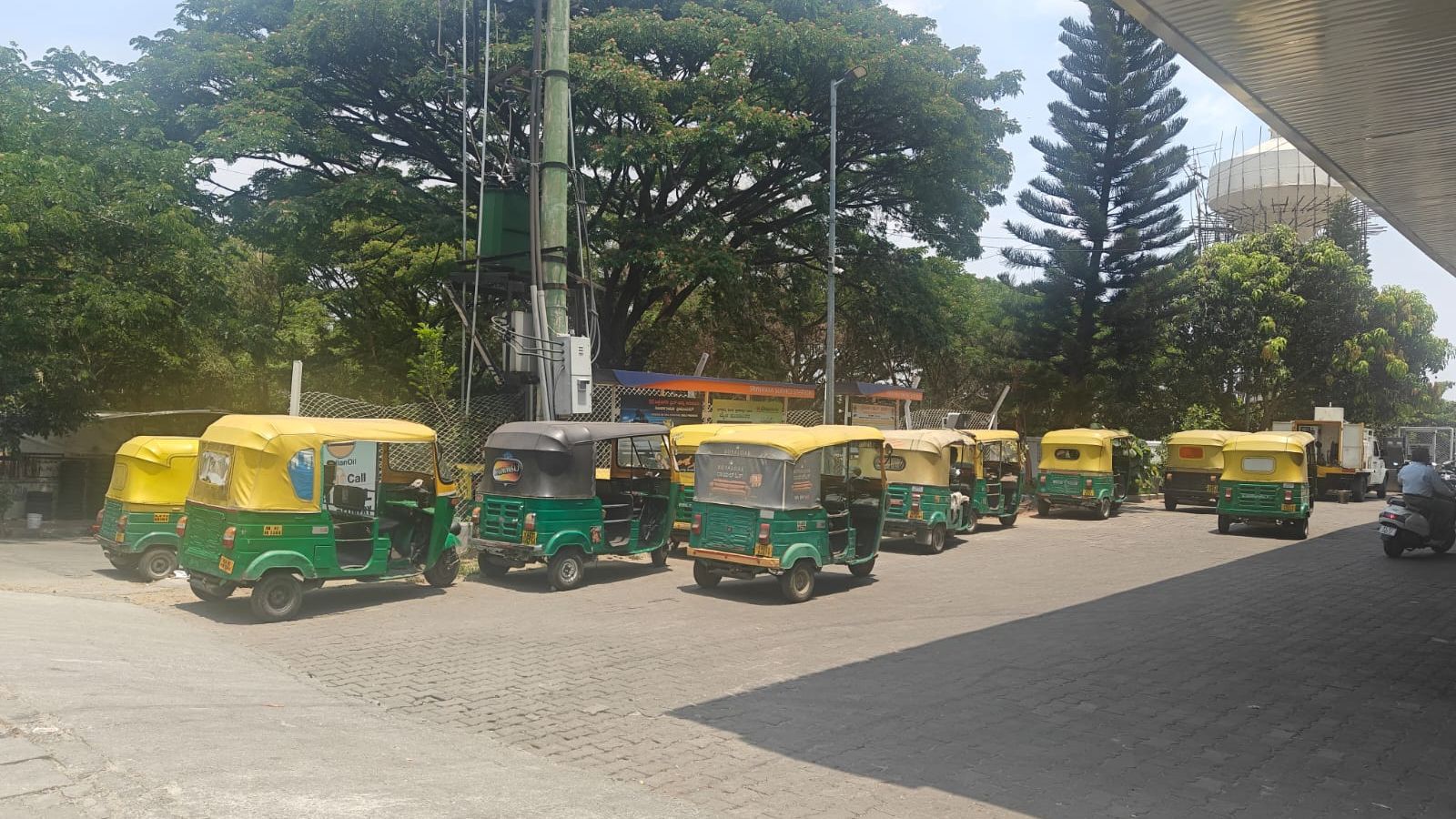
Long, winding queues of autorickshaws have become a permanent sight across Bengaluru since Wednesday, as an acute shortage of auto LPG, aggravated by the ongoing conflict in West Asia, brings the city’s three-wheeler fleet to a standstill. Auto LPG is liquefied petroleum gas specifically refined for use as a vehicle fuel.
While the Karnataka Department of Food and Civil Supplies maintains that stocks are adequate, the ground reality tells a different story. In areas like Kengeri, Indiranagar, and Rajajinagar, drivers have been forced to park their vehicles indefinitely near gas stations, waiting for tankers that have yet to arrive.

Chethan, an autorickshaw driver for a decade, found himself stuck at an Indian Oil pump in Kengeri Satellite Town after a 12-km search for gas. “My fuel was running dry. I can’t even drive home. I have no option but to wait till the supply resumes,” he told The Indian Express.
The crisis has also given rise to a predatory black market. While public-sector oil marketing companies (OMCs) hiked prices from Rs 54 per litre on March 1 to Rs 89.52 on April 1, drivers report that some private stations are exploiting the desperation, charging as much as Rs 110–120 per litre.
Nagesh, an autorickshaw driver, said, “There are some private gas stations selling fuel for Rs 120. I have confirmed this with a fellow driver, but I currently don’t have enough fuel to reach there since it is 10 km away.”
Hearing Nagesh’s words, Krishnappa, 49, felt elated, ironically, and asked for more details. “Please tell me where it is available. I need to refill and get home, as I have parked my autorickshaw here for two days,” Krishnappa said.
The gas shortage has affected nearly 60 per cent of the city’s autorickshaws, which have shifted to auto LPG for better profit margins than diesel, said Rudra Murthy, general secretary of the Autorickshaw Drivers Union (ARDU).
Story continues below this ad
“Drivers are helpless. They are sleeping in their vehicles near gas stations with no confirmation of when the next supply will hit,” Murthy said. On Thursday, unions convened emergency meetings to discuss potential strikes and city-wide protests.
On March 26, the Ministry of Petroleum and Natural Gas attributed the dip to reduced domestic refinery production but insists there is no overall shortage. To stabilise the market, the ministry confirmed that 8 lakh metric tonnes (TMT) of LPG cargo was arriving from the United States, Russia, and Australia, with further procurements under discussion to bridge the gap.
