

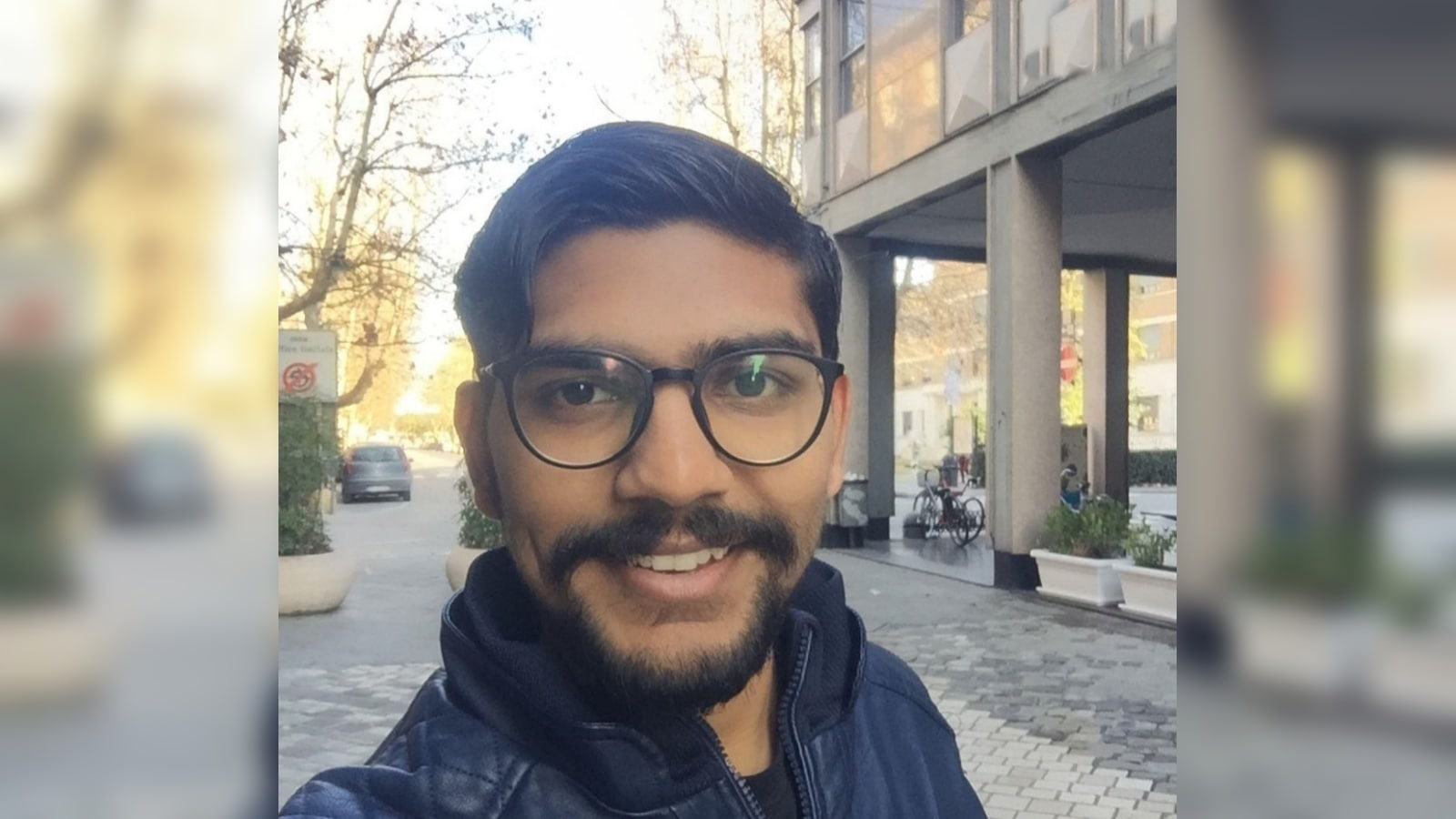
The mortal remains of Indian seafarer Dixit Solanki (32), who became the first Indian casualty in the West Asia war when he was killed in a missile strike on a merchant vessel off the coast of Oman, are likely to be brought to India Sunday.
The Sunday Express has learned that authorities have finally issued the death certificate and completed repatriation formalities. Solanki’s family had moved the Bombay High Court on April 2 seeking its intervention.
Correspondence between the UAE authorities, the Consulate General of India in Dubai, and the Ministry of Ports, Shipping and Waterways show that the death certificate was issued by the vessel’s flag state, the Republic of the Marshall Islands, on March 26,while all remaining clearances – including No Objection Certificates from the UAE and India’s Airport Health Organisation – have since been obtained.
On April 2, the Consulate wrote to the family sharing the death certificate and seeking a notarised authorisation letter. The family issued its consent for repatriation of Dixit’s remains on April 3.
Asked if the family’s petition in the High Court had accelerated the process, an official from the Union Ministry of Ports, Shipping and Waterways, said, “The movement happened in the last few days as pending documentation was completed and processes were aligned. Now, the remains are expected to arrive in the next two to three days. We all have been working from day one to bring the body back to the family, it has nothing to do with the family moving the High Court.”
The case dates to March 1, when an explosion and fire occurred on board the oil tanker MKD Vyom in the Arabian Sea, about 70 nautical miles off Muscat, Oman.
In a letter, dated March 2, addressed to the Office of the Marshall Islands Maritime Administrator, the Directorate General of Shipping in Mumbai noted the incident caused “a hole of about one metre above the waterline on the ship’s side, possibly due to a missile strike or external explosive impact.”
Story continues below this ad
The official in the Union Ministry of Ports, Shipping and Waterways described the broader context saying, “This was a high-risk, conflict-affected zone. The vessel could not be accessed immediately and took nearly two weeks to be brought to a safe location. Only charred skeletal remains were later recovered.”
Those conditions complicated identification and documentation from the outset. On the question of DNA testing, the official said: “There was only one casualty on the vessel, with all other crew members safe, so identification was established accordingly. There is no question of conducting a DNA test.” The remains were located in the engine room on March 17 and taken off the vessel.
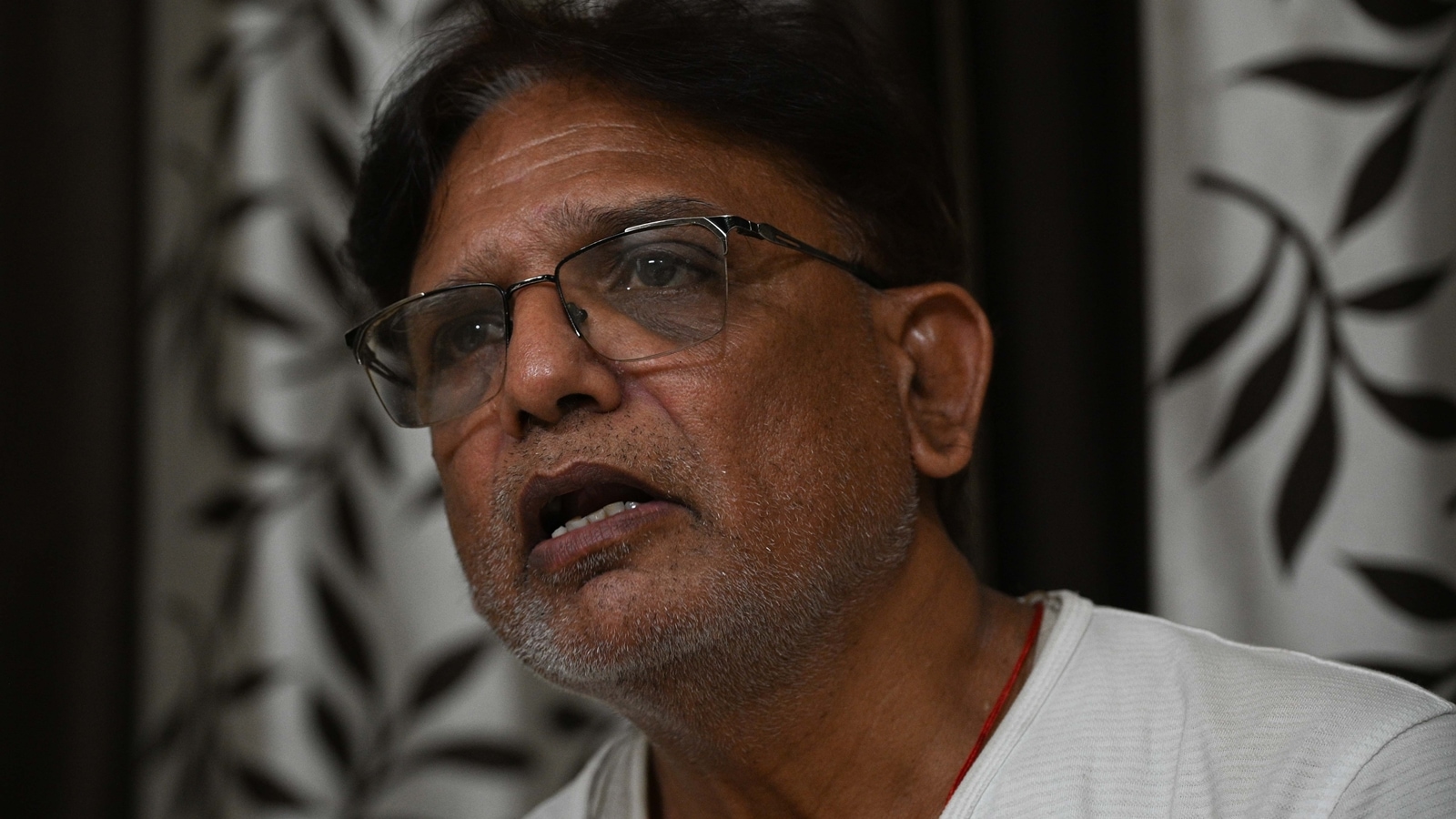 Amratlal Solanki, father of Dixit Solanki, speaks during an interview at his residence in Mumbai. (Express photo by Sankhadeep Banerjee)
Because the incident occurred in international waters, no single country had clear jurisdiction and this became the central cause of delay. The official acknowledged as much. “The incident occurred in international waters, and there was confusion over which authority was responsible. The UAE authorities maintained these were skeletal remains and did not issue a death certificate. Eventually, the flag state – the Republic of the Marshall Islands – issued it.”
On March 2, Manish Kumar Yadav, Under Secretary, Ministry of Ports, Shipping and Waterways, wrote to multiple authorities seeking “expeditious repatriation of the mortal remains to India”. By March 19, delays had set in. The Consulate General of India in Dubai pressed UAE authorities, noting that “nearly three weeks have elapsed since the incident”. The UAE declined to issue a death certificate, citing lack of jurisdiction.
Story continues below this ad
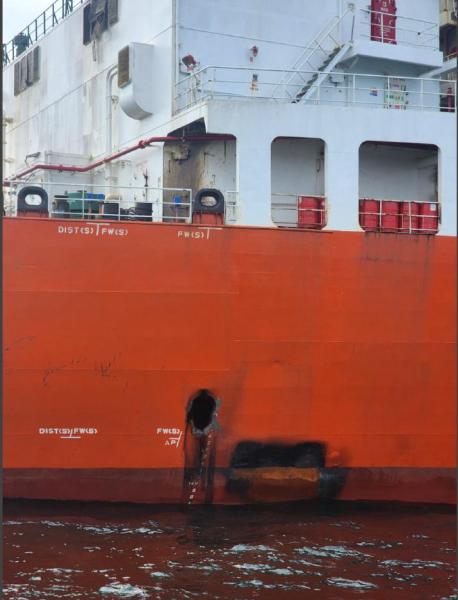 Vessel MKD Vyom was hit by a missile on March 1 which left a hole (see above image) of about one metre above waterline on the ship’s side.
(Express Photo)
On March 27, Assistant Consular Officer Sandeep Kumar wrote, “Despite our best efforts and follow-ups, the concerned authorities have not responded positively as the death happened outside their territory.”
While the UAE issued a No Objection Certificate pertaining to repatriation of remains, it neither issued nor attested a death certificate, meaning the Consulate could not register the death. Responsibility was then shifted to the Marshall Islands, which issued a certificate on March 26 recording that Dixit Solanki “died from fatal injuries as a result of an exploding projectile”.
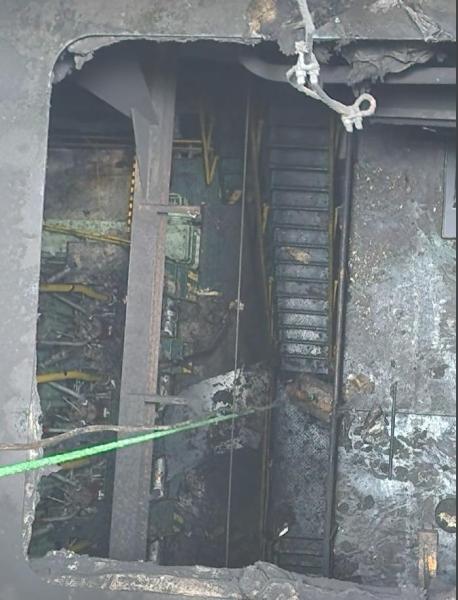 Charred insides of the vessel MKD Vyom close to where the missile hit and caused an explosion. (Express Photo)
The Sunday Express was the first to report that Solanki’s family had approached the Bombay High Court on April 2, seeking the court’s intervention to bring back his remains, after they said they were given no timeline or clarity on when they would be able to lay their son’s body to rest.
The petition by his father Amratlal Gokal Solanki (64) and sister Mitali Solanki (33) cited Article 21 of the Constitution, maintaining that the right to dignity extends even after death, and sought directions to expedite repatriation and share all investigation and forensic records with the family. The matter was listed to be heard on April 6.
Story continues below this ad
On April 2, the Consulate wrote to the family sharing the death certificate and seeking a notarised authorisation letter. The family submitted the required documents on April 3. The same day, Capt. P C Meena, Deputy Director General of Shipping, directed the shipping company to arrange the earliest possible flight. The remains are now expected to be flown back Sunday.
