

I fired him because he wouldn’t respect the authority of the President. I didn’t fire him because he was a dumb SoB, although he was, but that’s not against the law for Generals. If it was, half to three-quarters of them would be in jail.
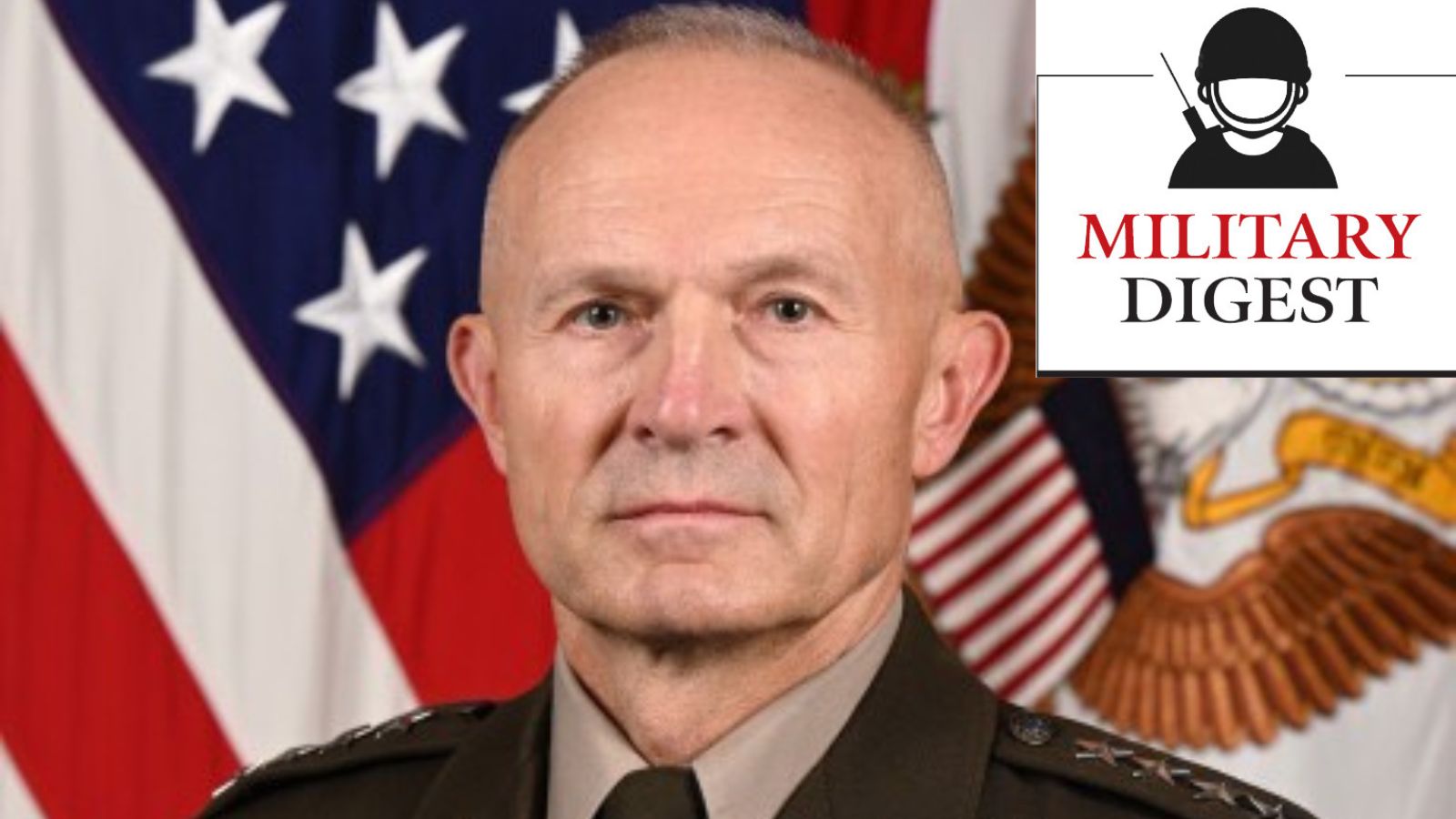
The dismissal of General MacArthur is one of the more memorable ones in military history. And it often comes to the fore whenever a senior military commander is removed from service. The sacking of US Army Chief of Staff Gen Randy George earlier this week by the US Secretary of War Pete Hegseth, acting on behalf of President Donald Trump, has made headlines across the world.
However, this is just one forced retirement in a long list of summary removal from service that have taken place in the US military over many years. Many senior-most Generals and Admirals have been sent into forced retirement during the present tenure of President Trump, including the Chairman of the Joint Chiefs of Staff. In this week’s column, we revisit some of the removals in US military history in the context of the authority that civilian decision makers wield over military commanders.
General George McClellan
A famous sacking going back to the 19th century is that of General George McClellan, who was fired by President Abraham Lincoln in 1862 during the Civil War as the General-in-Chief and later as an Army Commander. General McClellan routinely misbehaved with the President and often referred to him as a ‘Gorilla’. He also clashed with Lincoln over the war policy. After his Army career ended abruptly, he went on to contest an election against Lincoln and lost.
General Douglas MacArthur
Rank insubordination was one of the causes of the removal of Five Star US General Douglas MacArthur by President Harry S Truman in April 1951 in the midst of the Korean War.
MacArthur had earlier publicly criticised Truman’s policies on Formosa (Taiwan) and China. According to military writers, he had referred to the Truman Administration as “timid, vacillating, and appeasing”. He also disregarded orders not to deploy US forces near the Chinese-North Korean border, and later, when the US-UN forces suffered reverses at the hands of the Chinese, he blamed Truman.
General Michael Dugan
Story continues below this ad
General Dugan was the chief of staff of the US Air Force in 1990. He was removed from his post and retired a year later for telling journalists that the US was going to bomb Baghdad and intentionally target Iraq President Saddam Hussein, his family members, and his mistress, as well as other sites that would cause the most psychological damage to the Iraqi people. The civilian leadership did not approve of his statements and relieved him from command.
Lieutenant General John Riggs
John Riggs was commanding the US Army’s Objective Force Task Force in 2004 when he was retired and demoted to the rank of Major General.
This happened after he gave an interview to a newspaper saying the Army was being stretched dangerously thin and needed to be expanded substantially. This contradicted Defense Secretary Donald Rumsfeld’s stated position on the appropriate force size of the Army. Riggs put in papers for an early retirement, on the eve of which he was demoted to Major General.
Admiral William Fallon
In March 2008, Admiral William Fallon, who headed the US military operations in the Middle East as the CENTCOM commander, was sent into early retirement after he made several statements in the media wherein he appeared to be opposing the President Bush administration’s approach to Iran, Iraq, and China.
General Stanley McChrystal
Story continues below this ad
McChrystal is another US General whose career came to an abrupt end due to intemperate remarks made in interviews with the media. He was commanding US and Nato Coalition Forces in Afghanistan in 2010 when a journalist did a feature on the General and his staff for the Rolling Stone magazine. The report reflected derogatory remarks about members of President Barack Obama’s administration, including Vice President Joe Biden. Following the furore, he stepped down as the US Commander in Afghanistan and later retired from service. However, he was allowed to retain his four-star General rank even though he had not served in that rank for the mandatory period.
Vice Admiral Tim Giardina
Tim Giardina was serving as second in command at the US Strategic Command and landed in trouble for using counterfeit chips in a poker game at a casino in Iowa. He was removed as the second in command of the strategic command, investigated by the Naval Criminal Investigative Service, and demoted to Rear Admiral.
Supremacy of the civilian leadership over military commanders is well enshrined in almost all democratic nations. However, in the case of the US, as evident from examples given above, the threshold for tolerance of improper conduct of senior military officers is very low. Hence, summary dismissals, forced retirements, and demotions are almost routine.
The US President and the Secretary of Defense (now Secretary of War) not only enjoy extraordinary powers of removal but also exercise them remorselessly. Dissent is not an option for military commanders when faced with directions from the civilian leadership.
Story continues below this ad
To quote Mark Antony in William Shakespeare’s Julius Caesar:
“When Caesar says ‘Do this’, it is performed.”
