

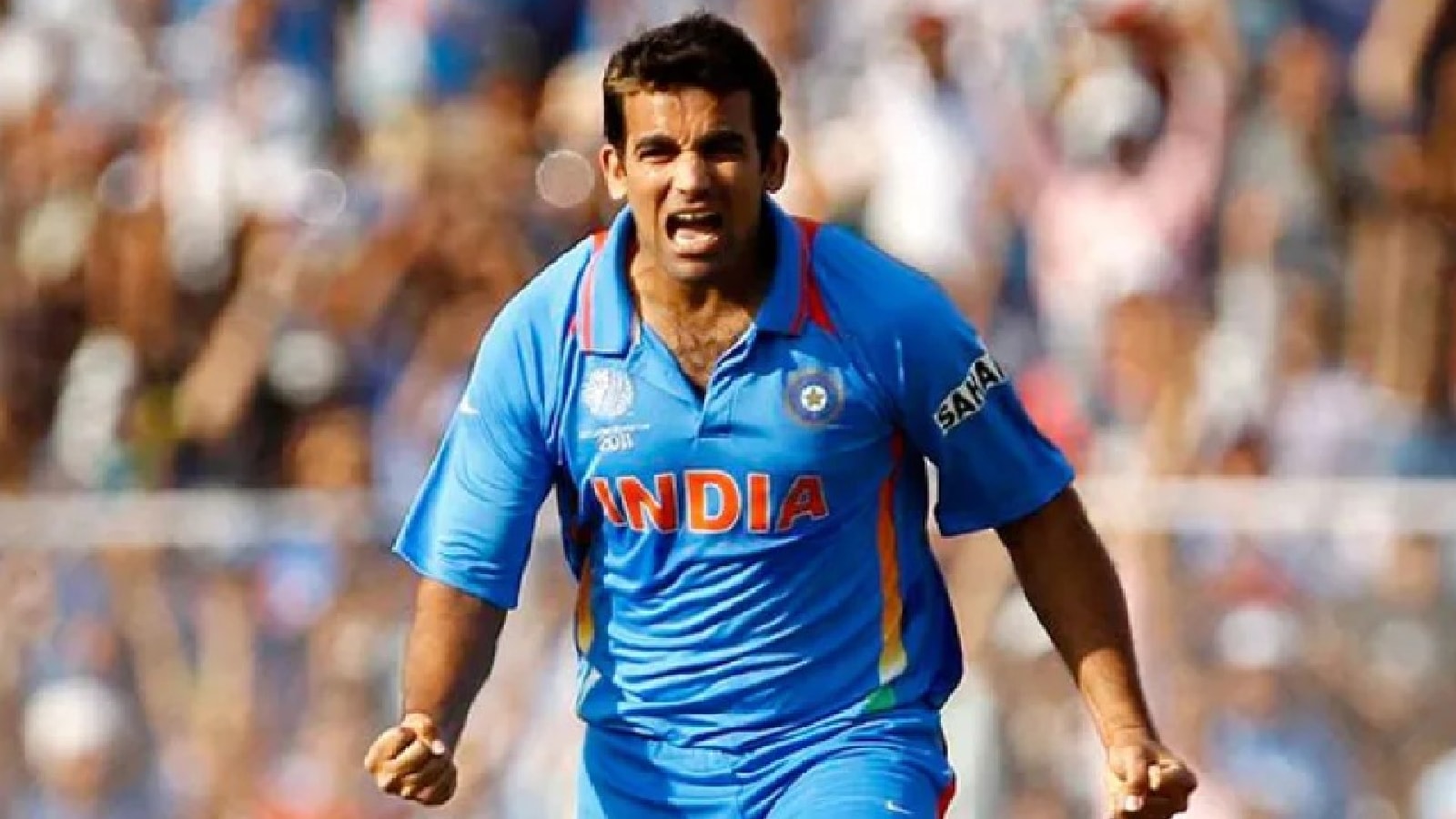
Zaheer Khan tried to bowl the back-of-the-hand slower ball for years. It wouldn’t come. His action didn’t allow it. His body didn’t allow it. He tried the Brett Lee variation—keeping everything behind the ball but slowing the wrist at release, not breaking it. His arm speed dropped visibly. Batsmen picked it. Out of the window.
He tried the split-finger slower one, the delivery Dilhara Fernando used to bowl. He spoke to the Sri Lankan pacer about it. “I realised he just had the advantage of being flexible. The length of the fingers was fine, but the flexibility—in my case, it wasn’t there.”

He tried Charl Langeveldt’s version — fingers bent on the seam, reducing speed without changing arm speed. “That was also not working because I was not able to grip it properly.”
Four variations. Four failures. Each one tried honestly, understood technically, and discarded without sentiment. The journey, as he describes it, was not about finding a trick. It was about finding the trick his body could perform.
“I had my own version of the slower one.” The knuckleball. The one that worked.
***
“When it started, it just started coming out very well for me.” Through his coaching work since retirement, Zaheer has understood why. “Maybe the flexibility of being able to get the knuckles behind the ball was the advantage I had.”
Sachin Tendulkar was there through the process. “He would encourage me to add a slower one because that was very important.” Right throughout the journey, he was there in terms of the feedback.
Story continues below this ad
The knuckleball became one of the defining deliveries of Zaheer’s second career — the World Cup semi-final and final in 2011, the prime moments when it mattered most. But it began as the fifth option, after four had failed.
***
Zaheer started playing cricket late. His coach Sudhir Naik told him so, plainly. “In Mumbai cricket, they start at the age of 9 and 10. You are starting at twice the age. So just know that you have a lot of catching up to do.” The words landed and stayed.
“It just became a part of my routine and it became ingrained in me—to be able to pick things.” The catching up never ended. It became the method.
Story continues below this ad
The first half of his international career was, by his own description, decent. Pace, swing, the raw materials. But the awareness of his own bowling — the four-part division he now teaches, load-up, delivery, follow-through, and the run-up that sets everything in motion — that came later.
“The team was so busy. Me playing both formats—at that stage, T20 was still not around. But the ODIs, the Test matches, and the domestic season in between was not giving me ample opportunity to prepare myself to do those changes at the international level.”
The progression needed confidence. “At the highest level, you can’t say, okay, if I mess up, I mess up. It doesn’t work like that.” Then came the break. The time away from the Indian team that is remembered publicly as a setback. Zaheer remembers it as the space he needed.
“That break gave me enough time to work on things.” He had been using his variations at first-class level already — the shorter run-up, the around-the-wicket angle, the adjustments. “The progression from using those changes from first-class level to the international level—I needed that much confidence and that much of a break for that.”
Story continues below this ad
When he came back, the bowling had changed. He went around the wicket a lot more. He bowled from closer to the stumps. The run-up was shorter. The leap wasn’t as exaggerated. The bowler who returned was not the bowler who left.
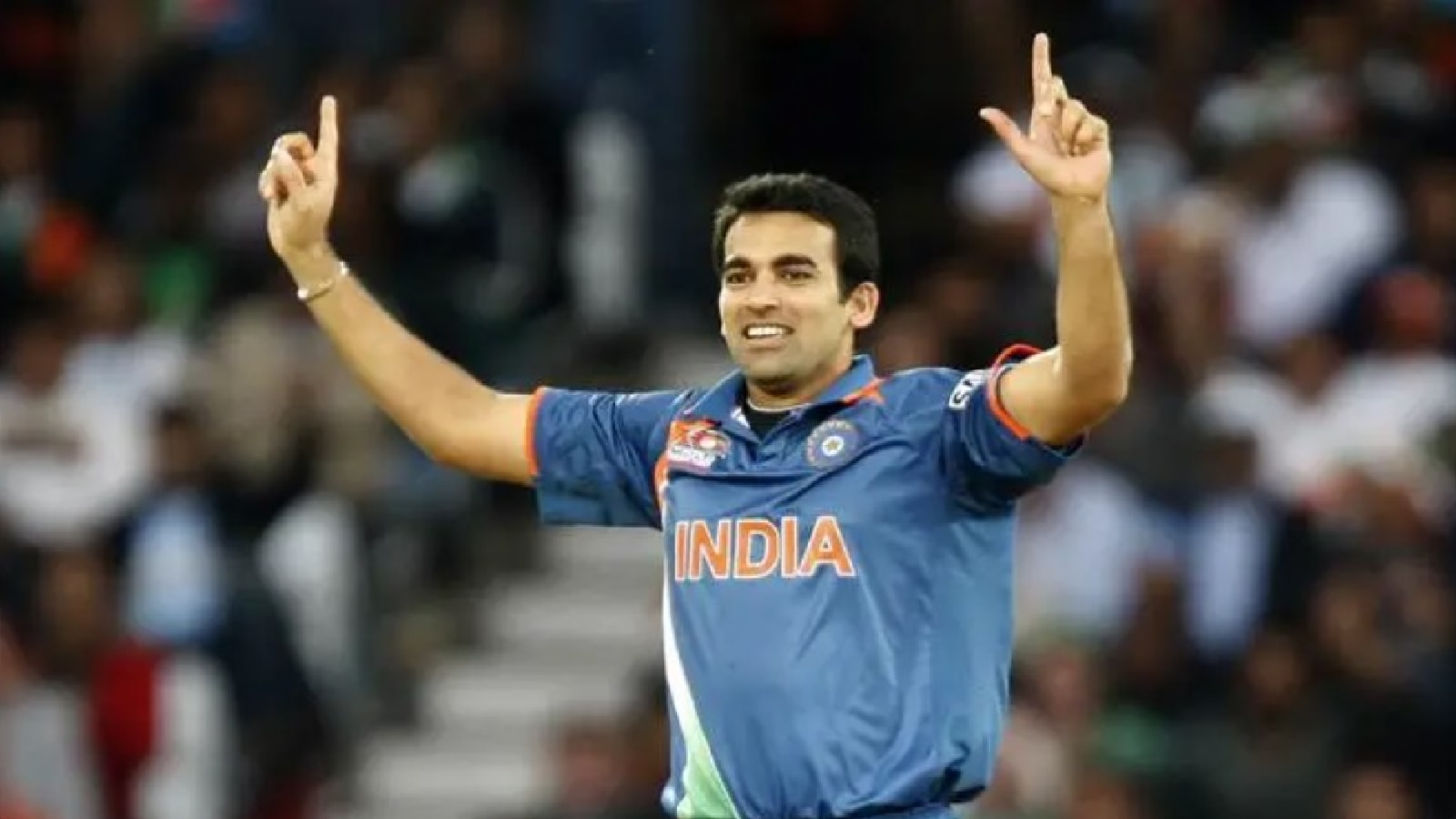 The first half of his international career was, by his own description, decent. Pace, swing, the raw materials. But the awareness of his own bowling — the four-part division he now teaches, load-up, delivery, follow-through, and the run-up that sets everything in motion — that came later. (File)
***
Zaheer’s most spectacular reverse benders from around the wicket came from a technical flaw, he reveals. In Bangladesh, he was finding it difficult to control the ball from over the wicket. “My wrist position had gone a little wrong—I was falling. My head was falling a bit, and because of that, I was coming into a position which was not giving me control with the new ball.”
So he went around the wicket. The angle was better. From that angle, he learned to control the falling head and the wrist position that had been betraying him. A flaw led to a solution. The solution became a weapon—and the weapon produced two of the deliveries he keeps closest.
Story continues below this ad
The first was to Ian Bell in the 2007 Test at Trent Bridge. It was England’s second innings, India trying to bowl them out. “That delivery gave me a lot of excitement.” It bent back in late to trap Bell lbw.
The second was to Ricky Ponting in Melbourne. Around the wicket, around off stump, cutting back into the right-hander. “Just doing enough for the bails to come off.” Both deliveries came from the angle that a flaw had forced him to find.
***
There are certain batsmen who play on line. There are certain batsmen who play on length. This is how Zaheer Khan divides the world.
A batsman who plays on length is looking for the ball to be pitched up — he wants to drive. “You can catch that guy on line,” Zaheer says. “Because even if the line is wider, he doesn’t mind. He is backing himself to play the length. So as the line is getting shifted, he is still risking it. You can actually catch him with the ball which is too wide to be driven, but being there for the drive.”
Story continues below this ad
A batsman who plays on line is the opposite. If the ball is in his line, he will play, regardless of whether the length is back. Virender Sehwag is the example Zaheer reaches for — cutting deliveries even when the length was close enough to drive, because the ball was on his line and that was enough. The commitment to the shot came before the length was fully read.
There are batsmen so confident in their judgement of length that they keep going regardless of the line. Over time, that confidence becomes the vulnerability. Like Virat Kohli at the end of his Test career. “That is typically the case,” Zaheer says.
***
Graeme Smith was a tall man, an onside player. Everything in his setup—the grip, the stance, the bat angle—was designed to take advantage of angles created by right-arm bowlers.
Story continues below this ad
“With my delivery swinging late to him, he would have less time to adjust because his bat would not come straight. So if he has to play the ball to mid-off, he would not be able to play it with a straight bat.” On the back foot, Smith’s shot was predominantly the punch— so for him to drive through the covers, the ball had to be really full. “If you get the length right, that’s where the length factor becomes crucial, then you have both sides to play. The ball coming back in and the ball moving away.”
Kumar Sangakkara was different. He played the ball late. His setup was built to defer the decision — play or leave — as long as possible. “Sanga was very good. He used to play the ball late. He would take advantage of your lengths nicely. I would try and get as close to the off stump as possible so that he has to work that much harder to play or leave. You have to be so precise.”
Two of the great left-handers of their era. Two completely different puzzles. Both were solved in real time, by a bowler who started late and never stopped catching up.
***
Beyond technique, beyond the line-or-length preference, there is a third layer: how a batsman builds his innings. “It doesn’t matter which format they’re playing. They always have this template of first 10-15 deliveries.”
Story continues below this ad
In T20, the window compresses — maybe four deliveries for a batsman to get in. But the template exists. The bowler who recognises it can attack within it.
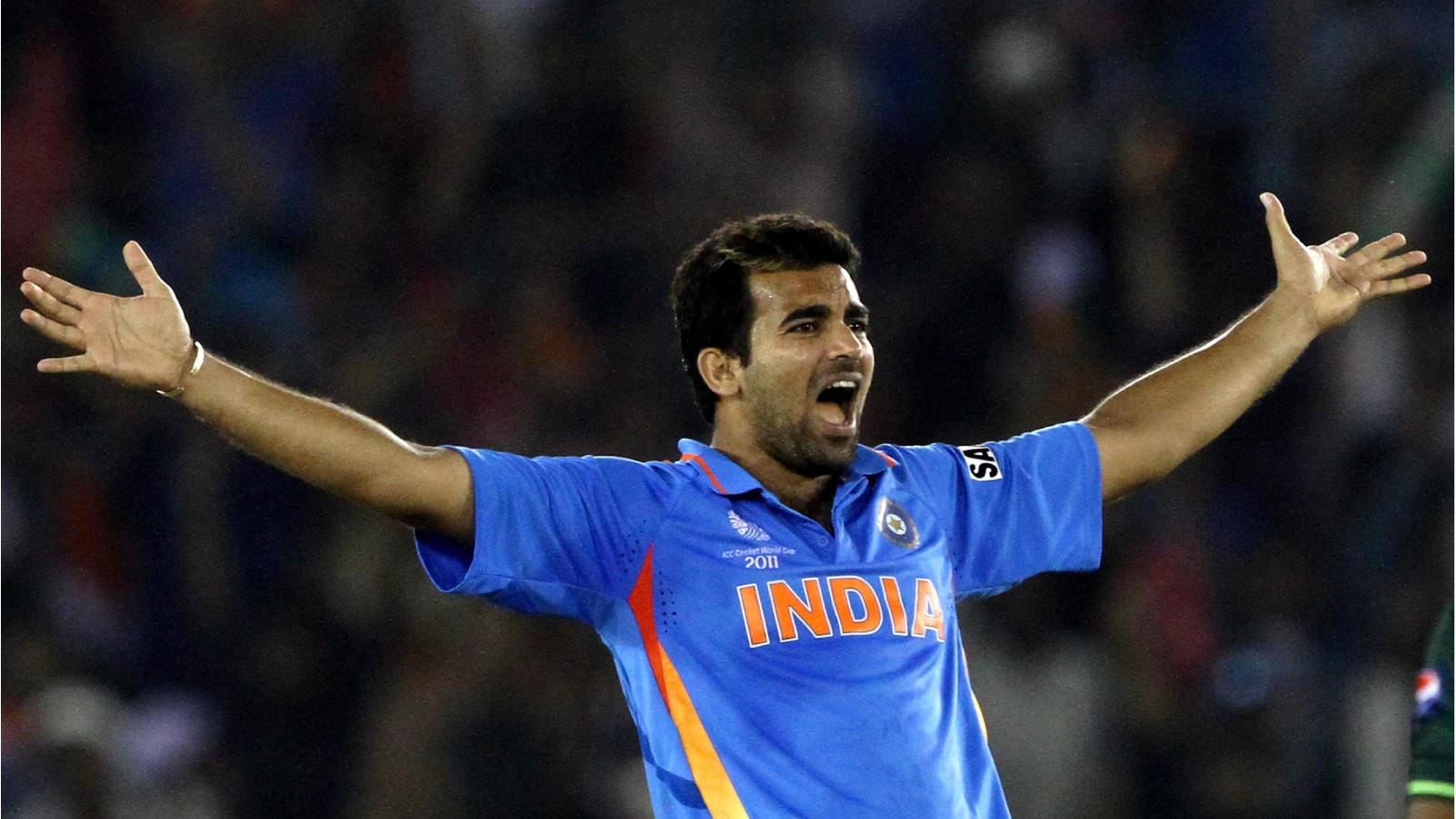 There are certain batsmen who play on line. There are certain batsmen who play on length. This is how Zaheer Khan divides the world. (Express Photo)
The example Zaheer reaches for is Dhoni. “He’s so assured of himself that he can hit the ball out of the park once he’s in. Once he sees the ball the way he wants to see it.”
So if Dhoni walks in under pressure, Zaheer knows he will not attack immediately. “Even if it’s ten deliveries to go and they need twenty-five runs, he will still say, okay, let me see.”
But when Dhoni walks in and hits the first ball — that tells you he has already read the conditions before arriving at the crease. “This is the side of things which goes beyond just the technique, beyond just the game. How one sees a situation when the pressure is highest — how are you going to react?”
Zaheer reads opponents to get them out. He reads Dhoni to know when the chase is already won.
***
The cues are always there, Zaheer says. Whether the batsman is standing deep in the crease or ahead of it. Whether the weight is on the back foot or the front. Whether the head is adjusting — which means the batsman is conscious of something, a technical correction, a fear, a habit he is trying to suppress.
“If someone is consciously trying to put his leg outside the line of the leg stump, that means he is conscious about it.” The bowler’s job is to notice. Sometimes, to mention it in the follow-through. Just loud enough to be heard: the front leg is still coming across. Not an insult. A reminder of the thing the batsman is already worrying about.
Ponting was run out in a Test match. Zaheer was in a huddle with his teammates. “You think you were Usain Bolt?” he said as Ponting walked past. Exit sledging — quick, disposable, designed to travel back to the dressing room.
Trent Bridge, 2007, was different. The jelly beans on the pitch, the escalating theatre, the bat eventually pointed at the England dressing room — these were not emotions. They were construction. “I made sure I involved the umpires in that, so that nothing would come back to me,” he says. Kevin Pietersen drew the attention, the energy redirected away from Zaheer and towards the spectacle itself.
“Sledging is not about the use of bad words. It’s using it to your advantage — and not losing yourself in the process.”
***
Between deliveries, Zaheer Khan had twenty to thirty seconds. What happened in his head? “A large part of it would be what’s coming next. A short part of it would be what has happened in the previous ball.”
In white-ball cricket, he carried two options to the top of his mark. “If the batter moves, I’m going to do this. If the batter stays, I’m going to do this.” Both options aligned with the over’s plan. The system was fed. The body was trusted to react.
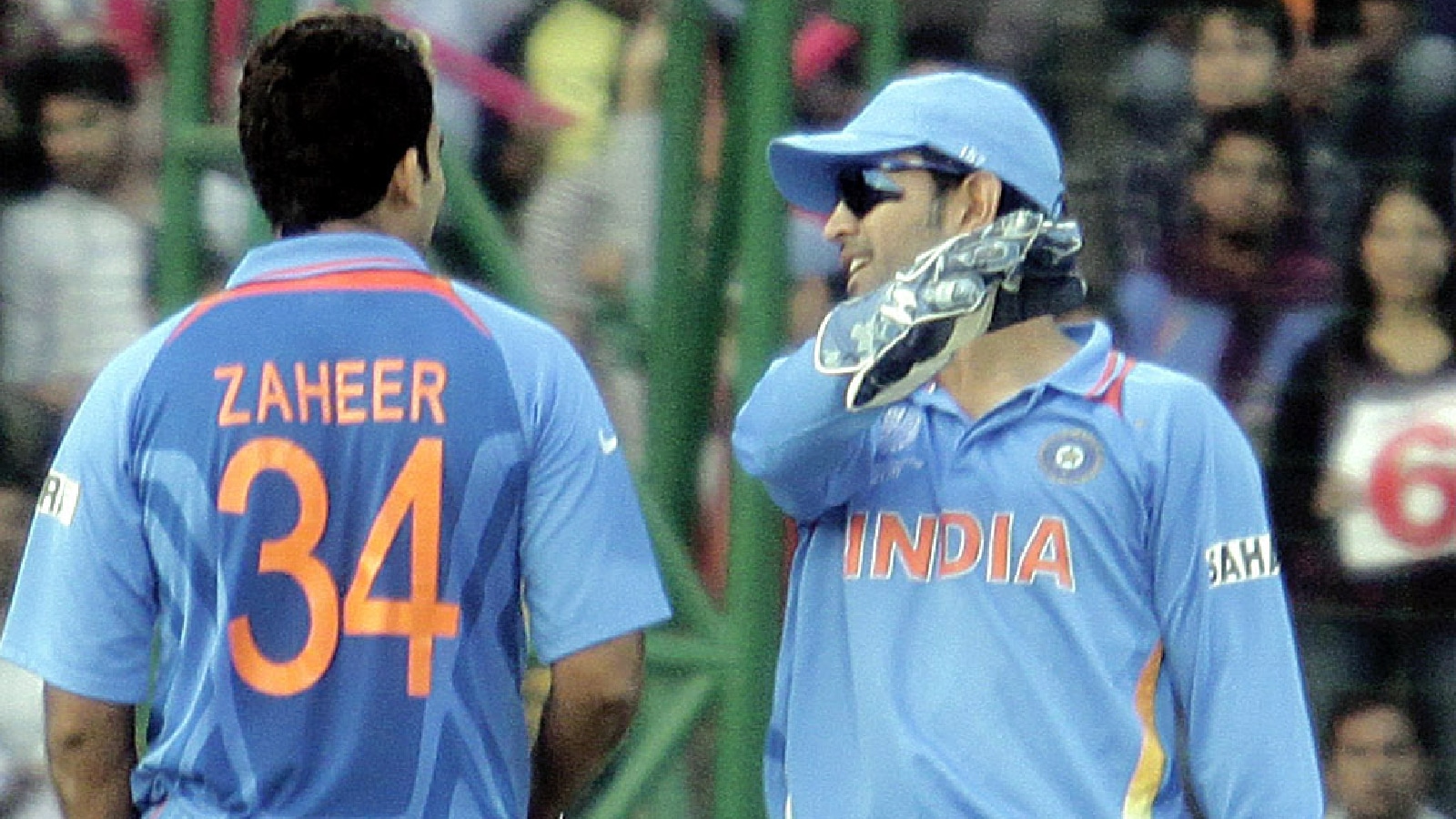 Zaheer reads opponents to get them out. He reads Dhoni to know when the chase is already won. (Express photo)
He held the ball delicately, as if holding an egg. “It used to give this impression,” he says, smiling. “But it was happening subconsciously. I don’t think I knew exactly how my fingers were.”
***
The Nagpur Test against Australia was the longest siege. A 7-2 field, a line drilled wide outside off stump, over after over, from both ends. Zaheer and Ishant Sharma were not trying to take wickets. Eventually, Simon Katich got out — adjusting and adjusting to follow the wide line until an in-swinger from Zaheer found him in front.
“MS and us, we just continued. Stayed patient.” The details of how long, Zaheer can’t quite remember. The details he keeps are the ones that taught him something.
***
The data question troubles him. Not because data is wrong but because it has replaced something that cannot be replaced.
“With more and more data, you’re just becoming too data-dependent. It is taking that instinct of the game out for a cricketer.” He sees it in the IPL. Bowlers turning to the dugout mid-over. The instinct that Mumbai club cricket once demanded — because you had no data, because you started late, because you had catching up to do — is being coached out of the game.
“When you’re too data-dependent, you are doing your work before the game and after the game. But when playing the game, you are not able to make decisions,” he says.
Are matchups overrated? “In some cases, yes.” A left-arm spinner bowling to a left-hander because the data says so — but the data doesn’t distinguish between one bowling at 135 kilometres and one bowling at 125. “The data gives you a reference point. But for you to execute, everything has to come together.”
What about bowling to a batsman’s strength? If his on-stump yorker lands at 75 percent accuracy, and the batsman’s strength is hitting a missed yorker into the stands, who does the bowler back? “Just because someone is strong enough to put a missed yorker out of the park, am I going to move away from my strength? Who are you going to back, your skill or the batsman’s?”
***
There is another kind of catching up he is invested in now. He is a co-owner of a franchise Antwerp Anchors in the ‘EUT20 Belgium’ cricket league, European cricket’s attempt to build what the IPL took decades to become—a pipeline, a culture, a place where the game means something to people who didn’t grow up with it.
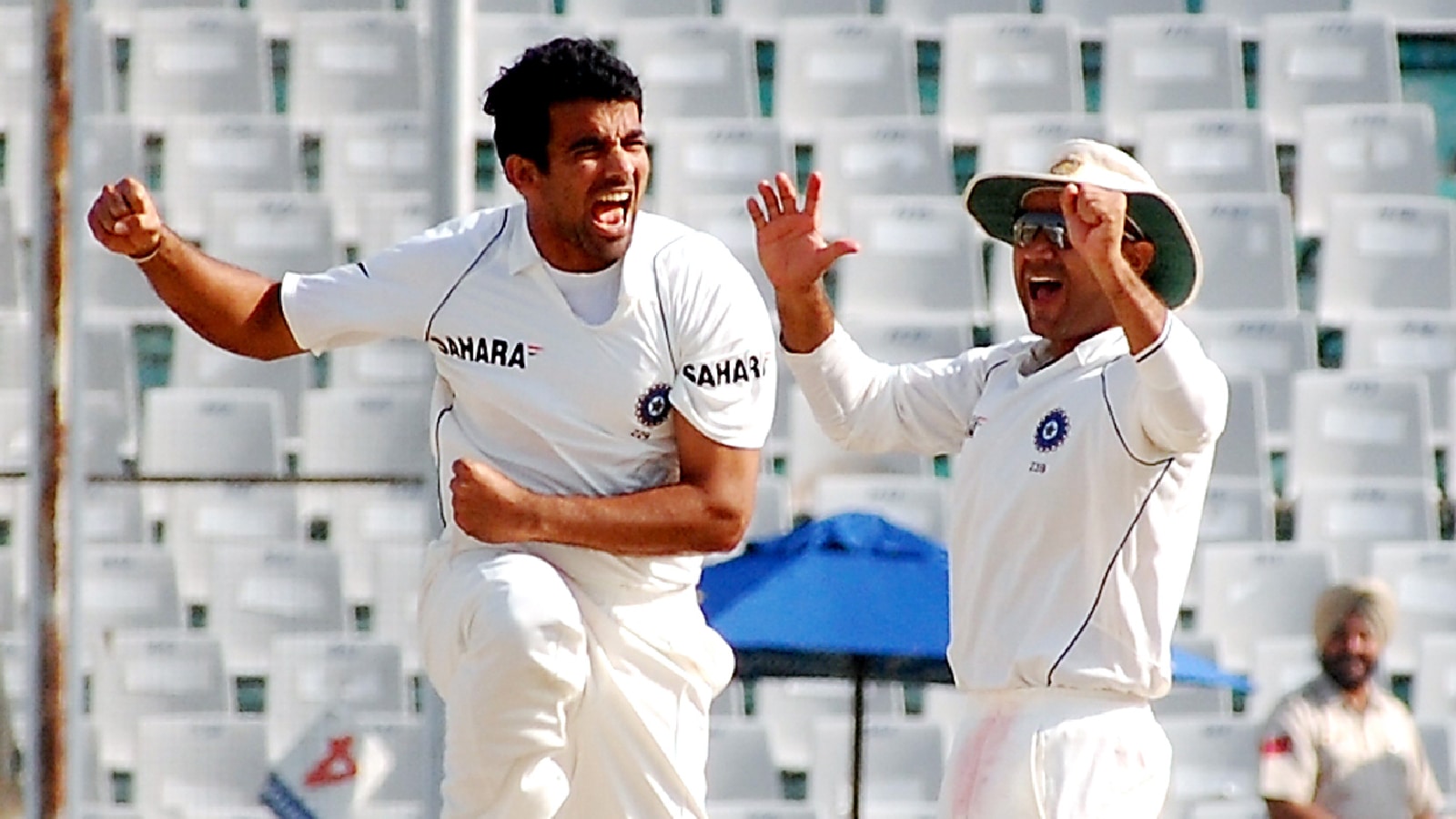 A batsman who plays on line is the opposite. If the ball is in his line, he will play, regardless of whether the length is back. Virender Sehwag is the example Zaheer reaches for — cutting deliveries even when the length was close enough to drive, because the ball was on his line and that was enough. The commitment to the shot came before the length was fully read. (Express Photo)
Belgium is not a country that has produced international cricketers. The growth is slow. “It is a long-term thing,” he says. “You are not going to see the results immediately.” The franchise model gives him something ICC development programs don’t — decision-making influence. A seat at the table rather than a presence in the bleachers.
“Cricket business in Europe is about value creation over time.”
***
South African seamer Fanie de Villiers told him something about awareness that stayed. Even if de Villiers bowled from a short distance, he would know exactly where his front foot was landing. Full run-up, same thing. “It’s just about perfecting those last three, four steps so nicely that you know exactly — it doesn’t matter from where you’re coming.”
De Villiers used white chalk on the ball. After bowling, he would walk to the pitch and see how many deliveries had landed on the seam. Before pitch maps existed. Before Hawk-Eye. Before data. A man with chalk and a cricket ball, reading the surface itself.
Wasim Akram talked about wrist position and body exaggeration when the swing wasn’t there. Jason Gillespie called after the Chennai Test in 2001 to talk about how to think about bowling going forward.
“What stood out for me predominantly, across all those conversations, was the position at the crease and being aware. The steady head. Knowing that you are in a good, strong position.”
Every conversation pointed to the same thing. Awareness. Of the body. Of the ball. Of the batsman. Of the surface. The coach’s words from the beginning — you are starting at twice the age, you have a lot of catching up to do — turned out not to be a warning. They turned out to be a method.
He tried four slower balls before finding the one his body could bowl. He learned from de Villiers how to read the pitch with chalk before Hawk-Eye told him what the surface said. The catching up never became catching up. It became the way he saw.
