

4 min readNew DelhiUpdated: Apr 22, 2026 06:20 PM IST
The Sabarimala reference hearing in Supreme Court on Wednesday saw some important exchanges between the bar and the bench, with the proceedings centering on the relationship between denominational rights, judicial review and the state’s power to intervene in matters of social reform.
- During the hearing the Chief Justice of India Surya Kant said: “So far as social welfare or reforms are concerned, it is a very wide term and the state is not a stranger or an alien. State represents the will of the people and if the people want certain social evils to be reformed, probably that power can be exercised. But it is very difficult for us to lay down any future guidance. It will always depend on case to case as to whether the reforms fall within the ambit of Article 25(2)(b) or it amounts to exceeding the power in the name of reform introducing something which amounts to infringement of a religious practice.”
- Justice BV Nagarathna:“All human beings are bound by conscience irrespective of the nature and quality of the conscience.” She added that this is what makes homo sapiens different from animals.
- Justice Aravind Kumar: “So the courts will sit in the armchair of ascertaining the theology of the practice?” The judge said it after senior advocate Gopal Subramanium, appearing for one of the review petitioners, argued on the “interdenominational” contest about the nature of a practice. “There are cases you have the most celebrated case, the vadakalai thenkalai that has been going on for centuries and I still don’t know whether it’s over, but I’m giving you an example that there can be projects that those have to be done. In such cases you will need evidence. You will need proof, you will need to track. But your lordships asked me a more fundamental question — is the court devoid of adjudicatory power? The answer is that the court is not devoid of adjudicatory power.” Subramanium added that there was no other place where any legal rights or legal injury can be established except a court. “I know those are not exactly the ideal kinds of situations,” he said.
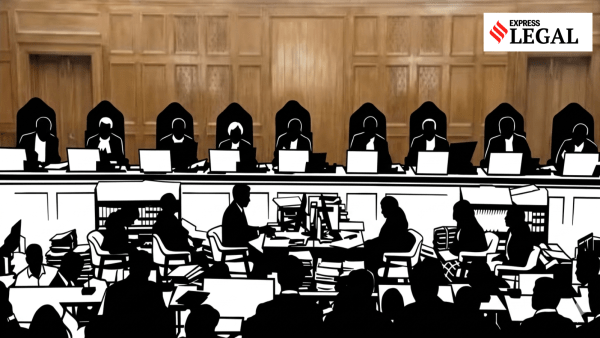 Chief Justice of India Surya Kant said the State is not a stranger or an alien and represents the will of the people, which has the power to reform social evils.
- Justice Nagarathna: “The Hindu society must unite and not say we are on one denomination, they are another denomination. They cannot come to our temple. We cannot go to their temple, that cannot be the idea. The denomination will suffer if they don’t throw open the temple to others.”
- Justice Nagarathna: “For example, for religious denomination believes that a lady who becomes a widow has to commit Sati and therefore Sati must be abolished in the context of Article 25 2 B. It cannot be considered to be an invasion of a religious practice.” The judge said this after Subramanium stated that there can be even discriminations within the realm of personal law. He added that the removal of that discrimination can still be a social welfare reform, which directly falls within the province of Article 25 2 B. He said that for the purpose of removal of discrimination, you don’t have to necessarily go back to article 14.
Background
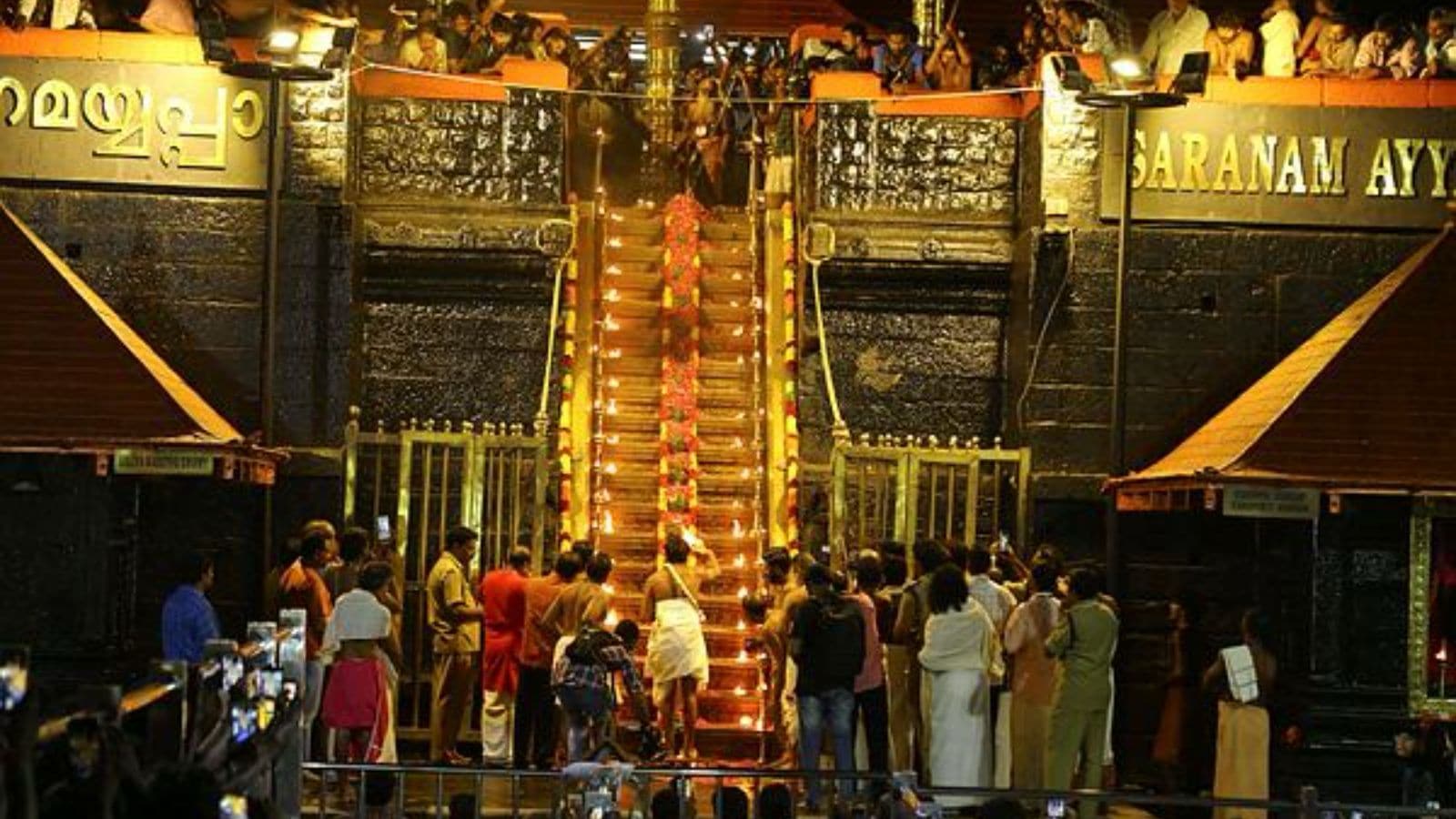
The apex court is hearing the pleas concerning discrimination against women at religious places, including the Sabarimala temple, and the scope of religious freedom under the Constitution.

A nine-judge bench headed by Chief Justice of India Surya Kant is hearing the case which also includes Justices B V Nagarathna, M M Sundresh, Ahsanuddin Amanullah, Aravind Kumar, Augustine George Masih, Prasanna B Varale, R Mahadevan and Joymalya Bagchi.
On September 28, 2018, a five-judge bench of the Supreme Court, by a 4:1 majority, lifted the age restriction on women visitors and struck down as unconstitutional Rule 3(b) of the Kerala Hindu Places of Public Worship Rules, 1965, which allowed the exclusion of women on the grounds of custom.


© IE Online Media Services Pvt Ltd
