

The overwhelming focus of the current global disruption has been on assessing its impact on the US and China. Instead, the real pressure is likely to fall on emerging markets and developing economies that are simultaneously being buffeted by the triple shocks of tariffs, trade diversion, and technology.
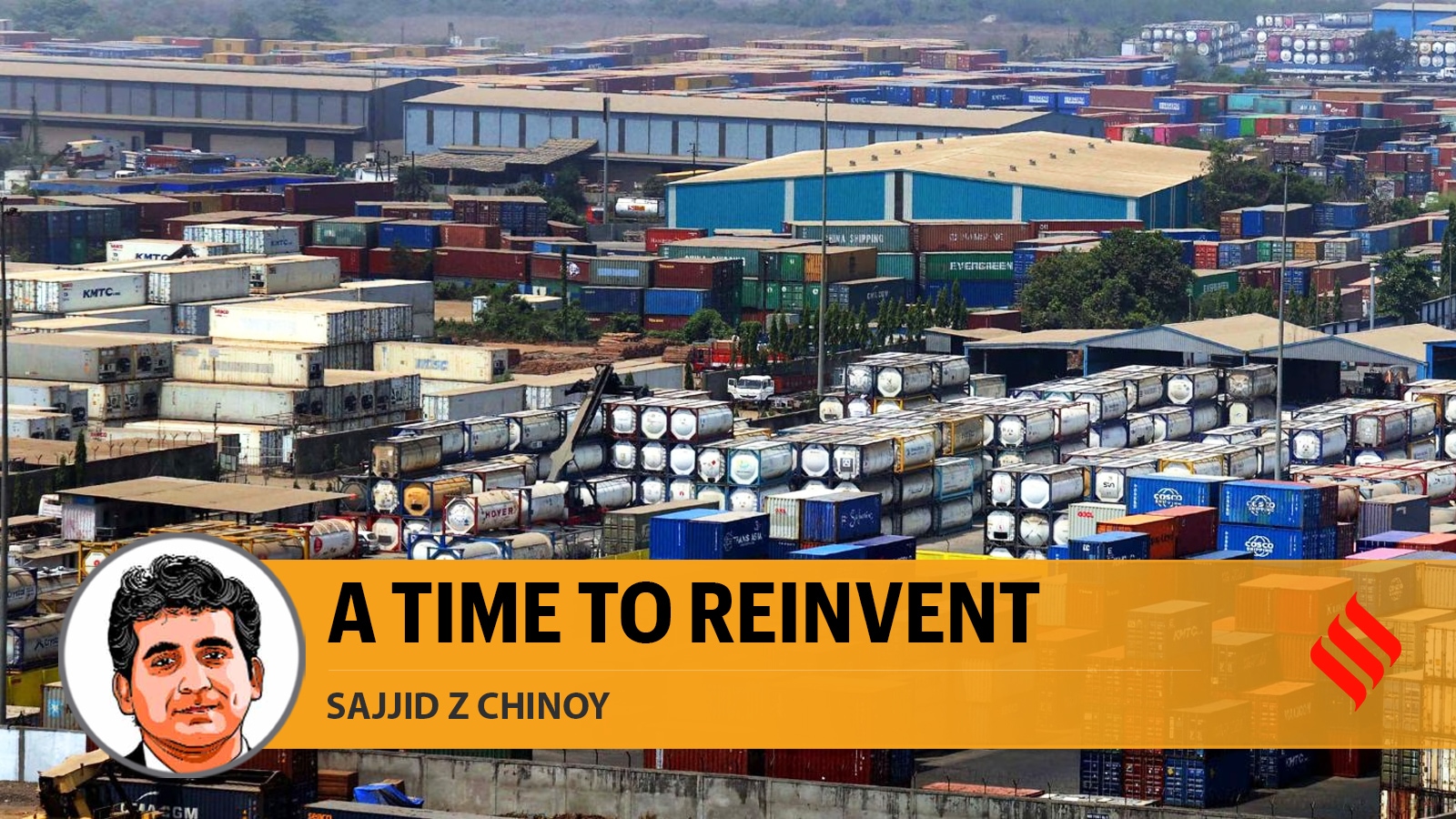
Tariffs: International trade has been the lifeblood of emerging markets (EMs) for 25 years. Growth in EMs (even outside China) and global trade volumes are so strongly correlated that they are virtually indistinguishable. Now global trade is facing one of its most acute crises. First, growth had slowed sharply after the global financial crisis. Then, Covid engendered a slew of non-tariff barriers around the world. Now come the Trump tariffs. The effective tariffs in the US have increased from 2.7 per cent to almost 18 per cent, levels last seen in the 1930s.

How will emerging markets — far more open and export-reliant than the US — grow amid rising protectionism and economic balkanisation? Where will growth come from for the small open economies whose domestic markets are not large enough to create sufficient demand? What about the enormous efficiency benefits that trade has delivered? In the run-up to the 250th anniversary of Adam Smith’s Wealth of Nations, the concept of specialisation and exchange is under serious threat.
Trade Diversion and China Shock 2.0: Protectionism is only half of the story. Think about its knock-on effects. Ever since the US started imposing tariffs on China in 2017, China has begun to redirect its exports to developing economies from Latin America and Africa to Asia. With US tariffs on China hiked from 10 per cent to 42 per cent, expect that dynamic to accelerate sharply. China is currently floating in excess capacity that is driving deflationary pressures at home. Emerging markets must, therefore, brace for this Chinese excess capacity to flood their markets at prices they can scarcely compete with.
Surging Chinese imports have impinged on domestic manufacturing in Thailand, Indonesia and India in recent years. Expect those pressures to increase dramatically after the Trump tariffs. The US experienced a “China Shock” in the early 2000s. EMs must brace for a China Shock 2.0 after the Trump tariffs. Not only must they prepare for a more protectionist world that hinders exports, but EMs must also simultaneously play defence at home to compete against a rising influx of Chinese imports that threaten their domestic manufacturing bases.
Technology: The breathtaking pace of technological change risks morphing from labour-augmenting to labour-substituting. Already, rising capital-labour ratios in manufacturing have pressured blue-collar jobs around the world. India, too, has experienced a sharp rise in its capital intensity across manufacturing and exports over the last two decades, at odds with its labour-abundant endowment. Now, the rapid evolution of AI will simply broaden pressures from blue-collar to white-collar. Job creation is getting progressively harder, and developing economies with their younger populations — from South Asia to sub-Saharan Africa — are most at risk.
All told, a potent combination of tariffs, trade diversion and technology risks creating a perfect storm for developing economies. Are the slew of recent youth protests in South Asia the canary in the coal mine? How then should policy respond?
Don’t turn inward: The demonstration effect of the US raising tariffs may embolden the developing world to turn protectionist in the mistaken belief that import substitution generates more growth and jobs. This would be a grave mistake. We have seen this movie before in India and know how it ends. We have lived through the Lerner Symmetry Theorem — that an import tariff is effectively an export tax. Only 13 economies since the Second World War have grown at 7 per cent for 25 years or more, and they all had one thing in common: Strong exports and global engagement. The US accounts for less than 15 per cent of global imports. There is hope yet for the rest of the world to promote rules-based multilateral trade.
Even if global trade were to wobble, India must not despair. India’s share of global manufacturing is still less than 2 per cent. So we don’t need the pie to grow. We need our share to grow within the pie. The collateral benefits of external orientation are well understood. Apart from exports providing a source of demand, global competition forces firms to be more productive, efficient and reach economic scale. If we want our firms to be more innovative and spend more on R&D, they should be exposed to more global competition.
Reform Reform Reform: This is also a world where the premium on being competitive has gone up enormously. To export amid rising protectionism or produce domestically against the threat of Chinese imports, increasing competitiveness is the key. This will require pushing hard on foundational reforms: Land, labour, power, health and education. The recent GST simplification and announcement of committees on deregulation and next-generation reforms are crucial and encouraging starts. We must now take this to its logical conclusion.
Bending the capital-labour ratio: The key to job creation is to equip labour to more effectively compete with capital. This will not be easy and necessitates a sustained push on education, health, skilling and ensuring that stringent labour laws don’t disadvantage the very factor of production they are meant to safeguard.
Finally, the sheer pace of technological dynamism and diffusion demands that societies and economies are re-wired to enable, almost welcome, creative destruction. This will require letting capital and labour move more seamlessly from sunset to sunrise industries. It will require large investments in re-skilling, re-training and continuing education. It will require intelligent and robust safety nets to protect those left behind and a tax system that can finance all this.
These are epochal times. Emerging markets are at a fork in the road. They are likely to face multiple, reinforcing shocks. One option is to look in the mirror and use these shocks to do the hard work of reforming and reinventing themselves. Another option is to turn protectionist and inward in the hope of wishing away the global storm. The latter would be tempting and simple. And wrong.
The writer is Head of Asia Economics at J P Morgan
