

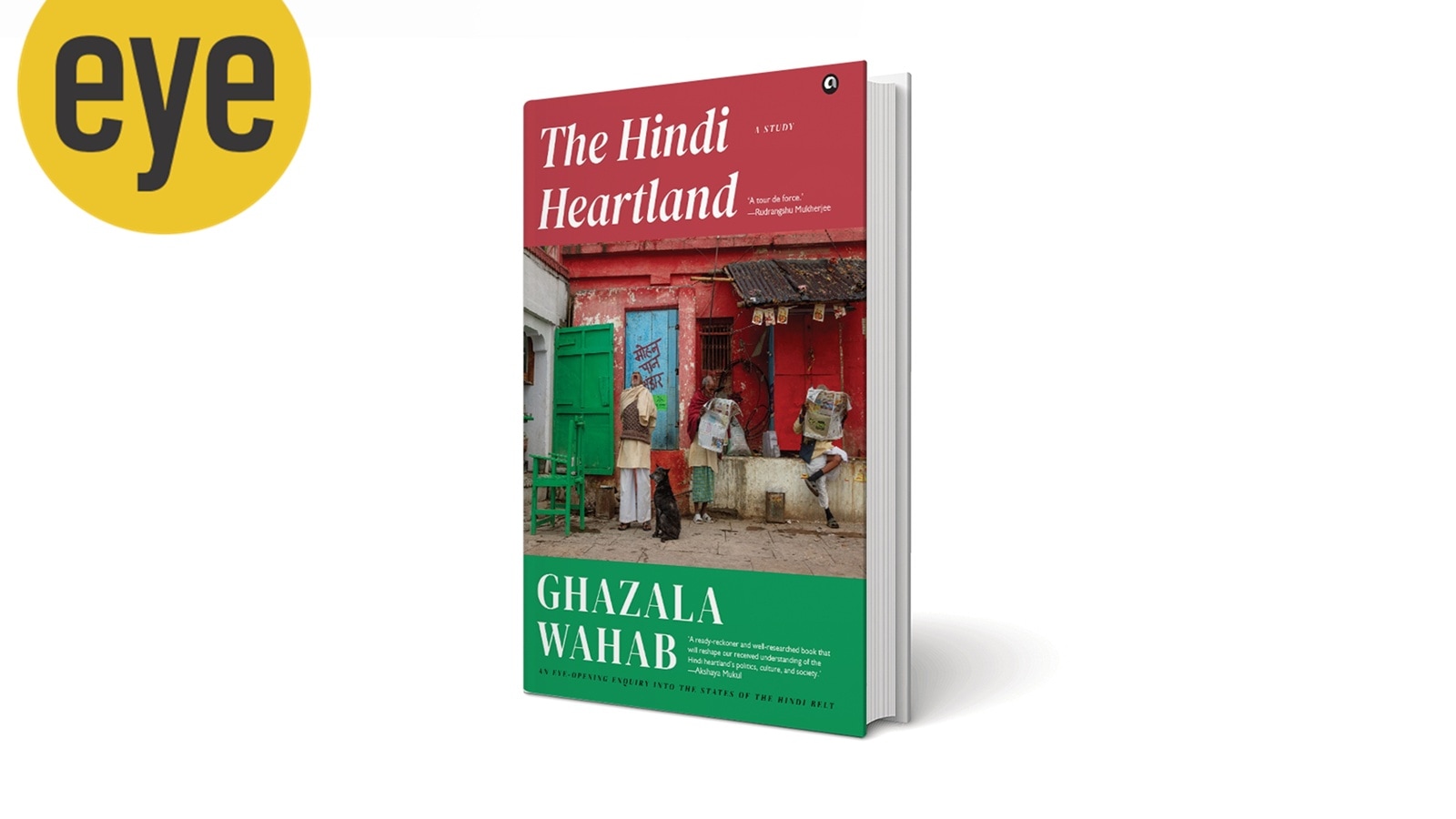
There are three features of this book that make it distinctively exceptional. First, it identifies the significance of northern India states as a researchable theme without being apologetic to the much talked about north-south divide. The book raises a set of clear and straightforward questions, which are often expressed as anxieties, apprehensions and concerns about the past and future of the Hindi heartland. The book is based on an intellectual conviction that the Hindi heartland is “…gripped by the insecurity about its inability to cope with the future,” hence, “…it is drawing comfort from a manufactured past, while…disowning its inheritance.” The Hindi heartland, in other words, is transformed into an object of a serious investigation to provide a historical context to the here and now issues of public discussions.
A creative conceptualisation of the idea of the Hindi heartland is the second distinctive feature of the book. Wahab argues that Hindi heartland reflects a congruity of factors, which make it a unique and identifiable entity. She examines the geographical formation of this region as a point of reference to trace the historical evolution of social formations, religious traditions, cultural forms, nature of economy and the ever-evolving linguistic universe of the communities and groups. This long ‘history of histories’ is used to explore the political changes that shaped the Hindi-heartland over the centuries. The major part of the book, covering eight long chapters, introduces the reader to a detectable political past of this region. A conscious attempt is made to assert the centrality of politics while recognising its sources in the socio-cultural constitution of the Hindi heartland.

This sophisticated representation of politics introduces us to the multi-faceted expressions of power in the region in the past. The last section of the book extends this line of reasoning and tries to unpack the dynamic postcolonial political trajectories. Wahab examines the long-term outcomes of the electoral politics that redefines the social and cultural life of the communities in an unprecedented manner. This section of the book answers the popular saying that ‘whatever happens in Hindi heartland happens in India’.
The style of presentation is the third and perhaps the most admirable feature of this book. Avoiding the stiffness associated with conventional academic research, the author offers us a refreshing narrative to reach out to different publics — professional researchers, students, policy makers and non-specialists. To address these different sets of possible readers, she evolves an interesting style of writing. Most of the chapters begin with a personal anecdote to make the reader slightly comfortable. This easy-to-understand introductory note then moves slowly and gradually to accommodate complex issues, factual information and chronological details. Wahab uses the existing academic literature as an important source to provide evidence to support her arguments and claims. However, she does not confirm the scope of her inquiry and moves freely to produce an original and innovative perspective on the idea of Hindi heartland.
This intellectual openness allows Wahab to make a positive and constructive conclusion. Evaluating the growing communal polarization in the region in the recent decade, she argues that “…separation breeds greater suspicion, which leads to violence…for the minorities, secularism is a desperate necessity. For the majority, it’s a lifestyle. In this gap lies the challenge of somehow not letting go our collective human values of grace, kindness, tolerance, patience and occasional indulgence.”
Wahab shows that the Hindi heartland can only be imagined in relation to two intrinsic values — an inherent diversity, which has produced an attitude of living together separately and a unique sense of unity that corresponds to a highly synchronised cultural universe. These values, in her opinion, need to be further strengthened. The intermingling of religious communities and groups based on historically shared culture and heritage, in this framework, could open new possibilities to solve the communal stalemate.
While the moral value of this line of reasoning cannot be underestimated, this conclusion poses a new kind of challenge: what would be the expected role of the political class, especially the opposition parties, to rediscover a workable and acceptable meaning of secularism in public life? This question is important because the Hindi heartland is also a creation of a modern political imagination that has relied heavily on an India-specific notion of secularism. In fact, secularism is more than a word that was included in the Preamble of the Constitution decades ago; it is a way of life that determines the cultural contours of the Hindi Heartland and, for that matter, the Republic of India.
The writer is professor, CSDS
