
Close Menu
  • Home
  • Education
  • Health
  • National News
  • Politics
  • Relationship & Wellness
  • World News
What's Hot

Before ‘corruption in judiciary’, the 15 instances where NCERT textbook revisions went unchallenged

February 27, 2026

Bombay HC directs MSRTC to pay Rs 50 lakh to widow of employee who died of Covid-19 while on duty | India News – The Times of India

February 27, 2026

SBI Clerk Mains Result 2025 Out: Download scorecards & merit list PDF at sbi.bank.in

February 27, 2026
Facebook X (Twitter) Instagram
Global News Bulletin
SUBSCRIBE
  • Home
  • Education
  • Health
  • National News
  • Politics
  • Relationship & Wellness
  • World News
Global News Bulletin
Home»National News»Darjeeling rain leads to deaths: Why landslides are so deadly for India
National News

Darjeeling rain leads to deaths: Why landslides are so deadly for India

editorialBy editorialOctober 6, 2025No Comments4 Mins Read
Facebook Twitter Pinterest LinkedIn Tumblr Email Telegram Copy Link
Darjeeling rain leads to deaths: Why landslides are so deadly for India
Share
Facebook Twitter LinkedIn Pinterest Email Copy Link

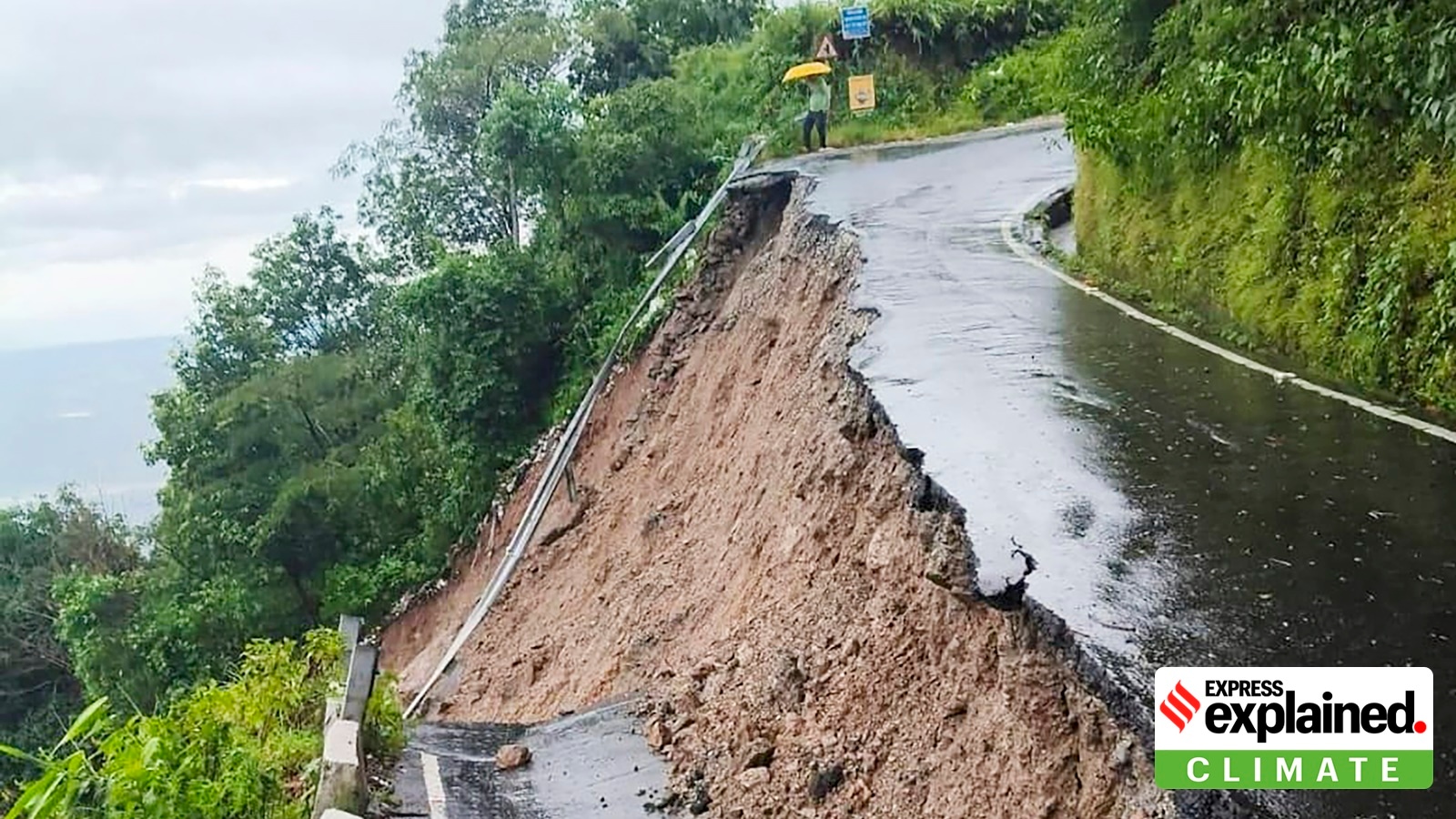
There are fears the number of casualties may rise, as severe weather and difficult terrain, worsened by rain damage, are making rescue operations difficult.

The disaster has cut off communication lines with neighbouring Sikkim with an iron bridge near Teesta Bazaar in Kalimpong collapsing.

Story continues below this ad

In several episodes of heavy rainfall recently in India, landslides have caused major damage. While India has done well to prepare and safeguard itself against certain natural events such as cyclones, landslides landslides continue to remain a threat. An early warning system is still being tried out, and pressures from population, development, and infrastructure projects have increased vulnerability.

What exactly are landslides, and why does India remain especially vulnerable to them? We explain.

What is a landslide?

A landslide is literally land — mud, rocks, debris — sliding down a slope. Landslides occur when the force of gravity becomes stronger than whatever ‘glue’ was holding this material together. The glue can be a combination of various factors, including tree roots holding soil together, the gradient of a slope, the weight and mass of the soil, channels available for water to move through the soil and down the slope, etc.

The reason heavy rain often triggers landslides is that water makes the soil heavier and also reduces friction, making it easy for the soil and rocks to slide down a slope.

Story continues below this ad

In India, especially in the hills, unplanned construction has worsened matters. Buildings and roads are often built without accounting for how much load a slope can hold, while improper drainage networks leave water with no avenue to flow out safely. In the plains, even if extreme rainfall takes place, water has more space to spread out.

Why are landslides such a big danger in India?

Because an adequate early warning system is yet to be developed. For cyclones, for example, warning generally comes well in advance for evacuation and relief efforts to mobilise. For heavy rainfall too, predictions come at least a day early.
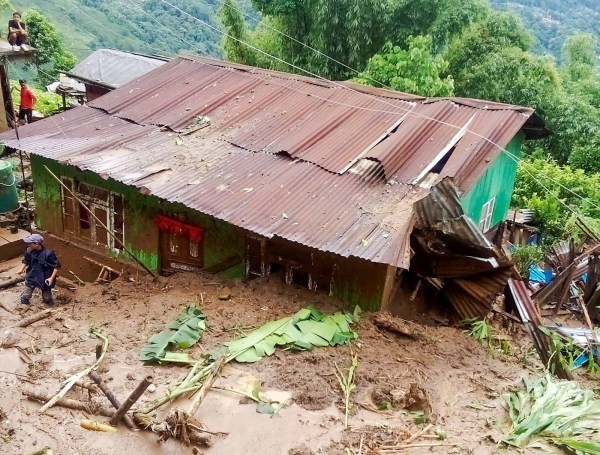
Darjeeling A house partially buried under debris after landslides due to heavy rainfall, in Darjeeling district, West Bengal, Sunday, Oct. 5. (PTI Photo)

For example, the India Meteorological Department (IMD) had forecast Saturday’s spell of rainwater in the hills, which is due to a low pressure system approaching Bihar. But when an episode of heavy rainfall will trigger landslides is still difficult to pinpoint.

About 0.42 million square km of India’s landmass, or about 13% of its area, spread over 15 states and four Union Territories, is prone to landslides, according to the Geological Survey of India (GSI). This covers almost all the hilly regions in the country. About 0.18 million square km, or 42% of this vulnerable area is in the Northeastern region, where the terrain is mostly hilly.

Story continues below this ad

As human activity-related pressures rise and climate becomes more erratic, the way forward is developing warning and mitigation mechanisms.

The National Disaster Management Authority (NDMA) has been working with GSI and other agencies to manage the risks from landslides. A National Landslide Risk Management Strategy was finalised in 2019, which talked about vulnerability mapping, identifying the most vulnerable locations, development of an early warning system, and preparation of mountain zone regulations. But most of the work still remains to be done.

Some early warning systems have been developed, on a trial basis at a few locations in Kerala, Sikkim, and Uttarakhand. These warning systems are linked to rainfall forecasts from IMD. The rainfall prediction is combined with soil and terrain information to calculate whether it is likely to result in displacement of land. However, they are yet to take off in a big way.

Follow on Google News Follow on Flipboard
Share. Facebook Twitter Pinterest LinkedIn Tumblr Email
Previous ArticlePVV Infra subsidiaries bag two solar power orders worth ₹799 crore
Next Article Uttar Pradesh: 'Shoot on sight' orders for wolves in Bahraich | India News – The Times of India
editorial
  • Website

Related Posts

Before ‘corruption in judiciary’, the 15 instances where NCERT textbook revisions went unchallenged

February 27, 2026

SBI Clerk Mains Result 2025 Out: Download scorecards & merit list PDF at sbi.bank.in

February 27, 2026

England vs New Zealand highlights, T20 World Cup 2026: ENG beat NZ by 4-wickets in Colombo

February 27, 2026

Badlapur bus driver arrested for molesting 12-year-old girl student during school run

February 27, 2026

CBSE Class 10th Feb 27 Exam Analysis: What was the difficulty level of Computer Applications, Information Technology, Artificial Intelligence papers?

February 27, 2026

March towards Ministry of Education stopped: JNU students clash with police, 51 detained, booked

February 27, 2026
Add A Comment
Leave A Reply Cancel Reply

Economy News

Before ‘corruption in judiciary’, the 15 instances where NCERT textbook revisions went unchallenged

By editorialFebruary 27, 2026

The new NCERT class 8 social science textbook, which was to be taught in the…

Bombay HC directs MSRTC to pay Rs 50 lakh to widow of employee who died of Covid-19 while on duty | India News – The Times of India

February 27, 2026

SBI Clerk Mains Result 2025 Out: Download scorecards & merit list PDF at sbi.bank.in

February 27, 2026
Top Trending

Before ‘corruption in judiciary’, the 15 instances where NCERT textbook revisions went unchallenged

By editorialFebruary 27, 2026

The new NCERT class 8 social science textbook, which was to be…

Bombay HC directs MSRTC to pay Rs 50 lakh to widow of employee who died of Covid-19 while on duty | India News – The Times of India

By editorialFebruary 27, 2026

Representational image (PTI file photo) NEW DELHI: The Bombay High Court has…

SBI Clerk Mains Result 2025 Out: Download scorecards & merit list PDF at sbi.bank.in

By editorialFebruary 27, 2026

3 min readUpdated: Feb 27, 2026 11:17 PM IST SBI Clerk Mains…

Subscribe to News

Get the latest sports news from NewsSite about world, sports and politics.

Facebook X (Twitter) Pinterest Vimeo WhatsApp TikTok Instagram

News

  • Education
  • Health
  • National News
  • Relationship & Wellness
  • World News
  • Politics

Company

  • Information
  • Advertising
  • Classified Ads
  • Contact Info
  • Do Not Sell Data
  • GDPR Policy
  • Media Kits

Services

  • Subscriptions
  • Customer Support
  • Bulk Packages
  • Newsletters
  • Sponsored News
  • Work With Us

Subscribe to Updates

Get the latest creative news from FooBar about art, design and business.

© Copyright Global News Bulletin.
  • Privacy Policy
  • Terms
  • Accessibility
  • Website Developed by Digital Strikers

Type above and press Enter to search. Press Esc to cancel.