

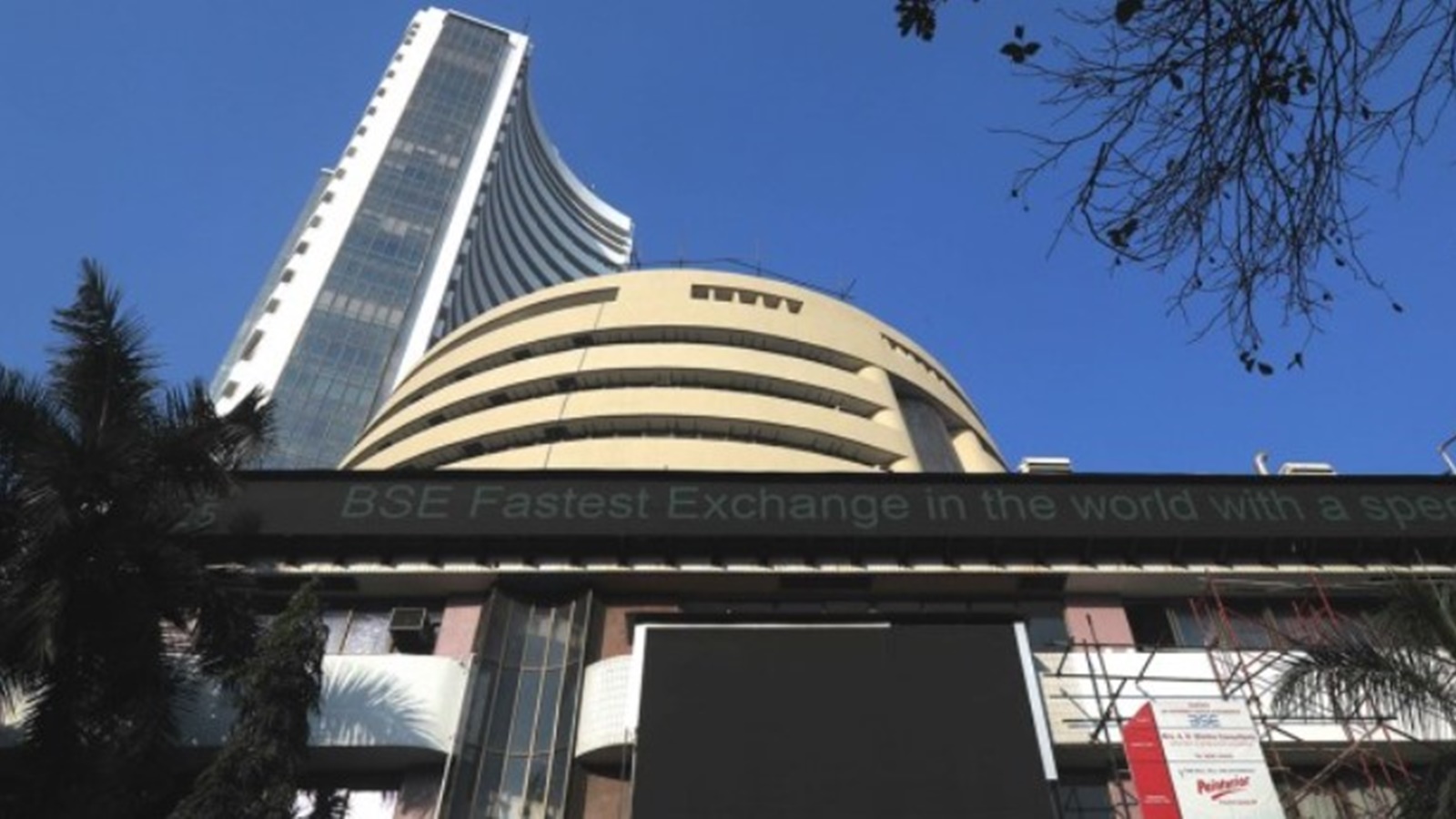
AFTER A long wait of 14 months, the Sensex at the Bombay Stock Exchange breached the 86,000 mark for the first time during Thursday morning trading, hitting a record high of 86,055.86 before finishing at 85,720.38 —up 0.13 per cent from the previous close of 85,609.51.
The broader Nifty 50 also scaled a lifetime peak of 26,310.45 during intraday trade but settled to end at 26,215.55, marginally higher than Wednesday’s close of 26,205.30.

The previous all-time highs, on an intraday basis, for the Sensex was 85,978.25 and Nifty 50 26,250.90, both on September 27, 2024.
It was exactly 14 months ago that the Sensex first crossed the 85,000 milestone following a strong run that began in December 2023, when it surged from 68,000 to 85,000 over the next ten months.
Having gained 17,000 points — nearly 25 per cent — between December 2023 and September 2024, the subsequent 14 months proved elusive for Indian markets. During this period, the Sensex oscillated between 71,000 and 85,000, hitting a low of 71,425 in April 2025 and the high of 85,978 in September 2024.
This turbulent movement indicates that while global factors kept the Indian markets under check, there were concerns on the domestic front about overvaluation of Indian equity markets. Hence, when global concerns arose on account of tariffs and oil prices, the Indian markets moved sideways, making slow progress.
During this period, several fund managers and experts had also raised concerns about overvaluation leading to expectations of a correction in the markets, especially in the mid and small cap segment.
Story continues below this ad
Overall, a multitude of factors contributed to this volatile journey, primarily driven by the arrival of Donald Trump on the geopolitical stage following his electoral victory in November 2024 and his repeated threats to impose tariffs on multiple countries, including India, apart from the continuing war in Ukraine.
At the same time, domestic economic fundamentals remained strong, supported by subdued inflation, declining Brent crude prices, and falling domestic interest rates.
Trade, crude & geopolitics
Trade tensions and protectionist fears under the Trump presidency weighed on market sentiment from November 2024. While the markets initially anticipated a US-India trade deal, periods of uncertainty and tariff-related speculation created volatility, with a 50 per cent duty on certain Indian exports denting sentiment. Further, potential higher US tariffs on IT and pharma exports triggered sell-offs, and concerns over tighter H1B visa norms pressured Indian IT services stocks.
Due to these global factors, the Sensex touched a low of 71,425 on April 7, 2025. This impacted investor confidence, particularly in export-oriented sectors. However, India and the US continuing with negotiations, amid reports of them inching closer to finalising a trade deal, could turn the sentiments upward going forward.
Story continues below this ad
Rising US bond yields, expectations of higher interest rates and reduced appetite for emerging market equities led to capital outflows from India from September to early November 2024, pressuring stock valuations. Fed officials last week signalled a possible rate cut in December, which could boost equity inflows into emerging markets.
Crude oil prices also affected sentiment at various points from September 2024. Higher crude imports widened India’s current account deficit, and raised input costs for industrial and transport sectors.
However, the scenario appears to be improving: Brent crude recently tumbled to a one-month low amid hopes for a Russia-Ukraine peace agreement. A JP Morgan report projected that the global supply glut could keep prices under check, possibly dropping to USD30 per barrel by 2027.
Meanwhile, Fed inflation worries prompted cautious market behaviour, negatively affecting energy-intensive and consumer sectors.
Story continues below this ad
Global geopolitical stress — including the Ukraine war, Middle East conflicts involving Israel and Gaza, and China-US tensions — also contributed to risk-off sentiment. These tensions pushed crude prices higher and increased risk premiums, prompting investors to seek safe-haven assets like gold and US Treasuries, reducing equity flows to India.
Positive developments, such as Israel’s ceasefire and indications of an end to the Russia-Ukraine war, are now seen to be easing these concerns.
Domestic balance
Domestically, delays in key reforms such as GST simplification and Insurance Bill amendments created negative sentiment.
Recent steps to simplify GST and the Government’s plan to table several economic bills, including the Insurance Bill, in the upcoming Lok Sabha session and 6.5 per cent growth forecast by the RBI were seen as positive signals.
Story continues below this ad
On the other hand, investors pumped money into equity schemes of mutual funds throughout the last 14 months with monthly inflows through SIPs touching over Rs 29,000 crore.
Slower-than-expected corporate earnings in select sectors also caused concern. Expectations of stronger third-quarter earnings could lift markets further. If the Russia-Ukraine war ends and the Indo-US trade deal materialises soon, domestic investor confidence is likely to strengthen, reducing the likelihood of tempered market rallies.
According to experts, Thursday’s high reflects strong investor confidence and steady economic momentum. “Such milestones show that trends are shaped by patience, discipline and data, not short-term noise. Credit goes to the Government, policymakers and retail investors who have supported the economy through uncertainties. It is truly a moment to celebrate,” said Shrikant Chouhan, Head Equity Research, Kotak Securities.
“Equity benchmarks scaling fresh record highs are being powered by resilient domestic inflows, improving global risk appetite, and renewed optimism around third-quarter earnings. While the undertone remains constructive, we expect only a measured upside from current levels, likely limited to a few percentage points in the near term,” said Prashanth Tapse, Senior VP Research Analyst at Mehta Equities Ltd.
Story continues below this ad
The new peak was reached even as foreign investors pulled out Rs 1.48 lakh crore from the equity market from January 2025.
However, experts have cautioned investors against over-enthusiasm or “FOMO (fear of missing out) buying”, as the rally continues to be narrow. A large portion of the mid-cap and small-cap universe, including several sector leaders, remains in a corrective or fragile zone. “Investors should avoid chasing high-priced, overvalued stocks. They should wait for corrections and adopt a selective buying approach,” said an analyst.
Sustaining the next leg of the rally will depend on a meaningful earnings recovery, stability in global macro factors and continued domestic participation. “We advise a selective, quality-focused strategy rather than chasing momentum at elevated levels,” Tapse, of Mehta Equities, said.
