

Be you ever so high, the law is above you.
Thomas Fuller’s famous maxim ought to be standard practice in modern democracies, where the overriding principle of governance is clear: No one can break the law and claim exemption from punishment simply because of who they are or the family they are born into.

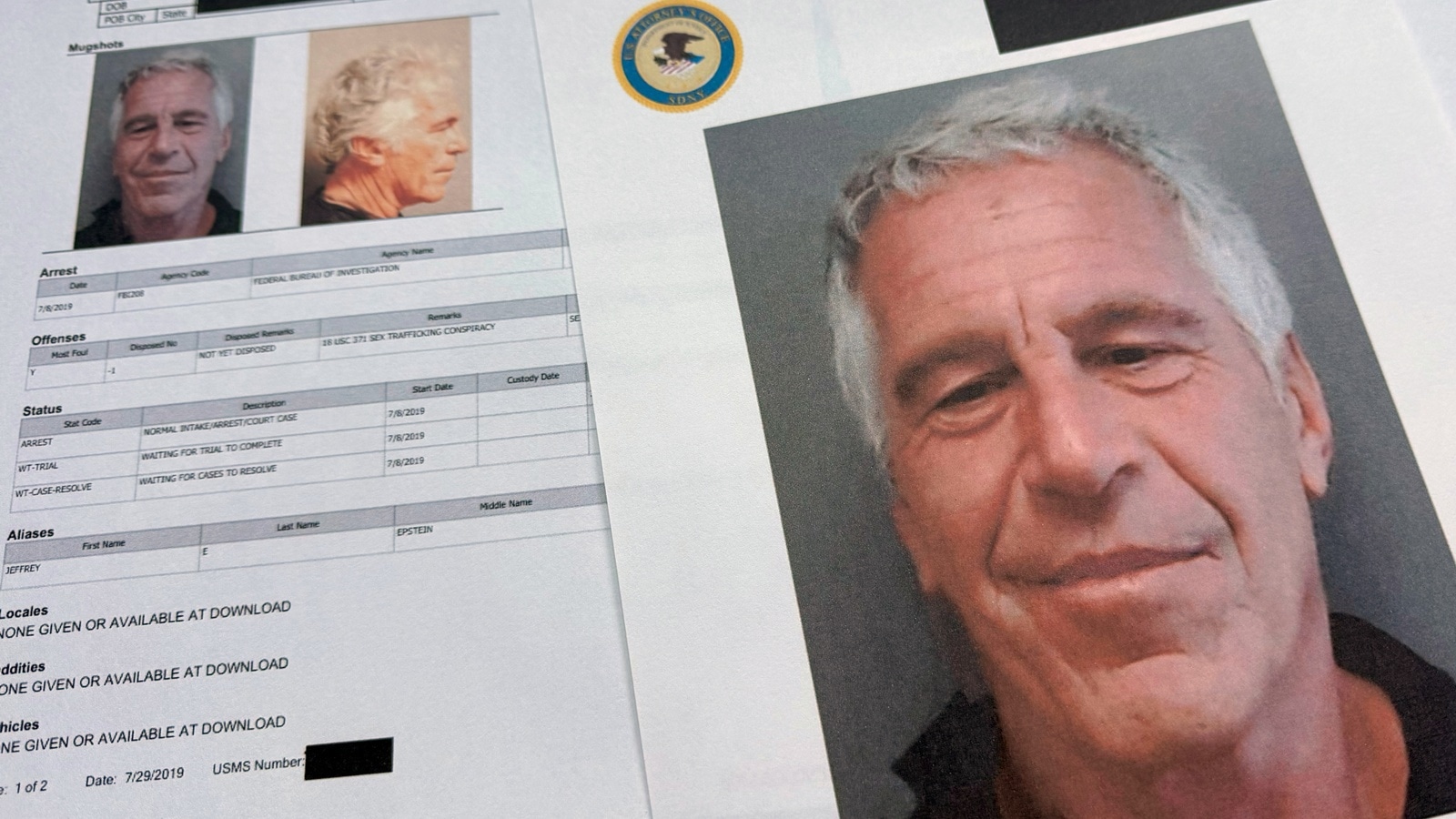
The arrest of Andrew Mountbatten-Windsor — no longer a royal, having been stripped of his titles and patronages by his own family — marks the first time in nearly 400 years that a member of the British royal family has faced state action of this magnitude. King Charles I was eventually beheaded in 1649, a fate unlikely to befall Andrew, given that the death penalty has long been abolished in the United Kingdom. Yet, the very fact that he was taken in for questioning over his conduct as the UK trade envoy, following the disclosure of emails linked to the convicted and now dead sex offender and trafficker Jeffrey Epstein, suggests that a measure of accountability still endures within Britain’s political system, one conspicuously absent on the other side of the Atlantic. His own brother, King Charles III, has publicly insisted that the “law must take its course.”
Much has already been written about Andrew’s fall from grace, from the infamous 2001 photograph of him with the late Virginia Giuffre, then 17 and one of Epstein’s many victims, with whom Andrew later reached a settlement, to the image released in January 2026 depicting him on all fours over an unidentified woman lying on the floor. That he is now under official investigation for allegedly forwarding sensitive government documents to Epstein, rather than for sexual misconduct that may itself amount to criminality, is a case still unfolding. What is clear, however, is that he has been on the receiving end of a sustained reckoning: From his family, from the British public and now from the police.
The fallout has not been confined to Andrew. The dismissal of Peter Mandelson as ambassador to the US due to his close ties to Epstein, including allegations that he shared sensitive government information, has pushed the Keir Starmer government to the brink. He continues to be under intense pressure from within his own Labour Party rather than from the Tories, whose parliamentary strength was significantly diminished after their drubbing in the last general election. Starmer has, for now, managed to weather the storm, not least by directly addressing Epstein’s victims in a public statement in which he said, among other things, “I am sorry.”
Juxtapose this with the country in which Epstein was born, where his private island is located, where most of his known associates are based, and under whose government’s control the files continue to remain. Where are the arrests in the United States? Professional fallout is not the same as criminal prosecution. Company heads and heirs, consultants, academics and former politicians may have stepped down from public roles. But a corporation or university managing its reputation is not justice.
Justice would mean releasing the files in full — with the identities of victims protected, something the US Department of Justice has deliberately blundered in — pursuing prosecutions, and, to borrow the words of the British monarch, letting the law take its course. Instead, there is a DoJ that appears less concerned with the victims than with carrying out the bidding of President Donald Trump, who, far from offering half the apology submitted by his British counterpart, has dismissed the Epstein affair as “pretty boring stuff”.
One can’t be blamed for being puzzled about the self-styled “transparency president” treating one of the most disturbing scandals in recent memory with such nonchalance. Then there are the files. According to remarks by US Representative Jared Moskowitz, Trump’s name appears in the Epstein files more often than “God” appears in the Bible or “Harry” in the Harry Potter novels. Moskowitz made the comment during a hearing before the House Judiciary Committee at which Attorney General Pam Bondi testified. Clips from that hearing have since gone viral for all the wrong reasons: Bondi declined to make eye contact with several of Epstein’s sex-trafficking victims seated in the room; refused to answer questions about Epstein’s crimes and clientele; and repeatedly chanted that Trump is “the greatest president of all time”.
And where are the Republicans? Unlike Starmer’s Labour Party-driven existential crisis, in the US, barring figures such as Marjorie Taylor Greene, not a single Republican has resigned in protest at what can only be described as either incompetence or a cover-up. And aside from a handful of GOP lawmakers like Thomas Massie and Nancy Mace, most have remained steadfastly loyal to Trump.
There is no modicum of doubt that the Trump administration is withholding the truth. It is now up to the American public, especially the President’s MAGA base, to hold its leaders accountable. Otherwise, Fuller’s maxim may require revision: Be you ever so high, and you may fly above the law.
The writer is deputy copy editor, The Indian Express, and can be reached at saptarishi.basak@expressindia.com
