

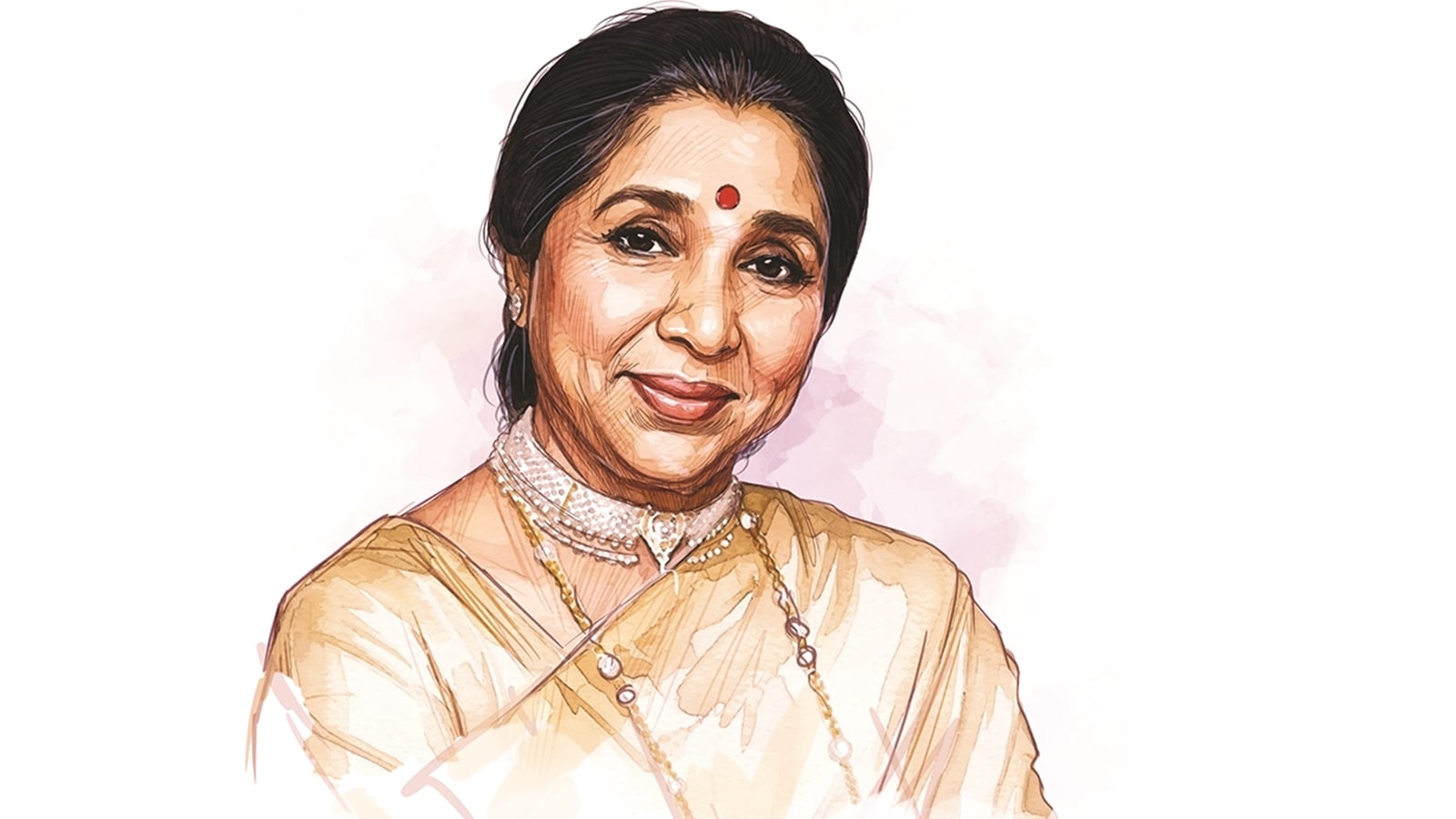
Asha Bhosle, one of the most remarkable voices in Indian film music with over 12,000 songs to her credit, was never regarded as the country’s nightingale. Post independence, the nation’s careful conscience had already given the coveted title to her older sister Lata Mangeshkar, who sang delightfully, piously and with a voice that soared over a generation’s lives.
But an astute Bhosle, who passed away on Sunday in Mumbai at 92 after a chest infection, recognised this early on and sang what was left, from where she could: the street, the nautanki stage, the cabaret floor and the club back rooms thick with smoke. This voice was wild, could shake a leg and take one’s breath away. It seemed to know what a party smelled like, what a dance floor felt like at 3 in the morning and what desire actually sounded like when it ceased to be polite. These were mostly places the nightingale wasn’t going to find or inhabit and that is where the brilliance of Asha Bhosle unravelled. With her range, she could sing just about anything: there was the sultry nightclub number, the flirtatious song, a rhythm-driven ditty to the delicacy of a classical ghazal, with none of them ever out of place and absorbed into her voice with effortless conviction.

Actor Smita Patil, in the British Film Institute’s documentary, Asha (1986, Neville Bolt), says how Bhosle’s voice “isn’t flat or sweet”. “It has a bit of a ‘come on’… it has life in it. It’s like the goddesses in India — she is the coquette, she is the pure, she is all of it,” said Patil.
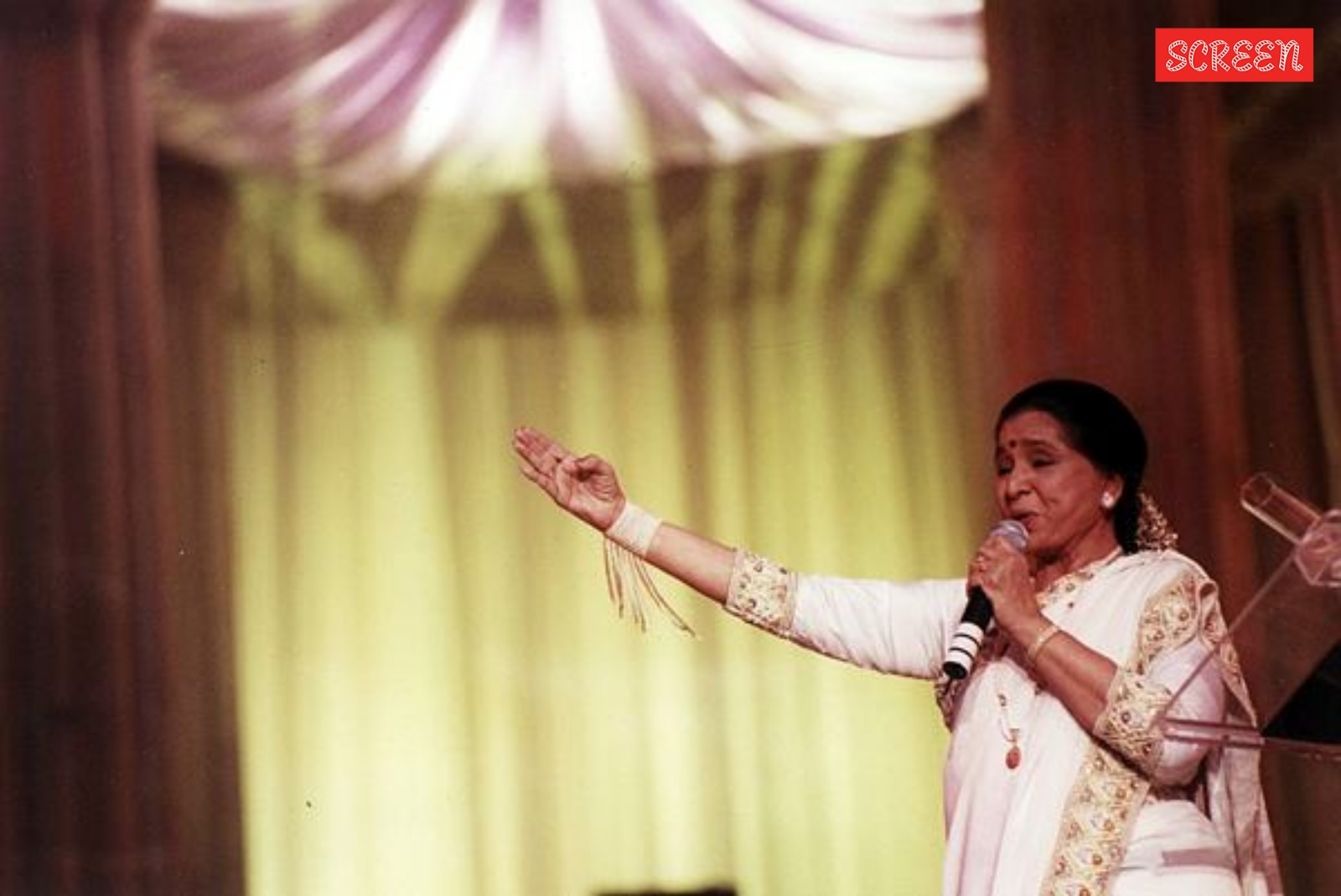 Asha Bhosle dies at 92. (Photo: Express Archive)
Born in Maharashtra’s Sangli, Bhosle grew up in Kolhapur, where the Mangeshkar family moved from Pune after Dinanath Mangeshkar’s demise and so that their eldest daughter Lata, 13 then, could work in the robust Marathi film industry of the city. Bhosle, nine then, was already captivated by English-language cinema. She was interested in films like Gone with the Wind (1939), For Whom the Bell Tolls (1943), and the musicals of Fred Astaire as well as by the vibrant, sensuous performances of Portuguese-Brazilian actor and samba singer Carmen Miranda. She would come home, drape a dupatta, and sing ‘Mama yo quiero’ while dancing like Miranda. “My mother thought I was crazy,” says the singer in the documentary.
After her Marathi debut at 10 with ‘Chala chala’ in Majha Bal (1943) and a Hindi solo in Raat ki Rani (1949), Bhosle came to an industry with Geeta Dutt, Shamshad Begum and more recently, Mangeshkar ruling the charts. In a film industry that operated under the tidy moral logic of the heroine and the vamp, Bhosle got what was left by the others and slowly began making her mark.
Also Read – Asha Bhosle, India’s most versatile and prolific voice, is no more
This is when the then 16-year-old eloped with 31-year-old Ganpatrao Bhosle, her elder sister’s secretary. The two got married against the family’s wishes, had three children and divorced in 1960.
Story continues below this ad
In 1953, Bhosle sang for Bimal Roy’s Parineeta starring Ashok Kumar and Meena Kumari followed by the song ‘Nanhe munne bacche’ in Raj Kapoor’s Boot Polish (1954), and ‘Chhod do aanchal’ with SD Burman (Paying Guest, 1957), which got her some attention. But the real breakthrough came with composer OP Nayyar, who turned her fledgling career around with BR Chopra’s Naya Daur (1957). But what really glistened was the sensuous ‘Aayiye meherbaan’ (Howrah Bridge, 1958) and then there was no looking back. She sang some of her best — ‘Ye reshmi zulfo ka’, ‘Deewana hua badal’, ‘Jaaiye aap kahan jaayenge’ and songs from Kashmir Ki Kali (1964), among others, with Nayyar.
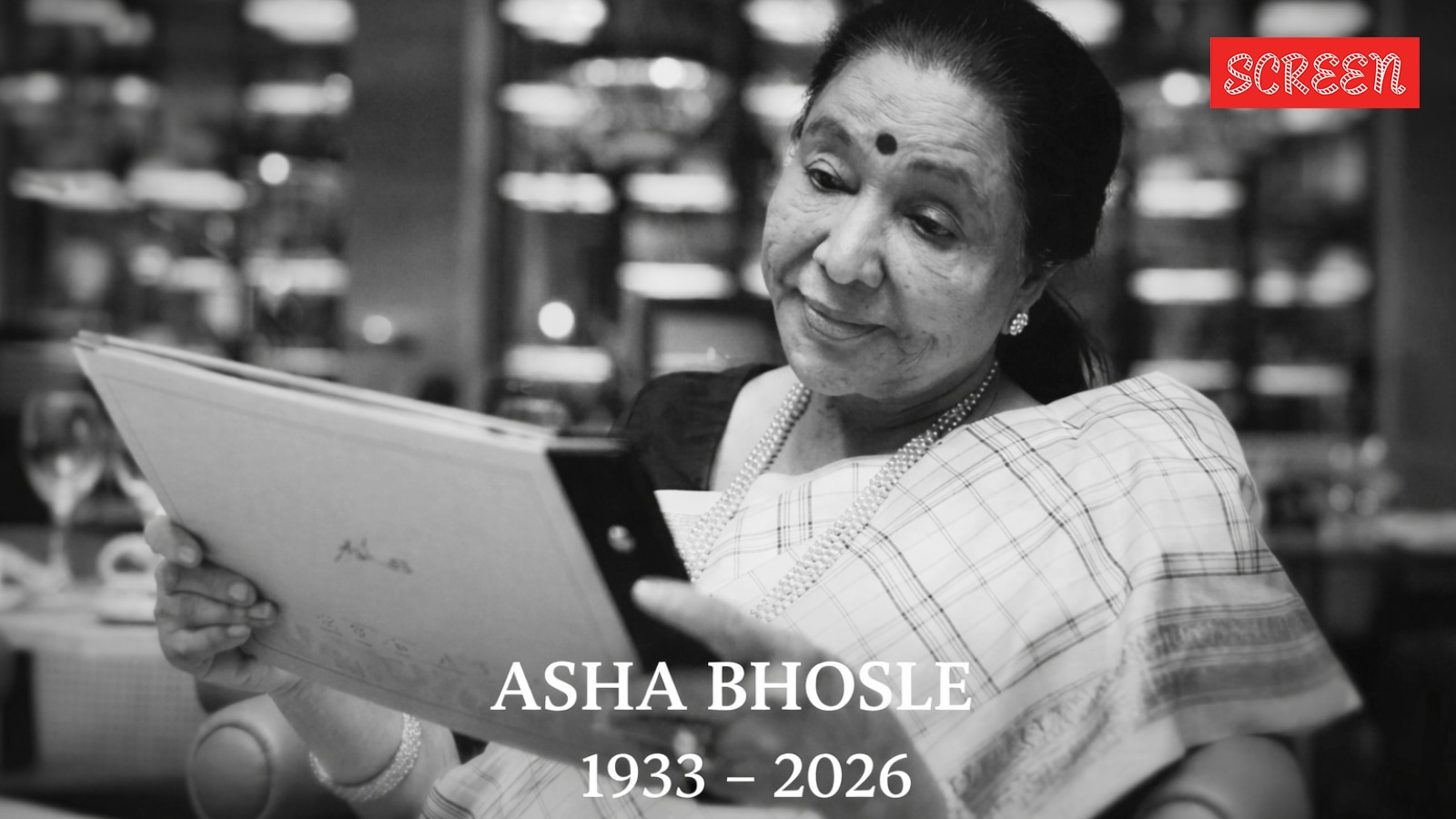 Asha Bhosle, whose range redefined Bollywood playback singing, dies at 92
In 1963, came Bimal Roy’s poignant Bandini, with S D Burman’s setting of Shailendra’s lyrics, ‘Ab ke baras bhej bhaiya ko baabul’, with the wistfulness of a married woman pining to see her family.
The rollicking ’70s are where Bhosle’s career got a new lease of life with R D Burman, whom she married some years later, at the helm. She could cry and laugh in a song, use dialogues, and play with her breath to produce some absolutely slick and sensuous cabaret pieces, such as ‘Piya tu ab toh aaja‘ (Caravan, 1971), the phenomenal neon-hued ‘Duniya mein‘ (Apna Desh, 1972), the smooth ‘Chura liya hai tumne‘ (Yaadon ki Baraat, 1973) that followed the clinking of the bottles, the steamy ‘Aao na‘ (Mere Jeewan Saathi 1972), the tipsy ‘Aao huzoor‘ (Kismat, 1968) and ‘Dum maaro dum‘ (Hare Rama Hare Krishna, 1971), a piece that became synonymous with rebellion as Zeenat Aman smoked and sang with abandon.
Her classical prowess was heard and applauded in Muzaffar Ali’s Umrao Jaan (1981), for which Bhosle won her first National Award, over 30 years after she first began singing. In the later years, Bhosle also recorded private ghazal albums with Pakistani singer Ghulam Ali besides tribute albums for Noorjehan, Farida Khanum and Mehdi Hassan. She also collaborated with US-based sarod maestro Ustad Ali Akbar Khan, under whom she began learning in 1995 as his “gandabandh shagird” (student for life). Their album together, titled ‘Legacy’, was nominated for a Grammy, making her the first Indian playback singer to be nominated for a Grammy. She was nominated again in 2006 for a collaboration with an American string quartet called Kronos Quartet.
Story continues below this ad
On Sunday, in a statement issued in Mumbai, her family said the funeral will take place on Monday.
Offering her “heartfelt condolences”, President Droupadi Murmu posted on her official X account that the passing of Bhosle “has created a huge void in the world of music”.
“Her legendary career as an iconic singer has defined an era of music in India. I have fond memories of having interacted with her personally. She led her life on her own terms as an artist and as an individual. With her melodious and timeless voice, she enriched Indian music for decades. Her music will live forever. Her demise is an irreparable loss to music lovers,” she posted.
Prime Minister Narendra Modi also took to X to express his condolences to the family. Describing Bhosle as “one of the most iconic and versatile voices India has ever known”, Modi posted: “Her extraordinary musical journey, spanning decades, enriched our cultural heritage and touched countless hearts across the world. Be it her soulful melodies or vibrant compositions, her voice carried timeless brilliance. I’ll always cherish the interactions I’ve had with her.”
Story continues below this ad
Till the end, Bhosle kept singing, unafraid of experimentation. Two years ago, on her 90th birthday, she performed a concert and just as the spotlight came on, the power in her voice set the club ablaze.
