

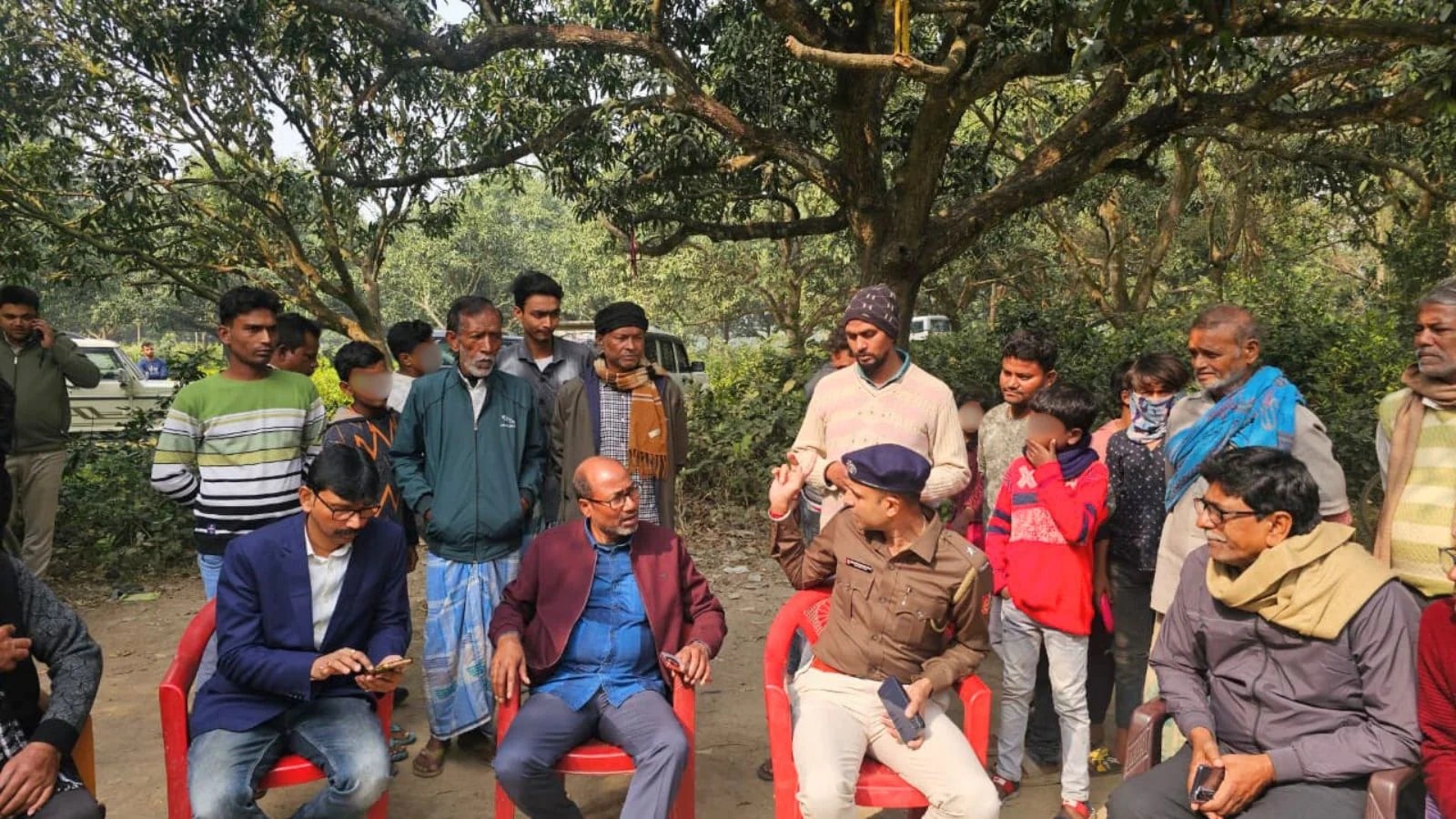
Eighteen days after a pastor was assaulted in Parjang Police Station area of Odisha’s Dhenkanal, and hours after the wife’s complaint drew outrage from leaders across the country, the Odisha Police on Thursday said nine people have been detained and are being questioned.
Police said they came to know of the January 4 incident only after the wife lodged a complaint, that pastor Bipin Naik was assaulted by a mob comprising allegedly Bajrang Dal members, had vermillion smeared on him, was paraded with a garland of shoes, and compelled to bow before a temple, over allegations of conversion.
Admitting that they were investigating these charges, Dhenkanal SP Abhinav Sonkar said other claims, that Naik had been forced to drink water from a drain and force-fed cow dung, had been found to be incorrect. “These haven’t been mentioned in the complaint nor have we found any indication of this,” Sonkar said.
In the past 19 months, half-a-dozen Odisha towns have seen curfew and Internet suspension over communal incidents, including lynching of Bengali-speaking Muslims. In most of the cases, the accused have been members of right-wing Hindu outfits.
Officials say many other cases may have gone unreported, with victims being Bengali-speaking daily wagers who are hesitant to approach police.
The Opposition has slammed it as “jungle raj” and the coming of “communal tension” to a state where the BJP formed its first solo government in June 2024.
The latest case was on January 14, when a Muslim youth was lynched by alleged ‘cow vigilantes’ in Balasore district. This was barely weeks after a Muslim youth from Murshidabad in West Bengal, 30-year-old Jewel Sheikh, was beaten to death in Sambalpur district.
Story continues below this ad
In both the cases, police initially denied any ‘hate crime’. While his co-workers and family members alleged Jewel had been assaulted on the suspicion of being an illegal Bangladeshi immigrant, police said the victim and the accused knew each other and had fought over a bidi. Six people were later arrested.
In the January 14 Balasore case, the initial police FIR, lodged on the basis of a complaint by a sub-inspector, had no mention of the assault or any names. It only stated that a driver and owner of a van were charged with rash driving, and under Sections of the Prevention of Cow Slaughter Act. However, a video of the incident showed ‘Sk Makandar Mahammad’ (who died in the incident) being beaten up, forced to chant Jai Shri Ram and to refer to the cow as his mother.
A murder case was registered after Makandar’s brother lodged a complaint against five people. Three were finally arrested, with self-proclaimed “gau-rakshaks” staging a dharna outside the Balasore Superintendent of Police’s office seeking their release.
By then, communal tension had erupted in Sundargarh town in western Odisha over rumours of beef, that left at least 12 injured. The government had to suspend the Internet and impose prohibitory orders.
Story continues below this ad
A month earlier, on November 24, a winter-garment seller, also from Murshidabad, was assaulted by a mob calling him Bangladeshi, at Ranipada village in Ganjam district. No arrests were made as police said they received no formal complaint.
On January 2, a youth named Sheikh Saroof was beaten by youths, who stripped him, paraded him and forced him to chant religious slogans. The Mayurbhanj SP said two people had been arrested.
Ahead of Christmas 2025, street vendors selling Santa Claus hats were abused and chased away by a group of youths in Puri. Police said no one lodged a complaint.
In October 2025, in an incident virtually unknown for the city, Cuttack saw a curfew of around three days following communal violence that started with a clash during Durga Puja immersion. Days later, members of the VHP clashed with police and indulged in vandalism and arson.
Story continues below this ad
Following the incident, Chief Minister Mohan Charan Majhi, who also holds the Home portfolio, issued an appeal for peace. “Cuttack is a thousand-year-old city known for its unity and communal harmony. Due to the actions of some miscreants, peace has been disturbed in recent days,” he said.
In December 2024, two tribal women were allegedly tied to a tree and beaten up in Balasore for allegedly trying to convert Hindus to Christianity. Police took action after a video of the incident went viral.
In June 2024, barely a week after the BJP came to power, curfew was imposed in Odisha’s Balasore town following a communal clash that stemmed from rumours that water in a local drain had turned red led to allegations of cow slaughter.
The same month, Internet services were suspended in parts of Bhadrak following the death of a man after a clash with cattle smugglers. Later, curfew was imposed in Khurda near Bhubaneswar following communal tension.
Story continues below this ad
Past numbers
As per data shared by the Union Ministry of Home Affairs in Parliament, Odisha saw nine communal incidents in 2018, and 0 in 2019. The National Crime Records Bureau puts the number of communal or religious incidents in Odisha at 10 in 2021, 44 in 2023 (the pre-election year), and 15 in 2025.
Responding to a query on communal and mob violence in Odisha since 2024 in the state Assembly recently, CM Majhi said information on it was being collected.
One of the most notable communal incidents in Odisha in recent years was in 2023, a year before the state elections, when 25 people were injured in violence during Hanuman Jayanti in Sambalpur, with at least one death in subsequent confrontations.
BJD leaders give the example of their government’s reaction after the violence, including the arrest of over a hundred people and a two-week curfew. Senior police officers from Bhubaneswar were rushed to Sambalpur and the district administration held peace meetings to restore normalcy.
Story continues below this ad
The following year, on Hanuman Jayanti, the administration banned religious processions and bike rallies in the city to avoid any untoward situation.
Claiming “complete lawlessness in the state”, BJD Rajya Sabha MP Sulata Deo said: “There is an ecosystem backed by some people in power that encourages such activities… It’s the duty of the government to protect everyone, especially the minorities.”
Former chief minister and BJD president Naveen Patnaik has urged the government and all communities to protect the state’s image of communal harmony.
Congress spokesperson Amiya Pandav said the hate incidents against minorities are “carefully organized crimes promoted and patronised by the ruling BJP”.
Story continues below this ad
Minority ‘fears’
Bishop Pallav Lima, general secretary of the Odisha unit of the Rashtriya Christian Morcha, blames police “inaction” in hate crimes, for the rise in communal incidents. Claiming 87 cases of “reported” hate crimes in Odisha since November 2024, “without any significant police action”, Lima told The Indian Express: “We are also against forceful conversions. Even if anybody is involved in such practices, the law enforcement agency should take action instead of mob attacks.”
He also accuses the Odisha government of ignoring the Supreme Court’s 2018 ruling that an IPS officer oversee investigation in cases of mob lynching.
Syed Barkat Ali Tanveer, the coordinator of the Odisha Muslim Development Council, says attempts are being made to incite hate. “Had there been strict action, such incidents would not have happened frequently. People are arrested following incidents, but they know they will be released on bail.”
A retired top police officer accuses provocative statements by leaders as prompting vigilantes to take the law into their own hands. “Police need to take strict action in every case irrespective of their political affiliation,” says the retired officer.
Story continues below this ad
BJP MLA Ashok Mohanty says the Opposition’s charge of the Majhi government doing nothing is “baseless”. “Attacks on cattle smugglers” are only a reflection of the anger of the people, he says. “Those who indulge in cattle smuggling should be aware of this.”
