

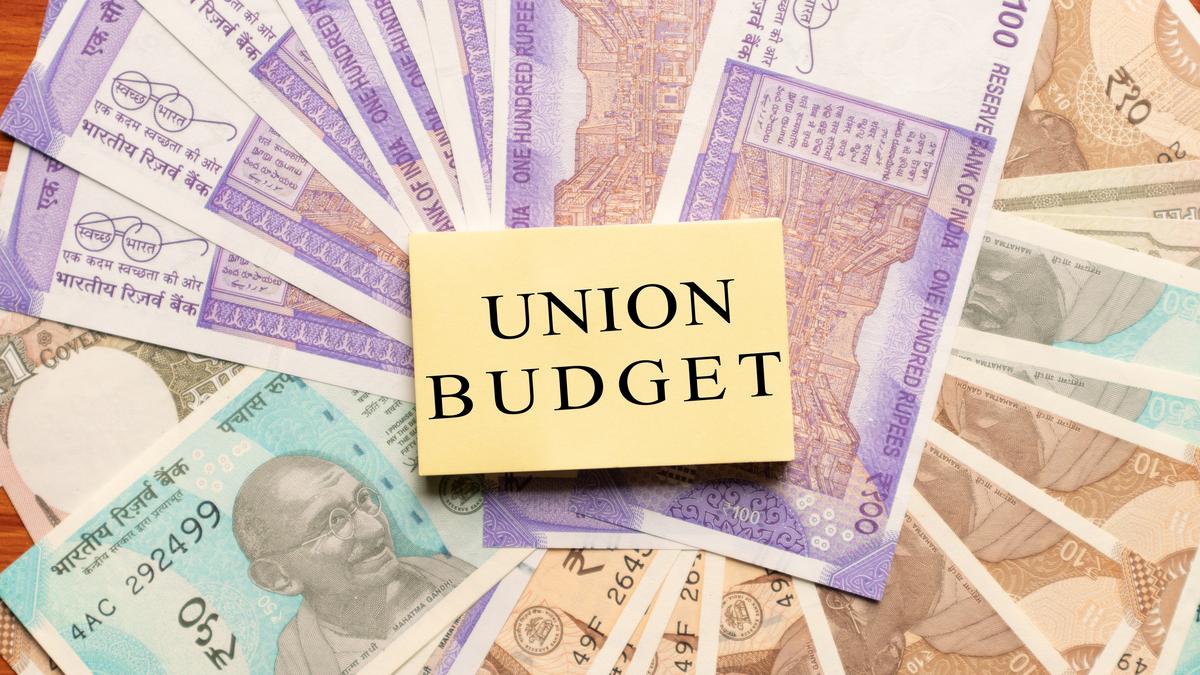
The Budget, which will be tabled in Parliament by Finance Minister Nirmala Sitharaman on February 1, 2026, is the Government’s blueprint on expenditure, taxes it plans to levy, and other transactions that affect the economy and lives of citizens. She will present the Budget against a backdrop of geopolitical uncertainties and a steep 50% U.S. tariff on shipments from India. This is the first time in the history of India that the Union Budget is being presented on a Sunday.
Ahead of the budget, here are some of the key terms that shape how public spending and revenues are discussed.
Inflation
Inflation refers to an increase in the general price level of goods and services in an economy. It can also be defined as the decline of purchasing power over time. The inflation rate is the percentage rate of change in the price level.
Fiscal policy
It is what a government does to influence the course of an economy through decisions on taxes and spending. Fiscal policy is implemented through the budget.

Monetary Policy
Monetary policy is what a central bank (RBI) does to influence the course of an economy through decisions on money supply and interest rate.
Capital Budget
The Capital Budget consists of capital receipts and payments. It includes investments in shares, loans and advances granted by the Central Government to State Governments, Government companies, corporations and other parties.
Capital receipts
Capital receipts are the funds that either create liabilities or reduce assets. The capital receipts are loans raised by the government (these are termed as market loans), borrowings by the government through the sale of Treasury Bills, the loans received from foreign governments and bodies, and recoveries of loans from State and UTs.
Capital expenditure
Capital expenditure or capex, is the money spent by the government on development or to acquire, or to upgrade machinery or assets. Capital payments consist of capital expenditure on acquisition of assets like land, buildings, machinery, equipment, as also investments in shares, etc., and loans and advances granted by the Central Government to the State and the Union Territory Governments, Government companies, Corporations and other parties.

Revenue Budget
The revenue budget consists of revenue receipts of the government and its expenditure.
Revenue receipts
Income received by the government that is not repayable is revenue receipts. Revenue receipts are divided into tax and non-tax revenue. Tax revenues constitute taxes like income tax, corporate tax, excise, customs, service and other duties that the government levies. The non-tax revenue sources include interest on loans, dividend on investments.
Revenue expenditure
Revenue expenditure doesn’t create or generate future returns. The government pays for salaries, pensions, and subsidies, which are for immediate consumption. This is revenue expenditure.
Direct tax
A tax, such as the income-tax and corporate tax, which has to be borne by the person or entity it is imposed on.
Indirect tax
A tax on goods and services, typically, levied on an entity but paid by another. They are paid by consumers when they buy goods and services. These include excise duty, customs duty etc.
Excise duty
An indirect tax levied on goods manufactured in India and meant for home consumption.
Customs duty
These are levies charged when goods are imported into, or exported from, the country, and they are paid by the importer or exporter. Usually, these are also passed on to the consumer.

Fiscal deficit
A fiscal deficit arises when the government’s total expenditure exceeds its total revenue, excluding the money borrowed.
Revenue deficit
The difference between revenue expenditure and revenue receipts is known as the revenue deficit. It shows the shortfall of the government’s current receipts over current expenditure.
Primary deficit
The primary deficit is the fiscal deficit minus interest payments. It tells how much of the government’s borrowings are going towards meeting expenses other than interest payments.
GST
Proposed to be rolled out in India from April 1, 2016, the GST seeks to make the indirect tax structure simpler and efficient by replacing a slew of levies such as octroi, central sales tax, State sales tax, entry tax and so on.
GDP
Gross Domestic Product (GDP) refers to the Total Market Value of all finished goods and services produced within a country over a specified period of time.
Disinvestment
The sale of shares of public sector undertakings by the government is called disinvestment. The shares of government companies held by the government are the assets at the disposal of the government. If these shares are sold to get cash, then earning assets are converted into cash . So it is referred to as disinvestment.
Published – January 20, 2026 11:44 am IST
