

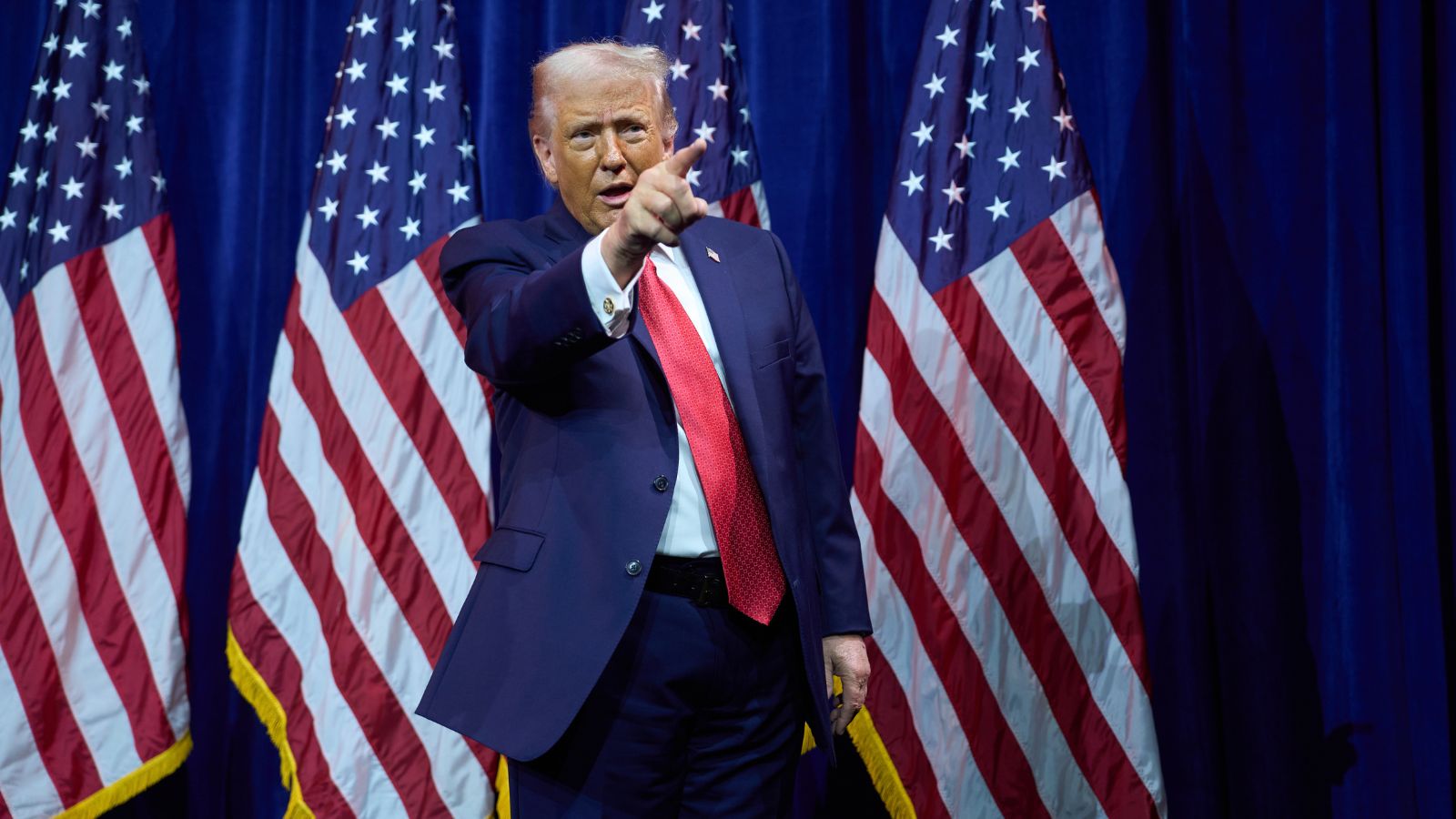
US President Donald Trump’s invitation to world leaders to help create a new global body, the “Board of Peace,” to manage international conflicts, has triggered a debate about the future of the international system built after World War II. Announced in the context of Gaza, the initiative raises a larger question: Is Washington now seeking to sidestep the United Nations Security Council as the principal global forum for addressing issues of war and peace?
Critics see the Board of Peace as a frontal assault on the UN Charter’s core principles of sovereign equality, universal membership, and collective decision-making. Where the UN rests on the idea that all states, large and small, are formally equal and participate in open deliberations, Trump’s proposal points in the opposite direction: An exclusive, invitation-only club operating under American leadership and discretion.

With Trump having wrecked the WTO and now ready to risk the future of the long-standing Western military alliance, NATO, and break up with the European Union on his claims to Greenland, Delhi should take Trump’s plans for a new global peace and security mechanism seriously.
For India, which has long championed “reformed multilateralism” , Trump’s move forces a reassessment of deeply held assumptions about the UN’s form and function as well as its centrality and credibility. Delhi’s traditional faith in a gradual reform of the UN system may not survive an American push to redesign global governance from the outside.
The Board of Peace fits neatly into a broader conservative American project to downgrade the UN and build US-led alternatives. It follows Washington’s recent decision to exit more than 60 international organisations, including several UN bodies, on the grounds that they are inefficient, excessively ideological, and inimical to American sovereignty. This approach closely tracks the recommendations of Project 2025, the Heritage Foundation’s blueprint for Trump’s second term, which called for sharp reductions in multilateral commitments and a preference for ad hoc coalitions where the US sets the agenda.
The Board of Peace is an experiment to translate long-standing American frustrations with the UN into a new institutional model. Reports suggest that nearly 60 leaders have received invitations. Few governments may wish to openly spurn an initiative led by the world’s most powerful state, but it is far from certain that others are prepared to anoint Trump as a global arbiter of peace.
The immediate context for the Board of Peace is Gaza. In November 2025, the UN Security Council adopted Resolution 2803 authorising the creation of a Board to supervise a transitional administration for stabilising and reconstructing Gaza until the end of 2027. Russia and China abstained, but the countries of the Global South voted for it. Prior to the UNSC resolution, a group of Islamic countries backed Trump’s peace plan for Gaza.
Trump is now seeking to expand that mandate, turning a Gaza-specific mechanism into a template for addressing a much wider array of global challenges. The reported charter of the Board of Peace: “embark on a bold new approach to resolving global conflict.”
The structure of the Board, approved by the UNSC in the context of Gaza peace, marks a sharp departure from postwar multilateral norms. Trump would chair it, ensuring White House control over agenda-setting and decision-making. An executive committee, reportedly staffed by trusted loyalists, would handle security, deradicalisation, and reconstruction. At the operational level, a Palestinian technocratic body would manage essential services such as water, power, and education.
Trump’s Board of Peace now appears to be looking beyond Gaza. Supporters present the Board as a dynamic crisis-management club that can overcome the current paralysis in the UNSC. Republicans have for decades criticised the UN’s sprawling bureaucracy, structural inefficiencies, and what they describe as its drift into a global “woke swamp”.
Trump’s own record reflects this scepticism. In his first term, he withdrew the US from UNESCO and the World Health Organization. In February 2025, he ordered a comprehensive audit of America’s multilateral engagements, followed by a sweeping pullout from dozens of international bodies. The Board of Peace seems the logical culmination of this trajectory. It seeks to recast the current global order, founded by the US at the end of the Second World War, on Trump’s terms.
For now, the Board’s legitimacy rests on its UN Security Council mandate. In theory, the denial or non-renewal of that mandate at the end of 2027 could bring the experiment to a halt. In practice, however, a measure of success in Gaza could attract defectors, diverting funds, influence, and political attention away from New York. Trump is clearly betting less on UN approval than on America’s unrivalled power and its leverage over allies and adversaries.
For India, this moment demands a fresh appraisal of its own multilateral strategy. As the global institutional order enters a period of extraordinary flux, Delhi will need to think beyond inherited orthodoxies and rework its multilateral sums.
C Raja Mohan is a contributing editor on international affairs for ‘The Indian Express’
